Latest News

EXAIR Launches Redesigned Website for Enhanced Digital Experience

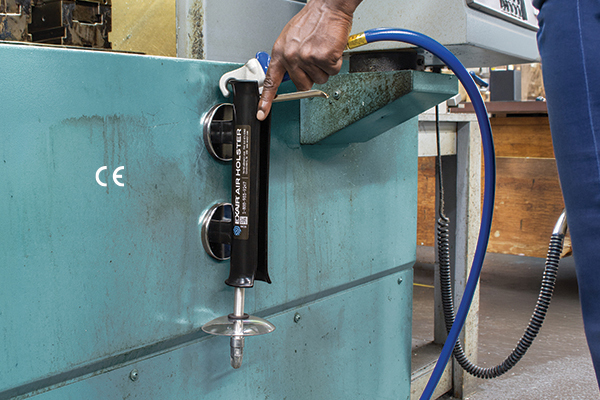
EXAIR has unveiled a redesigned website that delivers a more streamlined experience for engineers, maintenance professionals, and manufacturers searching for compressed air solutions. Featuring a modern look that reflects EXAIR's updated brand identity, the new website makes it easier than ever to explore products, learn about applications, and find the right solution for virtually any industrial challenge. Built with performance and usability in mind, the site offers faster page loads, improved navigation, and a cleaner interface.

            The redesigned website introduces several customer-focused enhancements that simplify the buying process from research to checkout. A streamlined shopping experience reduces the number of steps required to purchase products, allowing customers to move from product selection to checkout more quickly than ever before. Visitors can also browse new industry-specific pages featuring relevant product recommendations, application examples, and educational resources, making it easier for users to discover solutions designed specifically for their manufacturing environment. The site also offers ample opportunities to connect with EXAIR through catalog requests, newsletter signups, or speaking directly with Application Engineers to get answers for case-by-case manufacturing dilemmas.

            EXAIR.com reinforces EXAIR's commitment to providing customers with the tools and resources needed to solve industrial challenges efficiently. In addition, visitors have access to the application database, videos, CAD models, blogs, an extensive Knowledge Base, and direct support from EXAIR's Application Engineers. Combined with enhanced site performance and an improved user experience, the redesigned website makes finding, selecting, and purchasing EXAIR solutions easier than ever. https://exair.co/190-newsite

Atexxo Introduces ATEX / IECEx Certified Samsung Galaxy Tab Active5 (Pro) Series

atexxo_-.jpeg

Digitalisation is rapidly transforming hazardous industries. From maintenance and inspection to asset management and remote collaboration, field workers increasingly depend on mobile technology. Atexxo Manufacturing now brings Samsung’s latest rugged tablet technology into explosive atmospheres with ATEX-certified versions of the Samsung Galaxy Tab Active5 and Galaxy Tab Active5 Pro.

The compact Samsung Galaxy Tab Active5 ATEX is designed for use in gas Zone 1 and dust Zone 21 environments. Atexxo converts the original Samsung tablet using a modified aluminium enclosure and protected electrical circuitry, while retaining the functionality required by modern field workers. The device is certified as II 2G Ex db IIC T6 Gb and II 2D Ex tb IIIC T85°C Db under ATEX, with corresponding IECEx certification.

Its 8-inch, 120Hz display offers excellent visibility, while 5G, Wi-Fi 6, Bluetooth, Samsung Knox and physical SIM or eSIM connectivity support connected-worker applications. The tablet is available in Wi-Fi and Wi-Fi-plus-5G configurations, with 128GB or 256GB storage options.

For applications requiring a larger workspace, Atexxo offers the Samsung Galaxy Tab Active5 Pro ATEX for gas Zone 2 and dust Zone 22. Its 10.1-inch display provides additional space for technical drawings, digital work instructions, inspection forms and industrial software. The Atexxo version carries the markings II 3G Ex ec ic IIC T4 Gc and II 3D Ex tc IIIB T85°C Dc.

The Tab Active5 Pro combines 5G connectivity with a powerful processor, Samsung Knox security, glove-compatible operation and reinforced tether points. The original Samsung platform also offers a 120Hz display, up to 600-nit brightness and expandable storage, making it suitable for demanding industrial workflows.

Together, the two tablets provide organisations with a choice between a highly portable Zone 1/21 solution and a larger Zone 2/22 productivity platform. Applications include petrochemical facilities, offshore installations, hazardous-goods storage, maintenance, digital inspections, connected-worker systems and safe industrial photography.

With these new products, Atexxo enables companies to introduce modern Samsung mobile technology into hazardous locations without compromising explosion safety.

For more information, visit www.atexxo.com

AI Hits Zero Misses in Industrial Safety Trials

First industrial deployments of AI safety agent achieve a perfect recommendation capture rate across real production environments, as Ultimo expands AI offering across maintenance, safety, and operations

Ultimo today released results from the first commercial deployments of its health, safety & environment (HSE) digital worker, an AI agent built for industrial safety teams. Across a controlled trial group of manufacturing businesses, the agent did not miss a single recommended safety action - a result that matters in a sector where the International Labour Organization estimates1 nearly three million workers die from work-related accidents and diseases every year, and a further 395 million sustain non-fatal injuries.

The HSE digital worker continuously monitors work orders and shift logs. It surfaces recommended safety actions before they become incidents, handles compliance reporting automatically, and flags conditions that warrant attention from safety teams - without replacing the professionals who act on them. Every recommendation is audit-logged. The human makes the final call. The agent can be purchased and operated independently of the Ultimo EAM platform, giving industrial organizations a direct route to benefit from AI-assisted safety management across every site in their organization.

Agristo, a major European potato processor, was among the first to deploy the digital worker in production. "Ultimo's AI suggests our HSE actions. Reliable, smart, and to date not a single measure has missed the mark," said Piet Gabriël, Group Maintenance Engineer at Agristo.

The pattern held across the trial group. AI-generated safety recommendations were acted on, compliance workflows that previously required manual review were automated, and safety teams redirected time toward analysis and prevention rather than administration.

"Industrial safety teams are being asked to track more hazards, across more assets, with the same headcount,” added Steven Elsham, CEO of Ultimo. "The regulatory environment is tightening, and the consequences of a missed action are severe. In hazardous industrial environments, that pressure falls on skilled people who should be focused on the complex, high-stakes decisions that only they can make - not on routine monitoring and compliance administration. What we have built handles that load automatically, so the humans who work in these environments can direct their expertise where it counts. These early results validate the approach, and we are moving quickly to put it in the hands of more customers."

The HSE digital worker is part of a broader suite from Ultimo covering maintenance planning, technician guidance, and natural-language reporting. Each agent can be deployed independently or alongside the Ultimo EAM platform. These agents don't stand still - the HSE digital worker learns continuously from every work order, shift log, and safety action it handles, growing sharper and more capable over time. It is the first of an expanding line-up of Ultimo digital workers, with more scheduled to join across maintenance, operations, and safety through 2026 and beyond. Details will be announced at www.ultimo.com.

Ultimo is a 2025 Gartner Customers' Choice award winner (4.7/5, 90 percent recommend) and a Verdantix Green Quadrant Leader for EAM software for two consecutive years. The company supports more than 150,000 technicians managing over 22 million assets across 2,500-plus customers in manufacturing, logistics, energy & utilities, and healthcare worldwide.

Enerpac Launches LU-Series Lightweight Electric Torque Pump

Industrial tools and heavy lift systems specialist, Enerpac, announces the new LU-Series Electric Torque Pump specifically engineered for intermittent bolting applications. Lightweight and highly portable, the LU-Series is a compact alternative to the oversized, continuous-duty pumps traditionally used by maintenance and repair teams, without compromising on performance.
At just 15 kg empty, the Enerpac LU-Series is designed for safe handling and true portability. Its balanced lifting points and multiple carry points ensure that manoeuvring equipment across ladders, platforms, and tight spaces is simple and ergonomic. Critical components are fully protected, ensuring reliable operation in harsh field conditions where smaller, less robust pumps may fail.
"The Enerpac LU-Series provides a compact, right-sized solution that simplifies the workflow for field technicians and maintenance teams," said Angie Wallace, Global Product Manager, Enerpac. “Feedback from MRO technicians has included - lightweight and easy to transport thanks to the exposed frame design and multiple secure grip points - responsive and easier to operate remote control even with gloves on - a perfect combination of simplicity, size and weight.”  
Solving the Oversized Pump Burden in Intermittent Bolting
Intermittent bolting involves periodic or on-demand bolting in response to ongoing maintenance monitoring such as routine torque checks and servicing a limited number of bolts across multiple sites. Traditionally, technicians have had to transport heavy, continuous-duty industrial pumps for these quick, routine checks. The Enerpac LU-Series eliminates this logistical burden by delivering consistent, repeatable torque performance and the exact power required for standard maintenance, packaged in a significantly smaller, lighter footprint.
Designed for Real-World Bolting Maintenance
The introduction of the Enerpac LU-Series fills a critical gap in Enerpac’s wider wind energy and industrial portfolio. While Enerpac’s larger high-flow pumps remain the industry standard for heavy-duty, continuous installation operations, the LU-Series provides a dedicated, highly mobile solution for distributed, application-specific maintenance work.
The Enerpac LU-Series is fully optimised for the rapidly evolving wind energy sector, where technicians face intense pressure regarding mobility, tight maintenance windows, and challenging environments. Developed closely with operators, OEMs, and contractors, the pump’s design directly addresses how crews interact with equipment in real-world conditions.
As maintenance and operation tasks grow larger and installations become more complex, Enerpac continues to support industry growth through practical, application-driven innovation that enhances safety, improves operator efficiency, and maximises uptime.
For more information on the Enerpac LU-Series lightweight electric torque pumps, visit www.enerpac.com
 

Empowering Women in STEM

Winner of the 2026 Machinery Lubrication Industry Leader of the Year - Influential Businesswoman Awards (Issued by Acquisition International)!

Winner of the 2024 Engineer of the Year (Issued by Empowering Pumps & Equipment)!

Women and men in STEM often face challenges unrelated to their technical work but rather to the approach behind completing tasks and presenting to peers. The STEM fields have developed a reputation for being cold, focused on hard numbers and facts, while overlooking the human element—that real people with lives and feelings are behind the data and discoveries. This book addresses the human complexity in STEM environments, where practical situations are overshadowed by societal and cultural norms that particularly affect how women are perceived in these predominantly male-populated fields.

Empowering Women in STEM: Building a Culture of Resilience offers practical strategies and real-world success stories from women who have navigated the complex landscape of STEM careers. Each chapter presents common challenges—from being interrupted in meetings to having ideas attributed to male colleagues—followed by actionable techniques that have worked for others. The book includes interview excerpts from women leaders in various STEM disciplines, exercises to build resilience and communication skills, and frameworks for addressing bias in professional settings. Additionally, it provides guidance for creating supportive networks and mentorship relationships that sustain long-term career growth.

Serving as an essential resource for women at all stages of their STEM careers, this book offers practical guidance for overcoming gender-based obstacles while maintaining their passion for their work. It's equally valuable for male colleagues who want to become effective allies and advocates, helping to create more inclusive work environments. Department heads, team leaders, and HR professionals will find concrete steps to implement structural changes that support diversity and retention. Ultimately, this book is for anyone committed to building a more resilient future in STEM—one where diverse perspectives drive innovation and everyone can contribute their best work.

The new book by Sanya Mathura will be available on the 30th of September 2026


Fluidwell introduces the Next Level F1-Series

One Platform. Four Models. More Features at Every Level.

Fluidwell proudly introduces the Next Level F1-Series:
The next generation of level indicators, monitors and controllers.

These four powerful new products not only build upon the proven functionality of the previous F1-Level Series, they also introduce a broad range of enhanced capabilities designed to meet the growing demands of modern industrial applications. From advanced level monitoring and control to sophisticated pump management and open channel flow measurement, these new F1-Level Series takes performance, functionality and reliability to the next level.

What makes the new series so powerful is its platform architecture. Each higher model contains the complete functionality of the lower model and adds new features on top. This allows users to select exactly the functionality they need while maintaining a familiar operating structure across the entire range.

Start with Monitoring. Grow to Complete Control.

  • The series begins with the F170 Level Monitor, providing accurate level indication, alarm monitoring, analog retransmission and communication capabilities in a robust field mount enclosure.
  • Stepping up to the F173 Level Monitor / Controller, users gain advanced control functionality, configurable hysteresis, remote control inputs and 48-point strapping table / linearization for accurate volume calculations and tank shape compensation.
  • The F174 Pump / Level Controller adds powerful pump management features including pump groups, alternating pump operation, running-hour balancing, fill and drain cycles, pump diagnostics and advanced level control functions.
  • At the top of the range, the F175 Pump / Level Controller & Open Channel Flow Monitor combines all F174 functionality with dual open channel flow monitoring, flow totalizing, (sampling) pulse output and flow calculations according linear relationship, table-based and with standard weir/flume calculation factors.

More information

Ready for the Next Level?
https://www.fluidwell.com/next-level

Safety vs. Sustainability:

Navigating the confusion between refrigerant monitoring and leak detection

By Bryan Redmond, MSA Safety

The terms ‘refrigerant monitor’ and ‘refrigerant leak detector’ are frequently used interchangeably across the industry - yet they serve fundamentally different purposes. Bryan Redmond, a technical specialist at MSA Safety, unpacks the regulatory requirements and practical applications of each, offering guidance for operators navigating both safety compliance and sustainability goals.

In the modern HVAC-R landscape, ‘refrigerant monitor’ and ‘refrigerant leak detector’ are often used interchangeably - yet from a regulatory and operational standpoint, they serve fundamentally different purposes. Understanding this distinction is more than semantic precision; it's the difference between meeting life-safety compliance and achieving meaningful refrigerant emissions reduction.

Let's examine the why, when, and how of these two important systems.

Refrigerant monitors: the life-safety sentinel

Refrigerant monitors are often installed to achieve compliance with EN 378 and Regulation 573/2024 (F-Gas), which govern refrigeration systems and heat pumps. The core philosophy of EN 378 is straightforward: safeguard individuals from the harmful effects of refrigerant exposure, whether from toxicity or asphyxiation.

When and why are they required?

A refrigerant monitor - typically a diffusion-based point detector - is a mandated safety device for most HVAC/R applications in Europe. Monitoring is generally required under EN 378 when the volume of refrigerant that could potentially escape into a space is sufficient to pose a danger to occupants.

These devices are engineered for speed and reliability. Where applicable, EN 378 requires monitors to activate an audible and visual alarm within 30 seconds of detecting refrigerant gas at a concentration above a particular pre-set value. Other mitigation actions may also be activated by the alarm, such as mechanical ventilation or shutdown.  Units are typically pre-set to trigger at concentrations well below the occupational exposure limit of the particular refrigerant used (or for flammable refrigerants, well below 25% of the lower explosive limit (LEL)). For most refrigerants, alarm set points between 100 and 150 ppm fall well below harmful levels, providing crucial early warning to evacuate.

The maths of safety: is your room at risk?

Determining whether a specific room requires a monitor isn't guesswork, it's a calculation based on the "Practical Limit" of the refrigerant in use. For every individual room in a facility, the following assessment is performed:

If the resulting figure equals or exceeds the Practical Limit defined in EN 378, a refrigerant monitor is required under EN 378. Different refrigerants have different practical limits – R-410A, for example, has a Practical Limit of 0.44 kg/m³. If your system charge divided by the room volume exceeds this threshold, installation of a refrigerant monitor is mandatory.

Refrigerant leak detectors: high-sensitivity system oversight

If the refrigerant monitor exists to help keep occupants safe, an aspirated refrigerant leak detector is designed for high-sensitivity, ongoing system oversight.

Aspirated systems typically use a centralised Non-Dispersive Infrared (NDIR) sensor to actively draw air samples from various locations. Unlike diffusion-based monitors which typically alarm at 100ppm or more, these systems are engineered with a Minimum Detection Level (MDL) of 1 ppm.

Why low-level detection matters

Why detect at 1 ppm when the safety alarm doesn't trigger until 100 ppm? The answer lies in cumulative refrigerant loss.

Standard refrigerant monitors cannot always detect small leaks- that's not their purpose. However, a system can sustain a persistent, minor leak that loses hundreds of kilograms of refrigerant annually without ever reaching the 100–150 ppm threshold at the monitor's location. This is particularly true in large rooms or spaces with high air-change rates.

By the time a refrigerant monitor alarms, the leak is already significant. When an aspirated leak detector alarms, the issue remains a manageable maintenance task. Detecting these small leaks enables prompt repairs, drastically reducing refrigerant replacement costs and helping facilities meet their Environmental, Social, and Governance (ESG) targets.

It's worth noting that the majority of refrigerant loss occurs through undetected small leaks - not catastrophic blowouts that would trigger safety alarms.

The critical difference: why not use one system for both?

This is the question I encounter most frequently: If an aspirated detector is so sensitive, why can't I use it for my EN 378 safety compliance?

The answer comes down to cycle time.

The 30-second rule under EN 378

Because aspirated systems must sequentially sample each zone - drawing air through tubing, analysing it, and purging the sensor before moving to the next location- a cycle time is introduced. Depending on the number of zones and total tubing length, it could take up to 90 minutes for a 16-zone unit with maximum line lengths of 300 metres to return to any given location.

While this timeline is appropriate for identifying slow-developing leaks and reducing long-term emissions, it is unsuitable for life safety. If a sudden, large-scale leak fills a room with refrigerant, you cannot wait for an aspirated detector to cycle back to that location.

Under EN 378, refrigerant monitors must be installed in any space where the practical limit could be reached or exceeded. These devices must alarm within 30 seconds of detecting a pre-set concentration of refrigerant. Aspirated systems - regardless of their sensitivity - cannot fulfil this mandatory rapid-response role.

tabke.jpeg

Conclusion - a multi-layered approach

The choice between a refrigerant monitor and an aspirated leak detector is not an either/or proposition - it's a both/and strategy for effective facility management.

Refrigerant monitors are non-negotiable where EN 378’s “Practical Limit” is reached. They are the silent sentinels helping to prevent mechanical failure from becoming a human tragedy. However, relying solely on refrigerant monitors means accepting the hidden cost of slow, undetected leaks that drain budgets and may harm the environment.

By implementing aspirated refrigerant leak detection alongside required refrigerant monitors, operators can achieve both objectives: a compliant, safe environment for occupants and a higher-efficiency, lower-emission refrigeration system that delivers measurable returns through reduced refrigerant costs.

In a market increasingly defined by stringent environmental regulations and rising refrigerant costs, understanding this distinction has become a business imperative.

with appropriately specified refrigerant monitors, then consider where aspirated leak detection can deliver additional value through early identification of minor leaks.

The investment in both technologies pays dividends - not only in regulatory peace of mind, but in reduced refrigerant costs, lower emissions, a stronger position as sustainability reporting requirements continue to evolve, and perhaps most important, in improving safety.

Discover how MSA Safety can help you combine life-safety monitoring with high-sensitivity leak detection to support safer, more efficient and lower-emission operations.

Hoist & Winch supports plant maintenance programme with eight-hoist package

Picture1

Maintaining critical equipment across a large industrial processing facility requires lifting systems tailored to the specific demands of each application area. For a UK dockside seed-crush and refinery plant, Hoist & Winch Ltd delivered a turnkey package of eight high-quality electric chain and wire rope hoists to support vital site-wide maintenance operations. Installed as part of a multi-year plant improvement programme, the high-performance hoists serve a variety of maintenance functions across indoor and outdoor process areas, including a quayside pump station, an ATEX-rated mineral oil extraction zone and several general production locations.

Following close customer consultation, Hoist & Winch specified and supplied equipment from three renowned European manufacturers, selecting individual hoist designs according to each location’s operational requirements.

One of the most demanding applications involved the maintenance of process water pumps situated below sea level at the dockside. To support lifting operations, Hoist & Winch supplied two GIS electric chain hoists, each offering 6-ton safe working load (Swl). Capacity, reliability, travel performance and hook coverage were all key considerations during equipment selection.

The GIS hoists feature two-speed motion, cross-travel limit switches and remote radio control. Given their exposed quayside location, the hoists were also supplied with weather-resistant canvas covers and galvanised steel parking enclosures for protection when not in use.

                                                                                                                                                            Continued ……

Elsewhere on site, maintenance activities within the mineral oil extraction area required a lifting solution suitable for operation in a potentially explosive atmosphere. Hoist & Winch specified an Italkrane YY series 2-ton Swl electric chain hoist certified for ATEX applications up to Zone 1 II B T4.

The hoist incorporates flameproof electrical protection, anti-corrosion finishes and anti-sparking components, including brass trolley wheels, load hook and anti-tip devices. A low-headroom design, two-speed operation, cross-travel limit switches and radio control functionality further enhance its suitability for lifting vessel hoods and other equipment during maintenance procedures. A Hoist & Winch CompEx-certified engineer undertook the installation of all ATEX electrical connections.

For the indoor and outdoor process plant locations, Hoist & Winch supplied Stahl ST series electric chain hoists with 3.2-ton Swl. These units provide maintenance teams with a reliable means of lifting equipment between ground level and elevated work areas.

A separate maintenance location required significantly higher lifting capacity, leading Hoist & Winch to specify a Stahl SH series wire rope hoist with 9-ton Swl. Here, low-headroom configuration was essential to maximise available lifting height while accommodating larger process plant components. Across locations, the hoists were again supplied with two-speed operation, cross-travel limit switches and radio control systems to improve operational control and positioning accuracy.

Electrical power distribution was tailored to suit the constraints of each installation area. In general process locations, festoon cable C-track systems were mounted alongside runway beams. For the dockside and ATEX installations, however, specialised festoon trolley arrangements running along the bottom flange of the hoist runway beams were employed to accommodate beam configurations and site clearance/access requirements.

                                                                                                                                                            Continued ……

Following installation, Hoist & Winch conducted comprehensive testing and certification of every lifting system. All hoist and runway beam installations underwent LOLER inspection, dynamic load testing and 125% proof-load testing before entering service. The company issued LOLER Thorough Examination reports for all installed systems.

“Every area of this facility presented its own technical challenges, from dockside lifting operations and ATEX requirements to low-headroom maintenance applications,” says Hoist & Winch Director Andy Allen. “By selecting the most appropriate hoist technology for each location, we were able to provide the customer with a safe, reliable and long-term lifting solution that supports efficient maintenance across the entire plant.”

Hoist & Winch completed its work on site by delivering operator training, covering safe use of the equipment, operating controls, limit switches, emergency stop functions, routine inspections, lubrication requirements and annual certification obligations.

Visit www.hoistandwinch.co.uk for further information and to view recent case studies.

Manufacturers rethink role of video tech as operational pressures grow

Research for first issue of ‘In focus’ series from Axis explores UK manufacturing challenges and why cost and quality pressures are driving demand for greater operational insight.

Axis Communications, a leader in network video, found in a survey of 600 UK manufacturing decision-makers in Q2 2026 that 39% say operational efficiency and productivity will be the greatest future value of security systems ahead of security and incident prevention at 33%. This reflects a growing demand for better visual intelligence to help control the industry’s dominant pressure of rising costs, cited by 57%.

These are the findings of a new evidence-led series using independent research and expert analysis to examine how visual intelligence can support the digital transformation of key sectors. In focus: a spotlight on manufacturing by Axis explores how video data can help manufacturers add context to operations, close the visibility gap, and support smarter, safer and more efficient manufacturing.

Over one quarter of respondents said reducing cost would be the top priority to solve with better insight, and 45% see significant or some potential for network cameras beyond physical security. Yet while 96% use security technology for security and incident prevention, only 18% use it for operational efficiency and productivity currently.

The conclusions also point to a maturity gap. While visual intelligence can help teams find, understand and act on the causes of cost, including waste, rework, downtime, process variation, unsafe behaviours, manual inspections and delayed investigations, only 16% say security technology data is fully integrated into operational decision-making - 42% say it is used in some decisions and 27% say it is not used at all.

Key findings:

  • Cost is the dominant pressure: 57% of UK manufacturers cite rising operational costs as a major operational challenge
  • Insight is needed to control cost: 26% say reducing operational cost is the area where better operational insight could have the greatest immediate impact
  • Visual data has clear operational potential: 45% see significant or some potential for network cameras or visual data to improve operations beyond physical security
  • Security tech is still underused operationally: 96% use security technology for security and incident prevention, but only 18% use it for operational efficiency and productivity
  • Manufacturers expect a shift: 39% say operational efficiency and productivity will be the greatest future value of security systems over the next 3-5 yrs, ahead of security and incident prevention (33%)
  • Integration for decision-making is limited: Only 16% say security-tech data is fully integrated into operational decision-making - 42% use the data in some decisions while 27% do not use it at all.

Gabriele Mangiafico, Business Development Manager EMEA, Axis Communications, says, “What is clear from the research is that for manufacturing to become truly smarter, it needs more context to better understand what is actually happening on the factory floor. The main challenges given by manufacturers are context-heavy problems, such as reducing waste, where visual intelligence can connect operational data to real-world events, helping teams investigate faster and act with greater confidence. This points to a strong shift. While security technology is still overwhelmingly viewed through a traditional protection lens, it will move from the control room into the operational core of manufacturing in the near future.”

Health and safety is another area where visual intelligence can help manufacturers shift from forensic review to proactive prevention. While only 14% currently use security technology for health and safety improvement, 37% of Health and Safety respondents were unsure or have not considered the potential of visual data beyond security. Monitoring PPE use, verifying access rights to restricted or hazardous areas, detecting non-compliance and triggering visual or audible alerts are all strong use cases where network cameras can provide the real-time context needed to reduce risk before it becomes an incident.

Linn Storang, Regional Director, Northern & Eastern Europe, Axis Communications, commented, “The smart factory will not be built on data alone. Manufacturers also need context, and network camera technology can provide a vital layer of visual intelligence that many organisations have not yet fully explored. By connecting existing video data to operational decision-making, manufacturers can move beyond post-incident review and use visual insight to support productivity, quality, safety and resilience in real-time.”

Explore more on Axis.com: ‘In focus: a spotlight on manufacturing by Axis’


Toward EN 17975 compliant Lockout/Tagout

The recent European Norm 17975 addresses ‘grey zone’ energy-related risks during machine and pipeline interventions and proposes a task based framework for safe and efficient work. The norm can further increase the safety and efficiency of Lockout/Tagout programmes in a wide range of industries.

industries.jpeg

A task based safety framework

10%-15% of fatal workplace accidents in Europe’s industries are related to maintenance operations according to data from the European Agency for Safety and Health at Work. Many of these result from underestimating risks involved in specific tasks such as machine greasing, sensor adjustment or a quick cleaning that are not always seen as ‘maintenance activities’. They are kept outside the scope of Lockout/Tagout programmes even though workers are exposed to similar risks. European Norm (EN) 17975 addresses these grey zone risks by using task based risk analyses as a starting point.

“EN 17975 does not require an energy zero state for every machine or pipeline during every intervention”, said Mustafa Ekseri, EMEA Safety Engineer at Brady Corporation, a supplier of quality Lockout/Tagout solutions. “Not having to halt an entire production line for every intervention can save valuable time - if it is possible in a safe way. To achieve this, EN 17975 proposes a layered approach based on risks related to specific tasks on specific machines and pipes. These risks are to be highlighted in a risk analysis. In absence of a risk analysis, machine zero energy states remain the safety standard. In that sense, EN 17975 builds on ISO 14118 by providing more options for compliance with European workplace safety legislation. Impacted activities can be defined using EN 17007 and EN 13306 and are also listed in EN 17975.”

Risk analysis guidance

With machine and pipe intervention safety hinging on identified risks, industries will need thorough task-based risk analyses. Guidance can be found in other standards. “ISO 12100, primarily intended for machinebuilders to take into account their customers’ workplace safety, can be used as a basis for machine intervention risk analyses. ISO 31000 provides guidelines for managing risk in general, including 8 core principles, a framework and a process.”

preocess.jpeg

“EN 17975 proposes 6 steps to analyse the risk in any machine intervention task, starting with the identification of the task, all the way to a feedback loop for continuous improvement. That includes a thorough energy source inventory and identification. The standard also requires a risk analysis update before applying Standard Operating Procedures, and during maintenance activities. In addition, EN 17975 advocates clearly identified degraded situations that may deviate from the standard risk assessment.”

Task-based isolation

EN 17975 uses a task based risk approach that was captured earlier in the French norm X60-400. Based on a task risk analysis, the European Norm proposes 4 types of risk control processes:

  • Neutralisation: a process that, through design of the control systems, shuts down an item of equipment so that a list of predetermined tasks can be conducted in safety.
  • Standard isolation: a process that results in the removal – by locking in position a single or double isolating device – of all energies & fluids where the presence, accidental retention, unexpected appearance does not have hazardous consequences for workers, the environment, and items.
  • Reinforced isolation: a process that results in the removal – by separation or by a combination of isolating and opening devices (e.g. valve, tap, etc.) – of all energies & fluids where the presence, accidental retention, unintended appearance does not have hazardous consequences for workers, the environment, and items.
  • Specific provisions: a process that results in the implementation of organisational or technical measures enabling observation, diagnostics, testing activities and work on settings for the item in service to be carried out safely, with energies & fluids present.

“All 4 risk control processes require an inventory of energies and fluids per machine with their effects on people, property and the environment, a mapping of the isolating devices and an identification sheet of energies, fluids, components and lockout

devices. It also requires a shared risk assessment grid and process. EN 17975 describes the aim, application conditions, type of activities and other relevant factors for each of the 4 risk control processes.”

Lockout/Tagout guidance

Complying with EN 17975 requires a human, organisational and technical approach, all of which are outlined in the norm.

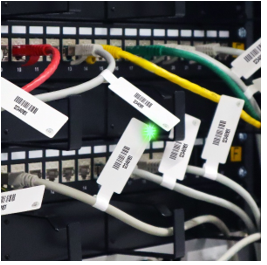
EN 17975 identifies 9 steps to carry out reinforced and standard isolations by Lockout/Tagout of energies and fluids. Steps involve separation of energies and fluids, isolation, lock out, tagout, identification, dispersion of energies, check, contain and inspect. “The ‘check’ step in EN17975 is already widely known in the industry as the ‘Tryout’ in Lockout/Tagout/Tryout or LoToTo. It is a vital step to help make sure that measures are implemented correctly and that they are still effective.”

“Brady safety engineers can help industries implement isolations by writing machine- and task specific lockout procedures. These can include all 9 steps from EN 17975, and they must be based on company task risk assessments. In addition, we can offer the right Lockout/Tagout tools for procedure compliance, set up a hands-on demo by locking out a specific machine, and provide training to relevant employees. Alternatively, a gap analysis can be made that identifies steps to be taken from the current state to arrive at compliant, best practice Lockout/Tagout.”

log_out.jpeg

Impact on existing safety programmes

EN 17975 is not a legal requirement. “The standard however considerably facilitates compliance with EU workplace safety legislation. It sets a clear expectation for any machine intervention: if no risk analysis for the task is available, a machine zero energy state is required.”

“Because many safety programmes already involve complete machine isolation from every energy source, for every task, it is likely that the new norm will impact existing Lockout/Tagout-programmes. Based on the risk analysis, machine zero energy states may not be needed for every type of intervention.”

“Adversely, some tasks that were considered ‘small and safe’ may unveil more risk after a thorough risk analysis. This means a single machine could have several Lockout/Tagout procedures. The right procedure can be included with, or communicated via a QR-code on a work permit for example.”

“Some forms of automated safety may not be sufficient for every task without an underlying risk analysis. Take a safety cage for example, equipped with sensors that deactivate moving machine parts the moment someone enters the cage. Do these nullify any residual energy that may pose a risk? Is gravitational, and other potential energy taken into account? The goal of EN 17975 is to prevent accidents, and to avoid a false sense of safety that does not provide any real protection.”

With the European Norm 17975, industries in Europe can now rely on a common standard for compliance with EU and national safety legislation that involve risk control processes of energies and fluids in maintenance activities. The norm is or will be implemented by the national standards organisations of Austria, Belgium, Bulgaria, Croatia, Cyprus, Czech Republic, Denmark, Estonia, Finland, France, Germany, Greece, Hungary, Iceland, Ireland, Italy, Latvia, Lithuania, Luxembourg, Malta, Netherlands, Norway, Poland, Portugal, Republic of North Macedonia, Romania, Serbia, Slovakia, Slovenia, Spain, Sweden, Switzerland, Türkiye and the United Kingdom.

Get the Brady EN 17975 Lockout/Tagout webinar recording

Go from zero machine energy to zero intervention risk with task based Lockout/Tagout, driven by the European Norm 17975. Get your copy of the EN 17975 webinar from an experienced, worldwide Lockout/Tagout solution provider.

Discover more about:

  • the unique European framework EN 17975 provides to achieve safety and efficiency
  • how EN 17975 focuses on task-based safety, rather than machine zero energy states
  • how EN 17975 can be used to address ‘Grey zone’ risks
  • 4 risk-based energy isolation levels presented by EN 17975
  • 6 steps to control risks
  • Lockout/Tagout procedure writing
  • Lockout/Tagout device and padlock types

Get the webinar recording now >

Draw inspiration from our free guidebook on how to best implement Lockout/Tagout. Download the free guide >

Mustafa Ekseri works as a Safety Engineer for Brady Europe, Middle East and Africa. He is involved in planning, writing procedures and rolling out Lockout/Tagout programmes at manufacturing and logistics workplaces throughout Europe. He is a Prevention Advisor Level 2, a Belgian legally regulated curriculum that equips professionals to handle safety and health risks in businesses.


IGS TubeTech introduces Rovex™ – the next evolution of its proven robotic fired heater cleaning technology

New platform builds on years of successful field deployment to deliver enhanced access, digital verification and improved fired heater performance

Integrated Global Services (IGS), a provider of asset integrity and energy efficiency solutions for the energy, power and heavy industry sectors, today introduced Rovex™, the latest evolution of its proven robotic cleaning technology for fired heater convection sections.

Building on the TubeTech robotic cleaning system, which has been successfully deployed across industrial facilities worldwide for many years, Rovex combines proven cleaning performance with advances in robotic mobility, access capability and digital performance verification. The introduction of Rovex brings together years of operational learning under a single technology platform, reflecting IGS' continued investment in robotics, digitalization and performance-driven maintenance solutions.

Designed to navigate complex tube geometries, the compact remotely operated vehicle (ROV) uses patented cleaning lance technology and integrated inspection capabilities to remove stubborn fouling while eliminating the need for confined-space entry.

Fired heater fouling remains one of the largest contributors to lost thermal efficiency across refining and petrochemical operations. Even a 1% loss in steam cracker efficiency can cost operators several million dollars annually, making effective convection section cleaning critical to plant performance.

Unlike conventional manual cleaning or water jetting, Rovex is designed to clean more than 90% of accessible tube surface area, helping operators recover efficiency while reducing the risk of damage associated with traditional methods.

Each deployment is supported by thermal performance analysis before and after cleaning, enabling IGS engineers to target fouled areas and verify operational improvements. Recent projects have demonstrated fuel efficiency improvements of up to 2.9%, stack temperature reductions of up to 60°C (108°F), annual CO₂ emissions reductions exceeding 1,600 tonnes, and payback periods of less than three months, depending on furnace design and operating conditions.

Recent field applications further demonstrate the platform's impact. At Oman Methanol Company, Rovex restored convection section performance, reducing stack temperature by 34°C (93.2°F) and improving fuel efficiency by 1.8%, enabling a return to full production capacity while lowering fuel consumption and associated emissions.

"Rovex represents the next stage in the evolution of our robotic cleaning technology," said Eric Duvekot, Vice President of Engineering at IGS. "We've built on years of successful field deployment with the TubeTech platform, incorporating customer

feedback and continued engineering development to create a more capable system. Rovex helps operators recover lost efficiency more safely, access more of the convection section, and verify performance improvements with greater confidence."

As industries seek safer, more efficient and lower-emission maintenance solutions, Rovex combines a proven operational track record with the latest advances in robotics and digital performance analysis to help operators improve energy efficiency, reduce emissions and make more informed maintenance decisions.

www.integratedglobal.com

This website is owned and operated by: MSL Media Limited

msl logo
www.mslmedialtd.com

Co. Number: 05359182

© 2005 MSL Media Ltd. All rights reserved. E&OE

ems logo mobile