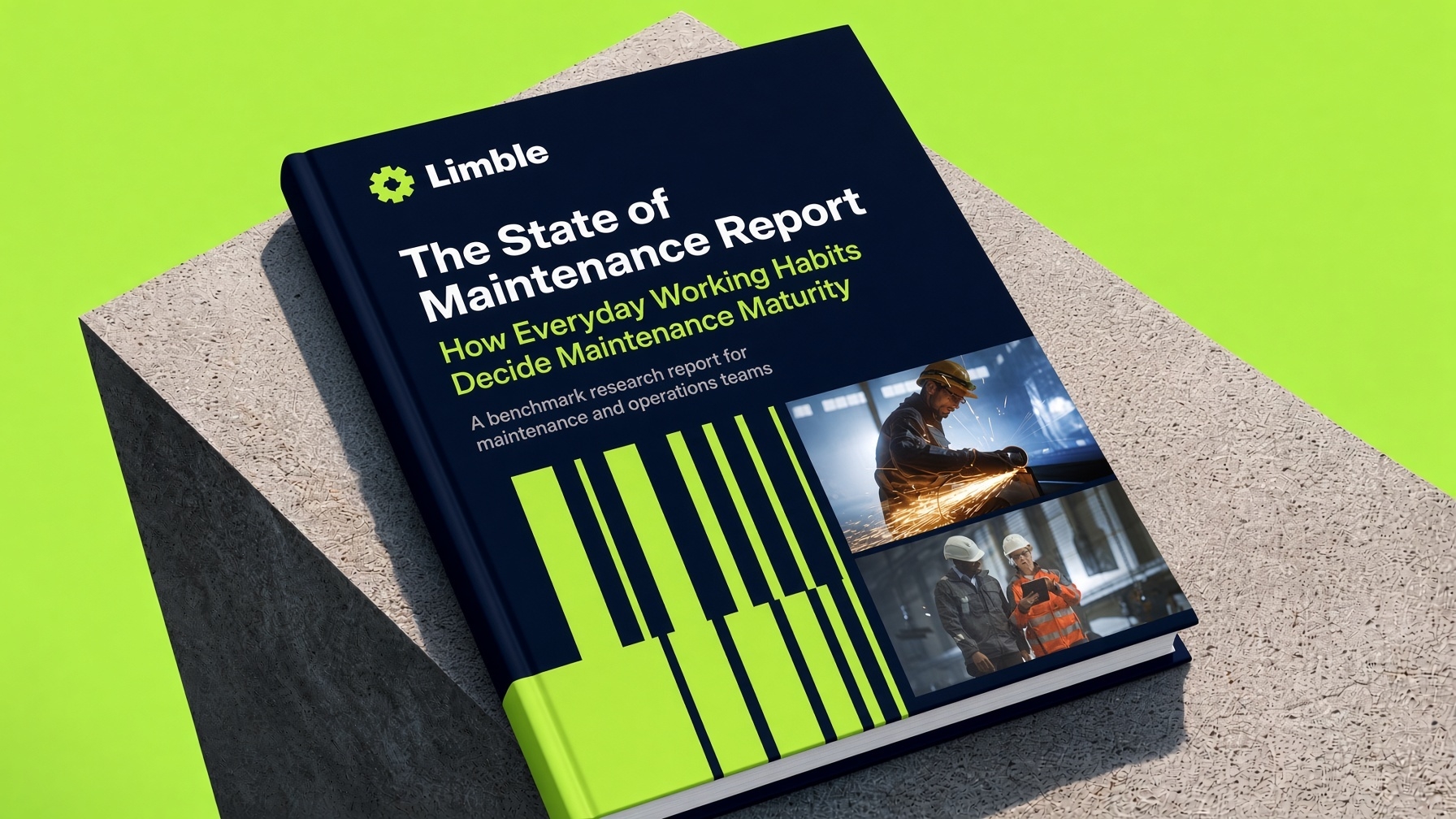
Limble, the modern maintenance and asset management platform, today unveiled its inaugural State of Maintenance Report, revealing the workforce, knowledge and data challenges standing in the way of deeper Maintenance Intelligence. Presented at Limble’s 2026 Maintenance Hero Summit, the survey of nearly 700 U.S. maintenance and operations professionals reveals a gap between the information maintenance teams need to make better decisions and what they can reliably capture and use. Closing that gap is central to Maintenance Intelligence: connecting the expertise of the people doing the work with trusted asset and maintenance data so teams can act earlier and operate more predictively.
“When costs are rising and resources are constrained, maintenance organizations can’t afford to treat reactive operations as simply the cost of doing business,” said Gary Specter, CEO of Limble. “The consequences show up in safety risks, lost technician time and critical knowledge. Building Maintenance Intelligence means connecting the expertise of the people doing the work with the systems in place so teams can act earlier, operate more predictively and create the trusted foundation AI needs to deliver real value.”
The Costs of Reactive Maintenance: Time, Money and Safety
The new research highlights the ongoing challenge of getting ahead of failures: leaders estimate their teams complete just 54% of scheduled preventive maintenance. Against that backdrop, nearly half (47%) of maintenance leaders report more than 10 hours of unplanned downtime in a typical month, including 24% who experience more than 20 hours — a pace that would amount to more than 10 full days of downtime over the course of a year if sustained.
The consequences extend beyond lost production: 40% of leaders estimate annual downtime costs of $100,000 or more, while 65% of respondents say reactive maintenance puts technicians in higher-risk situations at least monthly, including 12% who say it happens daily. Overall, 61% say their current maintenance approach creates moderate to very high risk related to unplanned downtime, cost and safety.
Teams further along the predictive-maintenance curve report better outcomes. Leaders on those teams were 46% more likely than average to keep monthly unplanned downtime below five hours.
The Workforce Shortage Is Also a Productivity and Knowledge Crisis
Those risks and costs are harder to absorb when skilled maintenance talent is already difficult to replace. Forty-six percent of leaders say open maintenance roles take three months or longer to fill. And when asked which improvements would have the biggest impact over the next three years, maintenance teams ranked hiring and retaining technicians first, ahead of AI and automation. Organizations also aren't getting enough time from the technicians they have. More than 60% of both leaders and technicians estimate that hands-on maintenance accounts for just three hours or less of a typical shift; 48% of technicians say they lose at least an hour waiting for approvals or site access.
Moving toward more predictive maintenance may help teams reclaim some of that valuable technician time: leaders on predictive teams were 25% more likely to report technicians spending three to five hours of a typical shift on hands-on maintenance.
Then there is the knowledge those workers carry. Previously released findings showed that 74% of maintenance organizations had at least one critical asset that exactly one person knew how to fix, while 47% said their organization had already lost knowledge it couldn't recover when someone left.
For organizations facing a limited talent pool, the challenge is therefore not simply hiring more people. It is making better use of the people they have, while also making what they know available to everyone else.
AI Won't Create Maintenance Intelligence Without Trusted Data
The technology to move toward predictive approaches and preserve valuable maintenance knowledge is already widespread. Eighty-two percent of respondents say their organization owns and operates a computerized maintenance management system (CMMS). And as AI adoption accelerates — 55% of maintenance teams are already using or piloting it — 92% agree AI needs good, complete maintenance data to work effectively.
But ownership isn't adoption. Just 39% report consistent CMMS use across their entire team, while 71% have asked a colleague for information their system already holds. Teams reporting consistent CMMS use were 53% more likely to have full real-time visibility across sites and 74% more likely to strongly agree they have a defined process for turning data into decisions.
“AI won't solve a maintenance organization's data and knowledge gaps simply by being added to the technology stack,” Specter said. “The foundation starts with systems people actually use. If technicians aren't capturing what they know and what happens to equipment, AI has less reliable information to work with. The opportunity isn't simply to add AI, but to give it the maintenance intelligence it needs to produce insights teams can trust and act on.”
Gen Z May Raise the Bar for Workplace Technology
The younger maintenance workers appear to have higher expectations for the technology they use. Forty-one percent of Gen Z respondents cite lack of confidence in AI output as a barrier to getting more value from the technology, compared with 29% of respondents ages 30 and older. Yet they're less likely to cite insufficient AI training as a problem: 25% versus 34%.
That scrutiny may extend beyond AI. Seventy-two percent of Gen Z respondents say their organization's current maintenance approach creates moderate to very high risk, compared with 59% of respondents ages 30 and older. Among maintenance leaders, just 29% of Gen Z respondents report full real-time visibility across the sites they oversee, compared with 45% of older leaders. And among frontline technicians, 50% of Gen Z respondents say incomplete or outdated equipment records interfere with maintenance work, compared with 40% of older technicians.
“The next generation of maintenance talent appears to be raising the bar for workplace technology,” Specter said. “Thirty-five percent of leaders say candidates increasingly expect workplace technology to be as easy to use as the apps they use every day. But our Gen Z findings suggest ease of use alone won't be enough: younger workers are also more likely to question AI outputs and perceive risk in their current maintenance approach. For employers, that means building a workplace where technology is intuitive, the information behind it is reliable, and technicians can trust the tools they're being asked to use.”
The findings suggest Gen Z may raise the bar for employers on another front as well: the careers they want to pursue. Among Gen Z frontline technicians, 81% say better pay would make the role easier or more attractive, compared with 60% of older technicians, underscoring compensation as an important consideration for employers looking to attract the next generation of maintenance talent.
Taken together, the findings suggest that moving beyond reactive maintenance isn't simply a matter of adding more technology. Organizations also need to make better use of the expertise and data they already have — capturing technician knowledge, improving adoption of maintenance systems and turning reliable information into decisions before equipment fails.
Methodology: Limble’s 2026 State of Maintenance Report is based on a survey conducted July 29–Aug. 6, 2026, among 686 full-time U.S. employees directly involved in maintenance or operations. Respondents included maintenance and operations leaders and frontline technicians across manufacturing, wholesale and distribution, facilities-intensive services, infrastructure and the public sector. The survey has a 95% confidence level and ±3.7% margin of error. Gen Z: Survey respondents ages 18–29 as of July 29–Aug. 6, 2026; comparisons are with respondents ages 30 and older.