 Setting the scene
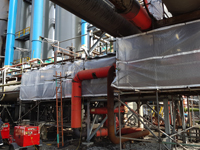
A misty summer sea breeze turns into stormy splashes in the later months, carrying salty vapours miles off the Welsh coast. As the years go by, the cycle continues, inadvertently creating a perfect recipe for corrosion at a nearby Steel Plant, where exposed pipework is located a few hundred feet off the coast.
Innocent looking solution of NaCL and H2O has thus become a significant complication for this plant, which has long outlasted its original lifespan.
Pipeline corrosionThe HP & LP COG main pipeline throughout the Coke Ovens Plant has been corroding for many years. As the metal was thinning, through-wall defects started to appear. These defects allowed H2S, CO2, CO and other poisonous gases exfoliated from the process of breaking down bitumen to escape. Wooden stake insertions and plates were temporarily used to seal the leaks.
These multiple small patches were never going to last, prompting a search for a more permanent solution. The conventional welding over pipework system could not be considered as the HP gas main could not be shutdown. Therefore, they turned to cold applied, coded and warranted repair systems.
Wrap systemThe contract was ultimately awarded to Belzona Technosol Limited to apply Belzona SuperWrap II, a wrap system which can be designed and installed in accordance with ISO 24817 and ASME PCC-2 Article 4.1 standards.
Application commenced in September, estimated to last two weeks. The surface was manually prepared to SSPC-SP11 using grinders, avoiding grit blasting as a potential ignition source. It was no surprise that the surface preparation opened additional weeping leaks in this severely thinned pipeline. A fast curing surface-tolerant epoxy composite, Belzona 1212, with a bypass plate was used to patch the leaks. The wrap application could then commence shortly.
The remaining wall thickness in this 1.2m diameter pipe was 2mm in some areas (20% of its original thickness). A wrap was designed and applied in two critical sections in compliance with ISO 24817. In sections with greater remaining wall thickness (no potential of defects going through-wall) Belzona 5831 (Super UW-Metal) was applied to isolate the metal from the external corrosive environment.
The end resultThe application was completed on time and similar work is expected at the plant shortly utilizing manual surface preparation and cold applied pipe wrap systems.
In the current climate, plants and their assets operate well beyond their design life and traditional repair options are frowned upon by the HSE. Cold-applied polymer systems, in turn, play an increasingly major role – extending asset lifetime without breaking the bank.

 A nationwide project to upgrade Pizza Hut’s kitchen ventilation systems to a higher performing, energy efficient solution is underway. Project manager Marcus Sawkins of GFMS Services Limited has already upgraded several of the restaurants’ systems with the Elta Fans QUBE Centrifugal Box Fan which is reducing energy usage. The most recent installation was at Royale Leisure Park in London where the new Elta Fans QUBE solution has reduced energy costs by up to 10%+ and breakdowns occurring on a regular basis, to zero.
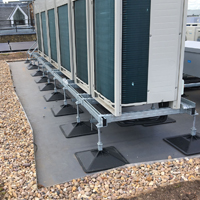 Big Foot Supplies Custom Support for Acoustic Screening
 Stackable 3D printers may hold the key to a faster yet more cost-effective design and manufacturing process. But what is stackable 3D printing? And how does it work to benefit businesses and meet their printing needs? To answer these questions, CEL has released a new white paper, ‘
 If an open, unchecked water pipe was being used to cool a machining process, the excessive volume of liquid being used would be obvious to see as it pooled on the floor. It would be clear that you would want to test lower flow rates that would conserve water and save money yet still effectively cool the part.
 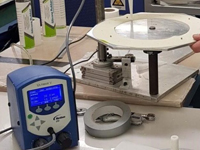 In this case study Techsil provided Speed Plastics with a flexible silicone adhesive and a fast, reliable, consistent dispensing solution in the manufacture of a Smoke Hood.
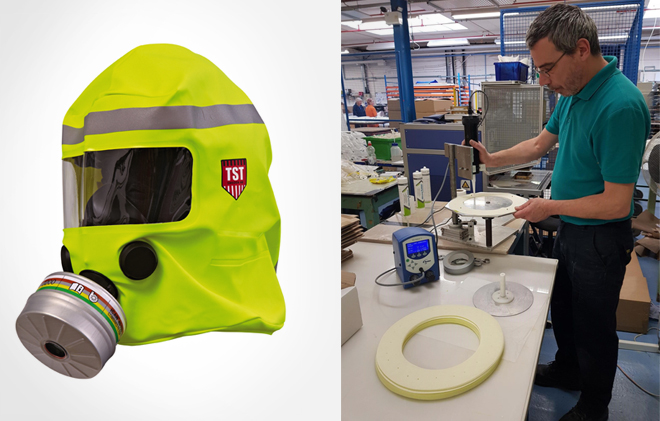 Conclusion - This project has increased the speed of the manufacturing process. The Momentive IS5628E adhesive, produces a sound bond which is uniform and repeatable due to the automated dispensing. In addition adhesive wastage has been eliminated, which was an inevitability of hand application.
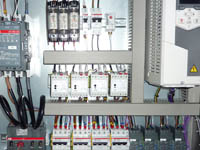 A control package, built around an ABB variable speed drive, eliminates ma-chine stoppages, improves safety and cuts maintenance costs for malt producer.
 How would you feel if at a routine health check your doctor informed you that it was time to have your hip replaced - even though you weren't displaying any symptoms!
  By John Saysell, Training and Skills Director, MCP
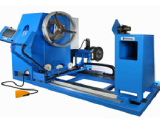 Whitelegg Machines has just shipped a machine that will be used to wind body scanner coils for a Korean multinational company. This is the first machine of its type on which Whitelegg has installed state-of-the-art servo-controlled axes and a touchscreen HMI.