Extend Lifespan of Wind Turbine Blades with New Leading Edge Repair and Protection Solution

In response to growing market demand, polymeric technology company, Belzona, now offers a complete leading edge repair and protection solution. Optimised to be easy-to-apply, fast-curing and hard-wearing, the combination of Belzona 5711 and Belzona 5721 is specially designed to fortify wind turbine blades with outstanding protection against leading edge erosion for the long term.


Picture1.png
Fast, in-situ application of leading edge repair and protection solution, Belzona 5711


New Thixotropic Paste Repair System Builds on Success of Leading Edge Protection (LEP) Coating

From Norway to North Dakota, since its launch in October 2019, Belzona’s leading edge protection coating, Belzona 5721, has already been deployed at numerous wind farms worldwide to great success. Lauded as an “extremely fast and cost-effective solution for protecting leading edges” by Jæren Vind Energi AS in Norway, the turbine blade coating provides a quick and straightforward means of protecting leading edges in situ.
Picture2.jpg
2-part leading edge protection coating, Belzona 5721, being applied in situ at a wind farm

Now, building on this knowledge and experience in the field, the Company has developed Belzona 5711 – a thixotropic paste specially designed to be applied in conjunction with the Belzona 5721 protective coating (amongst other product options). This solvent-free, 2-part repair paste is specially formulated for the in-situ repair and rebuilding of leading edge erosion and impact damage on wind turbine blades.

New Leading Edge Repair Paste Facilitates Fast Turnaround Time

Commenting on Belzona’s new polymeric solution for the wind industry, Jason Horn, Research and Development Manager, said: “Whilst offering rapid cure, Belzona 5711 also has a good working life which allows for the material to be perfectly contoured/formed to the leading edge of the blade. This removes the need for sanding, therefore, eliminating a step in the repair process and simplifying the application.”

He continued: “Belzona 5711 cures quickly and can be directly overcoated with Belzona 5721 in as little as 30 minutes at 20°C/68°F - without the need for any additional preparation. At the same temperature, Belzona 5721 will be fully cured within five hours, allowing the turbine to be returned to service in the same day.”


He concluded: “With the combination of Belzona 5711 and Belzona 5721, the balance between usability and rapid return-to-service makes the products ideal for in-situ repair across a broad application temperature range. The long shelf-life also makes Belzona an ideal stocking material for wind turbine maintenance.”

Key Benefits of New Belzona Leading Edge Repair Product VS. Leading Competitive Products

• 60-minute cure time in ambient temperatures ensures rapid return-to-service
• Product is suitable for all climates (5-40°C / 41-104°F) with a maximum overcoat window of 24 hours
• Cartridge packaging ensures good mixing quality and ease of use
• Easy to contour and long working-life ensures a smooth finish
• Reduced health and safety risks (CMR free labelling in EU)
• Durable technology provides a long-lasting repair
• Sanding is not required prior to overcoating with Belzona 5721, thus speeding up the application process
• Single component rather than two grades for all climates
• Three-year shelf life allows for flexibility in application planning 
• Higher volume per cartridge ensures reduced packaging waste
• Can be applied either at offshore or onshore wind farms
• Can be used to repair manufacturing defects
Picture3.jpg
Belzona 5711 cartridge packaging facilitates a fast and simple application procedure

In addition, Belzona 5711 is available worldwide through the network of Belzona international Distributors. In order to ensure that the product is applied correctly, Contractors can be trained in the application of Belzona 5711 locally on site by one of the local Distributors.

Repair not Replace: Leading Edge Repair and Protection System Supports a Circular Economy

According to the European Wind Energy Association, the estimated lifespan of a wind turbine is typically 20-25 years. Environmental factors, such as weathering, lightning, icing, birds and insect collisions, can seriously limit this lifespan. In addition, there is evidence that damage to the leading edges of a turbine blade can lower the annual energy production, with energy losses that range between 4 to 20% when the damage is severe. 

By investing in a high-performance leading edge repair and protection system, asset-owners can protect wind turbine blades against the environmental damage outlined above. In doing so, polymeric systems support a circular economic strategy as this technology helps to extend the lifespan of wind turbine blades. In turn, this reduces the demand for blades to be manufactured and, eventually, disposed of. Therefore, by giving the blades a new lease of life in this way, the combination of Belzona 5711 and Belzona 5721 will help towards mitigating the carbon footprint of the wind power industry.

In addition, by bypassing the expensive process of both replacing and disposing of damaged blades, asset owners will be able to make significant financial savings as well.

Safeguarding Wind Turbine Blades with Polymeric Technology Supports a Net-Zero Future


According to the 2021 State of Climate Action Report, authored by the world’s top climate analysis coalition, Climate Action Tracker (CAT), in order to meet the Paris Agreement’s net-zero by 2050 target, the share of wind and solar energy in electricity generation needs to increase from 7.03% (based on 2018 figures) to 37 - 72% by 2030. By 2050, the share needs to rise further to 80 - 82%. 

This means that by 2050, wind and solar electricity generation needs to increase by between 72.97 – 74.7%. In order to support this seismic growth, leading edge repair and protection systems, such as Belzona 5711 and Belzona 5721, play a critical role in extending the lifespan of wind turbine blades and, therefore, supporting a net-zero future for the planet.

Picture4.jpg
Polymeric repair and protection systems support a net-zero future for the planet

More information on Belzona’s leading edge repair and protection solution can be found here.

Fluke develops new European HQ in Eindhoven with customer experience at its heart

The new European Headquarters in Eindhoven, Netherlands is home to a 400sqm customer experience centre designed to showcase Fluke’s world-class tools and allow customers to experience using them in realistic environments.


Eindhoven, Netherlands. 9 May 2022: Fluke, the global technology leader in the manufacture of compact, professional electronic test and measurement tools and software, has today announced the launch of its new European Headquarters in Eindhoven, Netherlands, which includes a 400sqm customer experience centre. For the first time, customers will not only be able to see Fluke’s range of world-class tools, but experience using them in a variety of real-world applications.   

It has been described by Fluke Strategic support and training manager, Eric van Riet, as a dream come true. “What we wanted was for customers to experience our tools in an environment as close to reality as possible to show where and how our products are used, and provide the opportunity to deliver training,” he said.  

Give every asset a unique digital identity

With Brady Corporation's complete RFID solution, assets in any industrial environment can be given unique digital identities just by applying a label. Users will be able to identify and locate labelled assets all at once, from a distance, in real time, without needing line of sight.

Your needs. Your solution.

To make RFID driven efficiency possible in any unique workplace, Brady leverages its global manufacturing capabilities and services to customise each of the components in its complete RFID solution. Label read range can be adapted, as well as all other label properties that enable labels to stay attached to any user's asset selection in a wide range of industrial environments. Sensors can be embedded to capture environmental data including temperature or moisture levels. Scanners can be equipped with custom programmed apps that processes data to unlock the benefits a specific business needs, and Brady can integrate the entire solution with existing ICT infrastructure.

Discover Brady’s RFID complete solution >>

A major leap in workplace efficiency

Well implemented, quality RFID solutions enable a major leap in operational efficiency for many industries. With a handheld RFID scanner, multiple assets can be located, identified, tracked and traced from a 15m distance without needing line of sight. Fixed RFID scanners can even cover the entire workplace to considerably accelarate asset tracking. As a result, employees can quickly find any labelled asset they need, inventories can be automated, and outgoing cargo can be checked for completeness in seconds.

Business at your fingertips

Automatically collected data on all labelled assets can help inform strategic decision making on capital asset numbers, their locations, preventive maintenance and environmental elements. Decisions on stock levels can be supported by the latest data, all generated and collected automatically, to further drive business efficiency and profitability, all by giving assets a unique digital identity.

Download the free RFID Guide >>

Brady Corporation

www.brady.co.uk

Dollinger series GP-146 filters from Celeros Flow Technology offer highly efficient removal of trace contaminants from process gas

 Dollinger series GP-146 high efficiency filters from Celeros Flow Technology are designed to remove dirt, pipe scale and other contaminants from process air and other gases.

Acting as the last line of defence against particulates that could contaminate the end product or damage expensive equipment, the Dollinger GP-146 is equipped to deliver reliable filtration over extended periods while lowering total cost of ownership.

At the heart of the GP-146 unit is an efficient radial fin filter element that provides the largest filtration area for a given element size. It offers operational integrity up to a differential pressure of 50 psid as standard, with special designs available for applications which demand higher differential capabilities.

Dollinger GP-146 filters come in an extensive range of synthetic and natural fiber filter media suitable for use with most process fluids. Interchangeability of the filter elements makes it simple to vary the degree of filtration within the unit. The filter elements can be cleaned and re-used many times with no loss of performance, which makes the Dollinger GP-146 an excellent choice in applications with high levels of contamination. It also reduces operating costs compared to purchase and replacement of entire filter units.

The filter housing is generally constructed of carbon steel or stainless steel. Special housings to accommodate low temperature applications can also be accommodated.

Dollinger GP-146 high efficiency particulate filters are designed and constructed in accordance with the ASME VIII, Division I Pressure Vessel construction code. Compliance with other international codes - including Korean, SELO, PED, TV, and GOST – is available on request.

To learn more about Dollinger GP-146 particulate filters, visit: https://www.celerosft.com/en-us/brands/dollinger/products/gp-146-particulate-filters

Altus Supports Heller Industries with the Introduction Of a New Vacuum Reflow Oven

Altus, a leading supplier of capital equipment in the UK and Ireland, will be supporting their supplier, Heller Industries, the market leader in reflow oven technology as they introduce an innovative new Vacuum Reflow Oven at SMTconnect, Nuremberg from 10-12 May 2022.

As electronic products continue to become smaller, more advanced and complex in construction, it is important to have soldering processes which can be adapted to achieve solder joints with fewer voids to increase reliability. Heller Industries’ new Nitrogen Vacuum Reflow Oven 1911MK5-VR is helping manufacturers to achieve the best results thanks to its ground-breaking design.

With 11 zones, a vacuum chamber, closed loop nitrogen atmosphere control and the company’s award winning COOL-PIPE flux management system, which traps the flux so it can be easily removed and replaced while the oven is running, it has all the elements to ensure fast throughput and process flexibility.

Mike Todd, Operations Manager Assembly, Soldering & Cleaning Products said: “Heller Industries will be introducing visitors at SMTconnect to their newest reflow oven, which is a real game-changer. Heller vacuum reflow ovens provide best-in-class performance for removing voids in solder joints and interfaces. The 1911MK5-VR not only achieves ambitious performance metrics to assist manufacturers in streamlining SMT assembly, but it targets voiding ratios of less than 2% and cycle times of 40 seconds for single lane implementation and 20 seconds for dual-lane systems, impressive figures that will positively impact those that use it.

Fresh identity for Hart

Hart Door Systems has redesigned its logo and launched a refreshed website to improve the visibility of the company online.

“Both the identity and the website are important elements of the company’s marketing mix and refreshing the website and the overall identity go hand in hand. This is the first major overhaul of these elements for over seven years,” says Nick Hart, Hart’s managing director

“Within the web we have focused on four core sections – high speed doors, fire and security shutters as well as general industrial products, underlining our engineered for endurance mantra as well as emphasizing our World class technology and global delivery.

“Further the website is very visitor friendly with access to datasheets and other downloads so that we engage with our customers and potential customers.”

Hart has also taken the opportunity to modernize its logo as part of the process.  “It is clean and says everything about us – we are Hart after all and our business is designing and manufacturing door systems,” adds Mr Hart.

www.hartdoors.com    t: 0191 214 0404

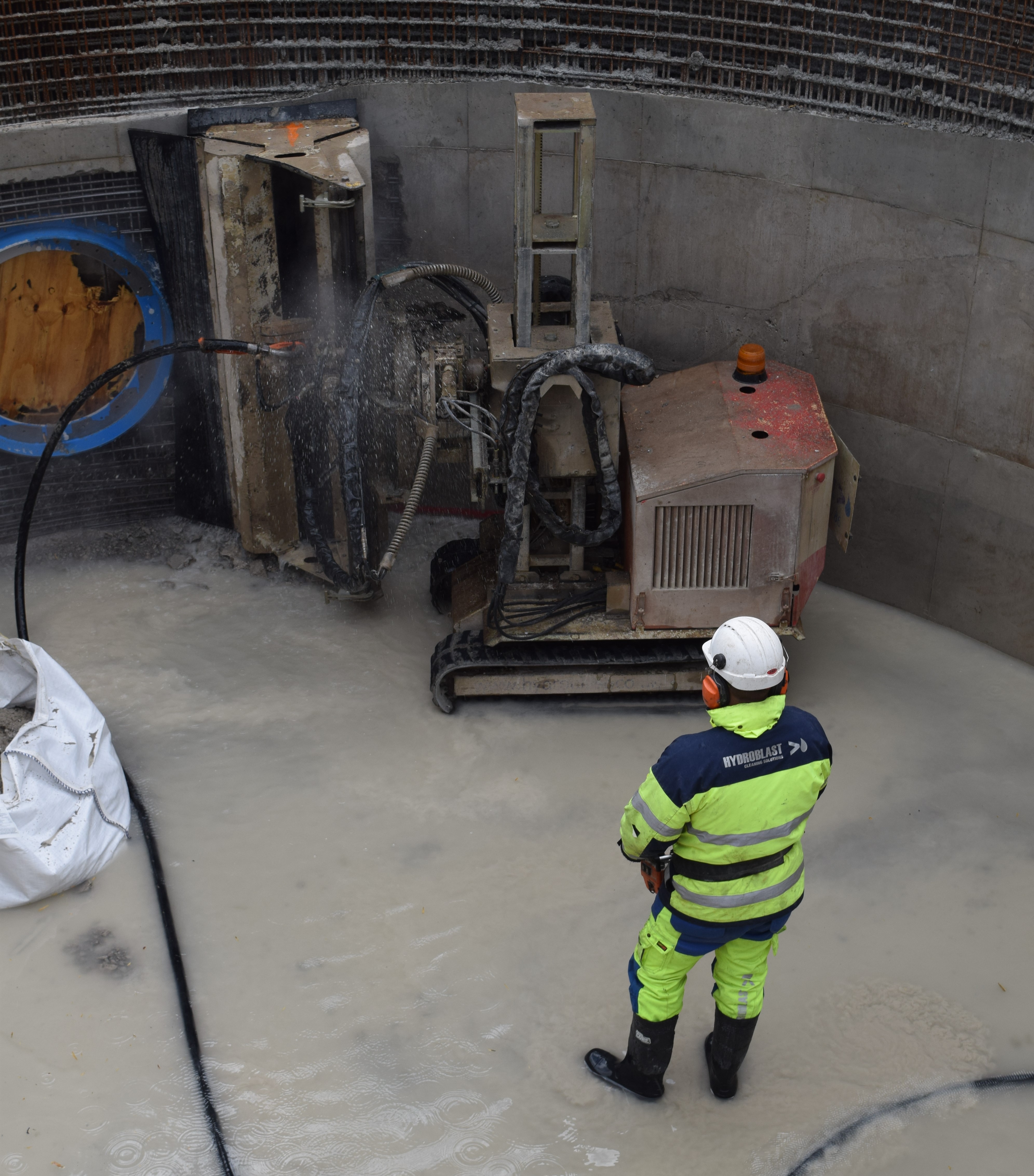
WJA gives water jetting standards an annual audit boost

The Water Jetting Association, the UK member organisation for water jetting, has introduced an annual audit system to help set uniformly high standards across the industry.

The measure is designed to ensure all members fully understand and meet the criteria for joining the WJA and continue to meet those standards as their membership is renewed each year.

It also promises to give members a commercial edge as they will be able to promote their audited status with a special WJA logo.

Jeff Haigh, a member of the WJA Ruling Council, is leading the audit initiative. He said: “Members have responded very positively to our new audit system.

“It is allowing us to be more certain that organisations seeking to join the WJA meet our criteria and that members continue to meet these standards as their activities develop.

“We’re also able to give companies who want to join the WJA better support and advice, as well as identifying where we can improve ongoing advice for members and raise standards still further.

Major energy supplier revolutionises electrical maintenance inspections with partial discharge detection

Kenter, a Dutch energy metering and management company, detects partial discharge using Fluke’s ii910 Precision Acoustic Imager to prevent the degradation of medium voltage applications which can impact SMEs and large multinational organisations

 Kenter, a leading Dutch energy metering and management company with more than 30,000 customers, has transformed maintenance inspections through the fast and safe detection of partial discharge. Left undetected partial discharge can cause degradation of medium voltage installations which pose significant safety, efficiency and financial risks that are critical considerations in maintenance inspections.

Kenter is part of Alliander, the largest energy network operator in the Netherlands, and works to install, rent and maintain safe and reliable energy supplies to a wide range of businesses from small family-run bakeries through to electric vehicle manufacturers and large multinational chemical companies. Kenter offers innovative energy supply and measurement solutions to aid companies wanting to optimise their energy consumption. The company’s team of 300 maintenance specialists have greatly improved the speed and accuracy of scheduled maintenance inspections using an innovative handheld tool, the ii910 Precision Acoustic Imager from Fluke.

Managing maintenance schedules

Kenter provides 24/7 maintenance on the equipment required to deliver a safe and reliable power supply to customers nationwide. This service includes scheduled maintenance cycles which typically occur every three, five, six or 10 years. During scheduled maintenance, Kenter looks to coordinate a series of works to minimise disruptions to operations, including checking for partial discharge.

Partial discharge is typically caused by a minor defect which can result in thousands of smaller repetitive electrical discharges. The phenomenon often occurs around insulation on pieces of equipment, such as high-voltage lines, transformers, turbines, busbars and the inside of cabinets, and can impact energy supply due to mechanical, heat, and chemical damage to insulators and conductors.

Trelleborg Accelerates Product Development and Small Batch Production of LSR Parts

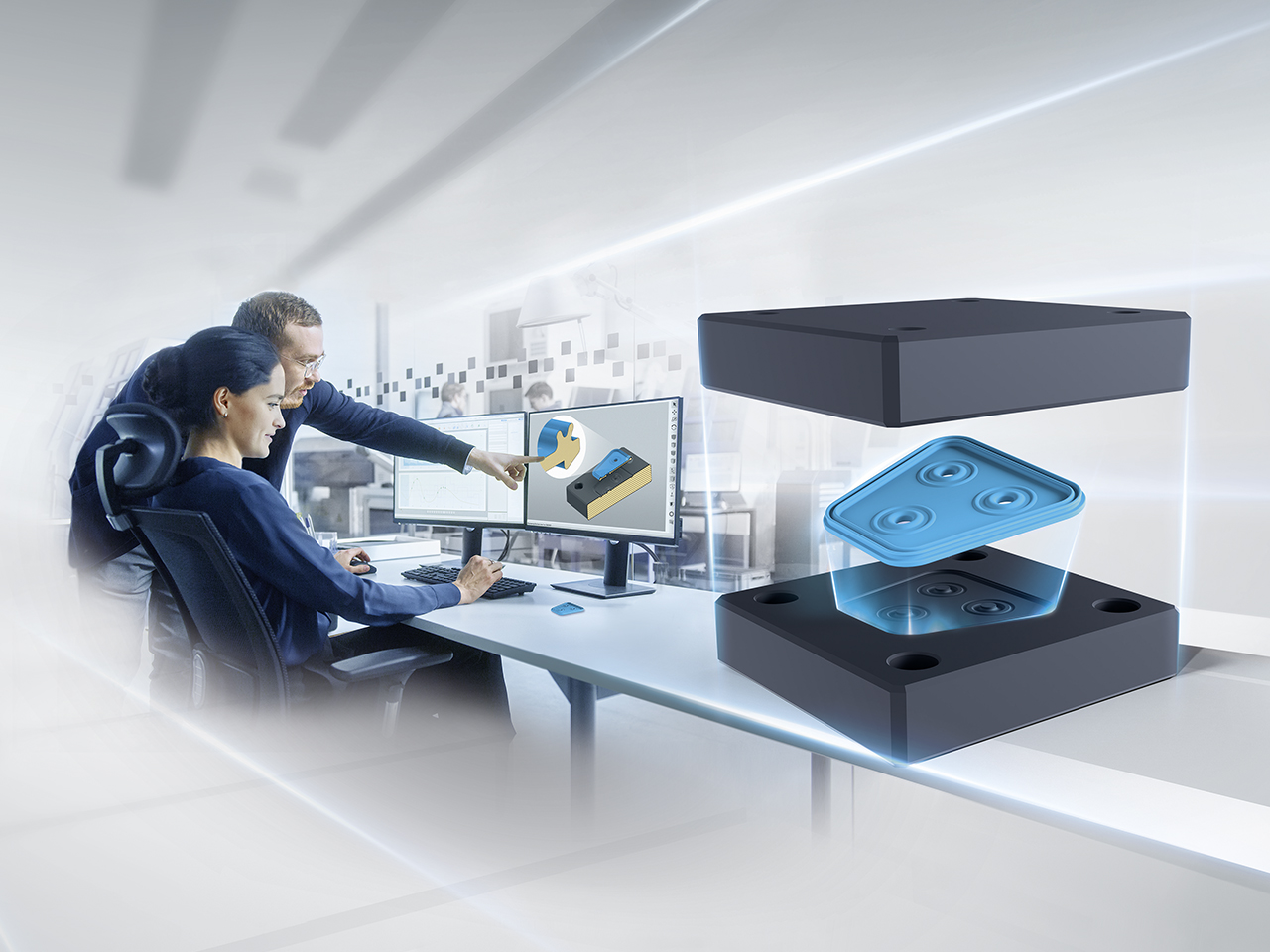
Trelleborg Sealing Solutions is supporting manufacturers with iCast™ LSR, a new fast and flexible digital manufacturing process for product development and small batch production of Liquid Silicone Rubber (LSR) parts.

Trelleborg’s unique iCastTM LSR process offers a cost-effective way for manufacturers to develop product variations or try out different design concepts before investing in serial production tools. In addition, the process enables the start of pre-series and series production with small batches, to close the gap between low and high-volume production.

Felix Schädler, Project Manager Innovation & Technology at Trelleborg Sealing Solutions, says: “iCast™ LSR is an adaptable five-step modular process that utilizes digitization and new manufacturing techniques. It can dramatically cut concept to production time for prototypes from several weeks to a few days for the average part. This helps manufacturers meet the pressures of rapidly moving markets that are demanding faster new product introductions, improvements, and advancements.”

The Trelleborg iCastTM LSR process starts with the submission of 3D part data and order details. A feasibility study based on artificial intelligence (AI) is triggered to confirm if the iCastTM LSR process is suitable for production of the part. Upon completion of the feasibility study, the part design is analyzed, and the individual digital mold layout is created based on 3D data. If necessary, this undergoes mold flow simulation. In a virtual environment, this process identifies the optimum production process for the use of additive manufacturing (AM) technologies in order to achieve the best possible quality.

With iCastTM LSR technology, quick and multiple design iterations of components in standard industrial grade two-component platinum-cured LSR can be made. These demonstrate the properties and quality levels of high-volume injection molded parts. Currently suitable for production of one to 2,500 parts, Trelleborg’s iCast™ manufacturing process can be utilized to produce a wide range of 2-D and 3-D LSR components including O-Rings, profile seals, diaphragms and custom-molded parts.

To view a technical webinar on iCast™ LSR digital manufacturing, go to: https://www.trelleborg.com/en/seals/resources/technical-library/webinars/webinar-icast

To find out more on iCast™ LSR digital manufacturing, go to: https://www.trelleborg.com/en/seals/products-and-solutions/latest-innovations/icast-lsr

The third generation of Vibration Monitoring: MBVI (Model-Based Voltage and Current Analysis)

How a new generation of condition monitoring technology is bringing new insights into machine behaviour

Condition Monitoring has long been understood to bring large benefits to plant operations, reliability and maintenance, and the most commonly used technique is Vibration Monitoring.  We can think about vibration monitoring as having developed in three separate phases – each one of which has led to new insights and understanding of machine behaviour.

The first generation – proximity probes for use in journal bearings prompted understanding of shaft bending resonant responses (eg 1x shaft speed)

Proximity probes such as those developed by Bently Nevada  in the 1960s measure the radial movement of the shaft relative to the machine casing and bearing journals.  These systems were mainly used to identify problems with large, supercritical machines like steam turbines and generators, where deflections of the entire shaft can be significant – effectively the shaft can be regarded as flexible.  Observations of the movement of the shaft position relative to the machine bearing housings led to the development of Rotor Dynamics as a separately identifiable mathematical discipline.  A key area of this work focussed on the different lateral bending modes of shafts, each with their own distinct resonant frequency.  This also led to new insights into understanding of elastohydrodynamic lubrication.

The second generation – seismic sensors prompt deeper understanding of rolling element bearing failures (eg n x shaft speed)

Whereas proximity probes measure relative movement between different parts of the machine, seismic sensors (most frequently piezo-accelerometers) detect movement of the entire machine in space.  These proved to be much more useful for monitoring progressive deterioration of Rolling Element bearings.  It was discovered that sensors with a high natural resonant frequency (around 20kHz+) were able to detect signals associated with the very early stages of deterioration in rolling element bearings.  This led to a deeper understanding of the deterioration process, which became classified into four distinct phases, as shown in figure 1 below. 

bearing_deterioration.png

Figure 1- categorisation of rolling element bearing stages of deterioration.

The third generation – MBVI systems, sensing changes in torsional behaviour using the electric drive motor as a sensor, lead to new understanding of sub-harmonic behaviour (eg 1/n x shaft speed)

Model-Based Voltage and Current (MBVI) systems effectively use the motor as a sensor.  Whereas proximity probes and accelerometers detect signals in a radial or axial direction, the variation in motor current associated with variations in load create a signal related to torsional vibration.  The same phenomena that are detected by conventional Vibration Analysis systems are also detected by MBVI systems, but with different sensitivities.  Certain phenomena such as rubbing friction, flow turbulence and belt drive behaviour, show up much more clearly in the torsional domain, which results in new insights into machine behaviour.

comparison_VA_vs_MBVI.png

Figure 2 - Comparison between the signals created in radial vs torsional directions for various commonly occurring machine phenomena

Advantages of MBVI systems include the ability to monitor inaccessible assets – because sensing is done in the switchgear (see figure 3) which is always accessible even when the machine itself isn’t; sensitivity to things conventional VA doesn’t see so clearly (torsional signals – including corrosion, belt drives, and rubbing); plus of course seeing electrical phenomena and energy consumption not visible to conventional Vibration Monitoring.

S200_in_cabinet.png

Figure 3 - Faraday Predictive S200 MBVI unit mounted inside motor starter cabinet

So What?

While there is no one Condition Monitoring technology that is perfect for every situation, MBVI systems offer a very wide range of coverage (Mechanical and Electrical and operational) across the entire machine (motor + transmission + driven equipment) all from one device, and have advantages when trying to monitor inaccessible machines. They also have advantages when monitoring Inverter driven machines.

For more information, contact Geoff Walker at Faraday Predictive – This email address is being protected from spambots. You need JavaScript enabled to view it., or 0333 772 0748.

Earth Day 2022

Five easy tips to help your business go greener

April 2022:  Earth Day commences on the 22nd of April. Earth Day marks the anniversary of the birth of the modern environmental movement in 1970. It celebrates the importance of recycling in preserving our natural resources and securing the future of our planet.

Commercial waste from businesses has been a withstanding issue, with GOV statistics estimating that the UK generated 43.9 million tonnes of commercial and industrial (C&I) waste in 2018, of which 37.2 million tonnes (85%) were developed in England.

However, many businesses do want to go greener. A recent report found that over 60% of UK business owners would cut ties with suppliers that broke their environmental commitments. In addition, SME owners across the country are calling for more government funding to help businesses go green this year (87 percent), as over a third state their customers care about that their business is doing for the environment along with their own employees (24 percent).

In light of Earth Day, card payment specialists takepayments Limited have compiled a list of practical but straightforward tips to help businesses and SMEs go greener effectively. 

Five eco tips for businesses this Earth Day

1. Invest in recycled paper.

It's all well and good to recycle your office paper and have separate waste bins for recyclable and non-recyclable stuff, but if. Still, if you opt to buy non-recycled paper, it's counterproductive. Paper production necessitates an enormous quantity of energy. 

Use recycled paper for offices to guarantee your company is environmentally conscious. Recycled paper uses 28 percent less energy, and you'll be helping the UK economy as well (as the recycled paper is often made in the UK).

2. Shut down tech properly overnight.

Monitors and lights are easy things left on after everyone has clocked out. Making your employees shut off laptops and other equipment at the end of the day is a good way of lowering your carbon footprint. Although this may not significantly lower energy use, it will if you have a bigger office space.

3. Select green suppliers

Using a green energy supplier is a reasonably simple and environmentally friendly move your company can make. Many energy providers generate electricity from sustainable, renewable sources like solar, wind, and hydro. Some offer a combination of energy sources, while others guarantee 100% renewable energy.

4. Collaborate with other eco-conscious businesses

Do your research and, if possible, collaborate with other like-minded, environmentally concerned businesses. Numerous green partners range from sustainable raw materials suppliers to carbon-balanced office printers and even eco-friendly web hosting.

For smaller businesses, collaborating with other local eco-businesses in things such as giveaways on social media or using their services is a great way to communicate your efforts with your customers and help boost the local economy.

5. Invest in sustainable packaging

Encouraging recycling and reusing is critical in any industry. You could sell branded reusable items like shopping bags and coffee mugs in retail. If you own an office, make sure you have the appropriate recycling bins and encourage your employees to use the best green practices, as we do at Solve.

Even the most minor things don’t cost anything, like encouraging staff to bring their lunches in reusable containers. You could even give them branded eco lunch boxes –good marketing for your company and the environment!

Sandra Rowley at Takepayments Limited , said,    

“Days like Earth Day are a reminder for all of us to keep incorporating minor changes in our business practices. People more than ever are looking to buy from businesses that incorporate the most ethical and eco-friendly friendly practices. Consumers are becoming more environmentally conscious every year, and companies need to adapt to that demand if they want to thrive long term.

Whether your organisation has the budget to invest in more long-term strategies or whether you’re an SME who wants to make small changes while getting the business off the ground, making a conscious yet committed effort towards sustainability will be rewarding not only for your business but also yourself.”

This website is owned and operated by: MSL Media Limited

msl logo
www.mslmedialtd.com

Co. Number: 05359182

© 2005 MSL Media Ltd. All rights reserved. E&OE

ems logo mobile