|
Brammer Buck & Hickman, the UK’s leading supplier of industrial maintenance, repair and overhaul (MRO) products and services, has released two new brochures, produced with bearing manufacturer SKF, aimed at the construction and aggregates industries. The new brochures address the specific challenges faced in these demanding sectors, along with SKF product solutions and advice on bearings best practice. Across all industries, bearings are one of the most often replaced components, but in construction and aggregates all the more so due to the exceptionally harsh operating conditions. Here, bearings face multiple challenges, from ingress of dirt and dust, through to very heavy loads and frequently working in extreme temperatures. Selecting the correct bearing is therefore essential to ensure reliable, long life. ‘SKF Bearing Solutions for Construction & Aggregates’ is a 12 page brochure highlighting SKF products that have been designed to operate in construction and aggregates sites. These include SKF Explorer Spherical Roller Bearings, SKF Explorer Cylindrical and CARB Toroidal Roller Bearings and the SKF Three-Barrier Solution which protects the bearing from contaminants, leading to extended bearing service life on average three times longer than standard open bearings. The brochure looks at the key attributes of these – and many more - bearing units and how they could benefit customers’ processes. 
The use of HVO fuel offers 90% reduction in greenhouse gas emissions and particulate matter pollution, with no loss in engine performance in comparison to fossil fuels
ICS Cool Energy, an international market leader specialising in complete temperature control solutions for manufacturing process and facilities applications, announced that from April 1st, 2022, it will introduce the Hydrotreated Vegetable Oil (HVO) fossil-free, diesel fuel as an option for its generator, boiler and heater hire product portfolio. The biodegradable HVO is a more sustainable fuel alternative to traditional diesel and leads to even 90% reduction in greenhouse gas emissions as well as Nitrogen Oxide (NOx) and particulate matter pollution (PM) from the burner or engine, with unchanged performance. The HVO biodiesel can be used as a drop-in replacement or mixed with regular diesel, with no requirements for engine or burner modifications or more frequent maintenance intervals. “Sustainability is at the core of ICS Cool Energy’s business. With our eMission Critical initiative, we have set ambitious plans to reduce carbon emissions from our products and thus help our customers to reduce impact upon the environment and achieve their sustainability targets,” said Dave Palmer, general manager for UK and Ireland at ICS Cool Energy. “By approving and validating the use of HVO in our heating hire solutions we give our customers another option to increase the sustainability of their operations.” 
Hiab, part of Cargotec, has received a record order for electric MOFFETTs in Germany. The Behrens Gruppe, a dealer and logistics company for wood and building materials, has ordered all-electric MOFFETT E4 truck mounted forklifts together with ProCare service contracts for five years for a value of EUR 4.5 million. In addition, Knettenbrech & Gurdulic, one of Germany’s fastest growing waste and recycling companies, has ordered MULTILIFT demountables with installation for EUR 1.7 million. The equipment orders were booked in Cargotec’s Q1 2022 order intake and will be delivered during 2022 and 2023. “The Behrens Gruppe is electrifying their whole truck mounted forklift fleet to operate more sustainably. Hiab’s MOFFETT E4 truck mounted forklift provides emission free performance without compromising on productivity. They are also much more comfortable and safer for the operator as it is virtually silent with less vibrations than a diesel-powered truck,” says Cord Schipfmann, Team Leader MOFFETT, Hiab Germany. The Behrens Gruppe order includes both MOFFETT E4 25.3 NX and E4 25.4 NX models with a lifting capacity of 2,500 kilos. Launched in 2020, the E4 was the world's first 3-wheel drive electric truck mounted forklift that is now also available in a 4-wheel drive version. In 2021, the E4 won an IFOY AWARD, also known as the “Oscars of intralogistics”, in the category Special Vehicle. Electric MOFFETTs are engineered with fewer moving parts than the diesel equivalents, which reduces service time and spare parts costs. The uptime is further increased with Hiab’s ProCare Total Repair & Maintenance contract. For a fixed monthly fee, Hiab will look after scheduled maintenance and emergency repairs to secure the equipment uptime, and original spare parts are included in the contract. Knettenbrech & Gurdulic has ordered a mixture of MULTILIFT Ultima hooklifts and MULTILIFT Futura skiploaders, which are Hiab’s most technologically advanced in each product category. Ultima hooklifts and Futura skiploaders allow operators to handle waste and recycling materials with ease and offer industry-leading safety and efficiency features for even the toughest jobs.
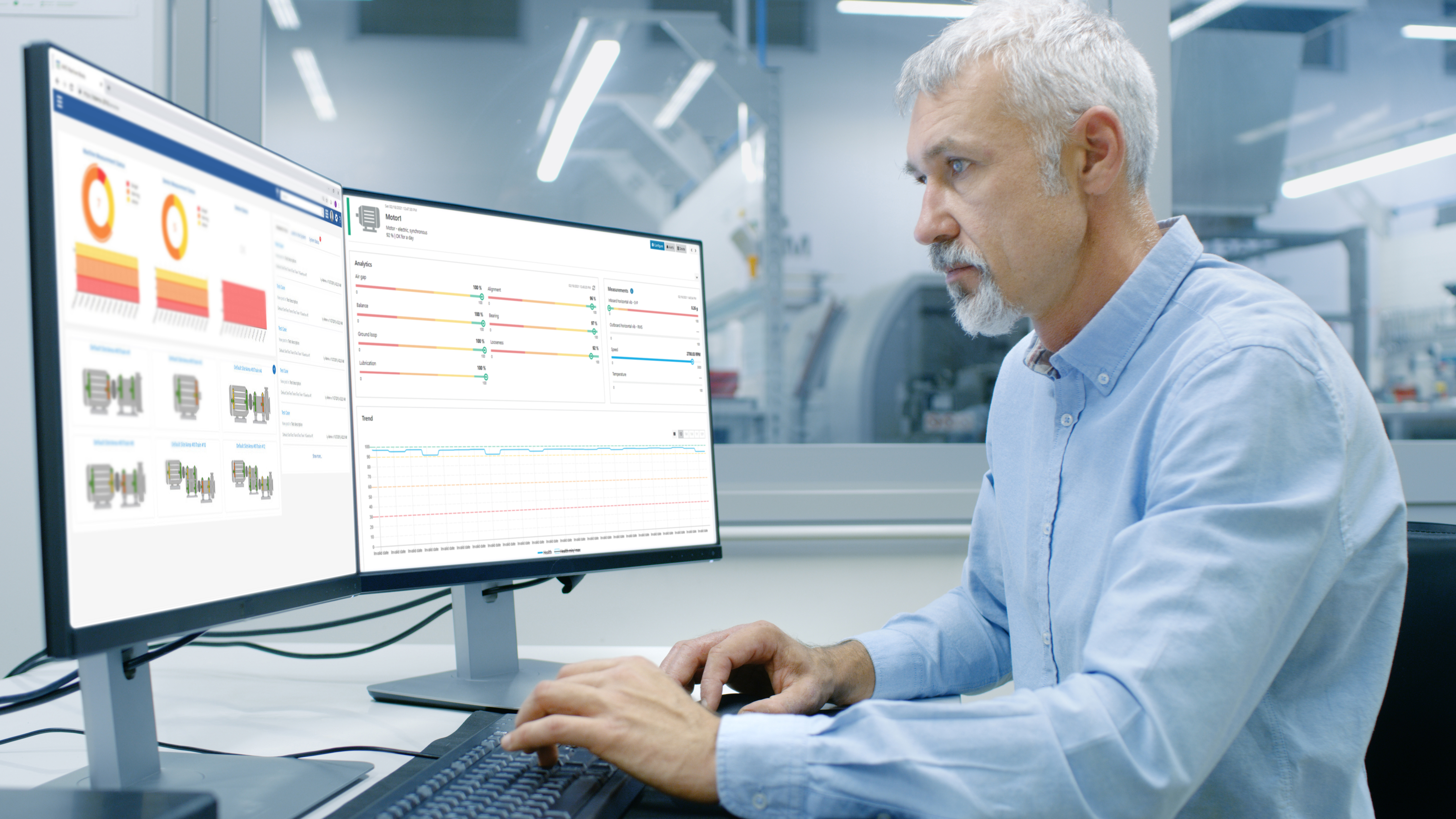
Global software and technology leader Emerson is updating its machinery health platform to enable customers to migrate to a more holistic, modern interface for condition monitoring. New support brings data from edge analytics devices directly to key personnel inside and outside the control room to help them more quickly identify and address a wide range of common equipment faults before they impact plant availability. In some industries, Emerson estimates every 1% gain in availability is worth approximately $8.4 million of additional profit margin per year. Plants around the globe have faced increasing shortages of experienced personnel to monitor and manage equipment reliability. Today, 58% of multinational manufacturers are having difficulty acquiring skilled talent, according to a 2021 study from Workforce Institute at Ultimate Kronos Group. To help small teams make the most of limited resources, Emerson has continuously evolved AMS Machine Works’ condition monitoring technologies for better diagnostics at the industrial edge. Increased connectivity to external systems provides personnel with an intuitive, holistic asset health score supported by maintenance recommendations to help reliability teams quickly see what is wrong and how to fix it. Intuitive information and alerts are delivered directly to workstations or mobile devices to provide decision support, helping maintenance personnel make the best use of their time. 
For engineers and technicians working in many industrial sectors FOD will always be a real and present danger. Keeping track of every tool and piece of equipment, especially when several storage cabinets are in use, can be challenging. Snap-on Industrial’s Level 5™ automated total asset management system minimises the risk of FOD by constantly tracking every tool, detecting which tools have been removed or returned. It also enables engineers and technicians to find every tool they need, when they need it, saving time and easing stress. Engineered to track individual tools by user, without bar codes, scanners, RFID tags or other add-ons, the system works at the speed its users demand. Level 5™ boxes are network ready, using either Ethernet or wireless connection. Powerful software enables users to review activity at all boxes in their location from one central computer, avoiding the need to inspect each box. Major benefits of the system include:
Level 5™ boxes are equipped with Keyless Access Control, giving users the ease of access they need but with security built in. The control system can be configured with magnetic cards, barcodes, PIN numbers and proximity cards. Says Richard Packham, Director UK & Europe for Snap-on Industrial: “Snap-on’s automated system takes tool management to an entirely new level, giving workshop managers and other authorised users easy access to the tools they need while protecting against foreign object damage. “The ability to monitor several boxes from one central computer offers managers a huge time saving advantage.” For technical details visit: snapon-industrial.co.uk; call (01536) 413904 or e-mail: This email address is being protected from spambots. You need JavaScript enabled to view it. 
|