Latest News

UK Fuels Announces 100% Carbon Offsetting Scheme for Fleet Operators

UK Fuels has launched a new service that can offset 100 percent of the carbon its fuel card customers currently release from the 1 billion litres of fuel they use each year. UK Fuels is the UK’s biggest supplier of fuel cards and the carbon offsetting service will benefit the 76,000 fleet businesses and their 500,000 drivers using UK Fuels’ cards.

UK Fuels has partnered with UK-government endorsed carbon offsetting company Forest Carbon to invest in renewable energy projects. Businesses which take up the new service can reduce their carbon footprint and support their social and environmental responsibilities, while avoiding the risk of wasted investment in ineffective offsetting schemes.

As well as UK environmental projects, investment will be made around the world in renewable energy projects including wind, hydro, waste-to-energy and solar power; chosen for their ability to achieve immediate carbon neutrality.

"LIMITLESS” GROWTH FOR BOLD ENGINEERING CONSULTANCY

FOUNDERS of a rapidly expanding engineering firm, based in Nottingham, have spoken of their unique approach to growing a reliable, innovative and client-focused business. 

The combined experience within the team at Hexa Consulting is unrivalled and has led to soaring success over the past two years. Flying fairly below the radar, the civil and structural engineering and transport planning specialist has achieved its results organically, nurtured by reliability and trust from within the industry.

The business, headquartered in Nottingham, centres on creating smart and innovative engineering while not being afraid to offer alternative approaches to traditional methods. It also focuses on providing green and sustainable schemes for its clients.

While the groundwork started in 2019, the business really kicked off in spring 2020 during the height of the Covid-19 lockdown. Despite the challenges of the pandemic, Hexa’s founding members were able to take the business from humble beginnings to having a prime, city-centre office location with a thriving team of 25.

DMG MORI Finance posts over £100 million lending since its UK launch

With the objective of turning machine tool investment on its head, DMG MORI Finance was formed in Germany in 2007 and was launched in the UK in 2017, offering funding in GBP. Since then, DMG MORI Finance has funded investment in DMG MORI machine tools exceeding £100 million.

James Clist, Director, UK & Ireland Business, DMG MORI Finance explains, “Traditionally, financing of machine tools requires the purchaser to pay a deposit and make payments before they have gone through the learning curve and generated an invoice for the parts manufactured on the new machine, making the investment cash flow negative from the start. DMG MORI Finance understands that behind every machine tool purchase there is a financial decision. We focus on creating the best possible environment for investment, creating financing structures to suit the customer, gaining an understanding of where the customer is going with their business and not concentrating solely on historic performance. The aim is to make the investment affordable, and more importantly cash generative, thereby enabling the customer to choose the best machine for their application, whilst not having to compromise on manufacturing capability and performance due to headline cost”.

DMG MORI Finance is the DMG MORI Group’s own leasing company and is regulated by BaFin, the German Federal Financial Supervisory Authority. This gives DMG MORI Finance the ability to use its expertise in machine tools and manufacturing investment to assess the customer and the beneficial impact of the machine it plans to buy.

RLSS UK DEPLOYS THE LATEST DRONE TECHNOLOGY TO SUPPORT WATER SAFETY RESCUES

The Royal Life Saving Society (RLSS UK) is launching the UK’s first water rescue Emergency Drone Piloting Award. The water safety and lifeguarding experts, have partnered with innovative Remotely Piloted Aircraft Systems (RPAS) and Drone specialists Eagle Eye Innovations (EEI) to create a unique water rescue award, launching this month.

The Emergency Response Drone Pilot Award offers candidates the opportunity to learn the skills, technical knowledge and legalities of using and operating a drone to assist with water-based rescues. The drones are fully waterproof, specially designed for rescues and can find a person in difficulty and deploy a torpedo buoy or inflatable lifesaving device, allowing precious time for a lifeguard or Emergency Services to reach the casualty.

The course content is Civil Aviation Authority approved and covers; rules and regulations of formal drone flying in the UK, practical drone flying techniques and the lifesaving skills required to perform emergency actions with a drone that preserves life until rescuers arrive.

U.S. Deputy Secretary of Energy David Turk to lead speaker list at Downstream USA 2022 conference and exhibition in Houston

U.S. Deputy Secretary of Energy David Turk has been confirmed as a speaker at the Downstream USA 2022 conference and exhibition in Houston, Texas. Turk will lead one of the strongest downstream speaker lists ever at the event, on June 8 and 9.

Alongside Turk will be Bob Maughon, executive vice president and chief sustainability officer at SABIC; Shelley Porter, executive director of sustainability and circular solutions at Eastman Chemical Company; and Chemours chief sustainability officer Sheryl Telford.

Elsewhere, the Reuters Events conference will feature Christopher Guith, senior vice president of policy at the U.S. Chamber of Commerce’s Global Energy Institute, and Dipankar Das, group vice president and head of digital for commercial and value chain operations at Marathon Petroleum.

Rounding off the stellar cast of speakers will be Venki Chandrashekar, vice president for research and technology at Chevron Phillips Chemical, and Suresh Padmanabhan, senior vice president, chief technology officer and global manufacturing head for PET at Indorama Ventures.

New 10% Taskforce aims to save £147.5 million in wasted compressed air energy costs

The British Compressed Air Society (BCAS) has launched the 10% Taskforce - a call for UK businesses to take simple steps to cut their compressed air energy usage figure by 10 per cent, with the potential to save a combined £147.5 million in wasted electricity costs.

Launched at this year’s Air-Tech exhibition, the campaign has an ambitious target to save over 411 thousand tonnes of CO2, the equivalent of taking 317 thousand cars off the road. 

Generating compressed air can be very energy intensive, representing as much as 30 per cent of a site’s total electricity bill.  According to a report entitled ‘Compressed Air Systems in the European Union’[1], when looking at the most important energy savings techniques available to compressed air users, ‘the energy savings amount to 32.9 per cent, achievable over a 15-year period.’

This includes a range of measures including system installation or renewal and operation and maintenance techniques, such as reducing air leaks and more frequent filter replacement.

However, while both environmental and financial targets are driving operators to reduce their site’s overall electricity bill, many simple energy-saving measures related to their compressed air system can be overlooked, as Vanda Jones, BCAS Executive Director explains:

“As the UK’s trade body representing compressed air system manufacturers, distributors, and end users, we are regularly advising on the numerous ways that customers can improve the efficiency of compressors. 

“Using figures from the recent UK Energy-related products policy study, conducted by ICF in May 2021, we have calculated the combined energy usage for the mid-point of all industrial compressor technologies over their lifetime at 11.71 TWh.[2] Based on the current UK average non-domestic electrical unit cost of £0.1249/kWh[3], the figures are substantial - equating to £1.475 billion being spent by UK companies to generate the compressed air their businesses rely on.

“Add to this the fact that over 30 per cent of this energy is being wasted through inefficient practices – equivalent to £485.43 million in wasted electricity spend - and there is much that businesses can do to cut this figure significantly.

“However, many operators may feel that this will require significant investment in new capital equipment, when often, taking small, incremental steps can have a significant impact on energy consumption.  Whether it is fixing air pipework leaks, recovering heat which would otherwise be lost to the atmosphere, or implementing routine system maintenance, BCAS members can advise on the best combination of measures that can help cut ownership costs.

“Our new 10% Taskforce is designed to help businesses save money and make a positive difference to the environment.  We encourage everyone in the industry to get involved. Alongside a dedicated white paper (available to download for free at taskforce10.bcas.org.uk), which details the energy-saving potential and some of the simple steps that can be implemented, we will also be showcasing some of the best examples of energy-saving compressed air programmes through our website and social media.”

To pledge your commitment to the 10% Taskforce and learn how you could cut energy consumption from your compressed air system, please visit https://taskforce10.bcas.org.uk


[1]Compressed Air Systems in the European Union. Energy, Emissions, Savings Potential and Policy Actions. Peter Radgen and Edgar Blaustein (Editors: Note that the potential for savings is less than the sum of the savings for individual measures. The total possible savings must be calculated as a product of efficiency gains. It should be considered that the efficiency gain of each measure acts on the residual compressed air system energy consumption.

[2] Data obtained from the UK Energy-related products policy study. Conducted for the Department for Business, Energy, & Industrial Strategy by ICF Consulting Services Limited.

[3] https://www.gov.uk/government/statistical-data-sets/gas-and-electricity-prices-in-the-non-domestic-sector

Could the application of hydrophobic epoxy coatings to pumping systems offer industry a saving in energy consumption? Belzona Solution Proven to Save up to 20% on Energy Costs

 Manufacturing operations are faced with many challenges in today’s marketplace. With Global energy prices soaring, many industries are being impacted in the form of rising production costs, supply chain issues and lower output.

With this in mind, now is the time to think about reducing your business’ energy costs.

The British Pump Manufacturers Association (BPMA) estimate that that pumping systems account for almost 20% of the world’s electrical demand and the cost of energy represents 95% of the cost to run pumping equipment (1). It is clear that solutions developed to increase pump performance would be of great benefit to industry.

Fluid handling equipment can suffer from several physical and mechanical problems, including general and/or localised corrosion, cavitation or reliability linked with poor efficiency or performance. All these parameters may affect the power consumption of the equipment, increasing considerably its lifetime running cost.

One effective way to reduce the loss of equipment performance is to protect pumping systems using erosion/corrosion resistant coatings. In this area, Belzona Polymerics Ltd has provided coating technology solutions for over 70 years within all industry sectors.

Belzona 1341 offers a unique hydrophobic surface coupled with high erosion/corrosion resistance, which reduces friction losses and thus the energy input required. Belzona 1341 (Supermetalglide) can also be used on new equipment to enhance pump efficiency and reduce electrical consumption. Its unique system provides gains in hydraulic efficiency from 3% - 8% on new pumps as well as up to 20% on those already in service.


 Pump Efficiency Coating - Case Study

The Situation

A car manufacturer had four long-coupled end suction pumps that had been deemed beyond economical repair by another third-party repairer. Each new replacement pump would cost £18,000 and had an expected lead time of up to five months from the USA,

meaning an expensive and drawn-out process for the Customer.

 
  Picture1.png


Hayley 24/7 Industrial Pumps team were given the opportunity to offer a second opinion.

One of the pumps was sent to the Hayley 24/7 facility, installed on the state-of-the-art test rig and its performance was analysed. Its hydraulic efficiency was down at 38.3%. Work began on a strip and inspection with reports of both processes submitted to the Customer.

The Solution


    Picture3.png


The Customer was keen to proceed, and the team set to work. This started with the heavily eroded volute casing being repaired with Belzona 1111 (Super Metal), a metal repair composite.

The volute casing was then re-profiled to suit the impeller vane tips and Belzona 1341 (Supermetalglide) was applied to improve the units’ hydraulic efficiency, flow rate and head characteristics.

Flow rate was an important factor in the Customer’s operation, and this was identified as a key metric for improvement prior to the refurbishment.  

The pumps’ seals were also upgraded to the latest EagleBurgmann SN Single cartridge seals, with bearing isolators installed to help eliminate bearing contamination.  

Reassembly of the unit was completed, and the pump was re-tested before being shipped back to the Customer’s facility.

The Result

The refurbishment and upgrade cost the Customer significantly less than what they had been quoted for a new replacement pump, from the American OEM. By providing this service, Hayley 24/7 enabled the Customer to secure a capital expenditure saving of £11,500 and cut the delivery lead-time down to just 2.5 weeks.

It was calculated that the refurbished pump would deliver an annual energy cost-saving of £14,500, based on the following performance test results:

  • Hydraulic efficiency: increased to 48.3%
  • Flow rate: increased from 77.3% to 85.1%
  • Motor absorbed power: reduced from 42.6kW to 40.8kW
  • Pump differential head: increased from 20.6m to 23.5m

The Customer is now looking to roll-out a comprehensive programme of pump refurbishments at their site, including all 12 active pump assets. By doing this, the Customer will benefit from an annual energy cost-saving of around £173,000. The reduction in energy consumption will also have a positive impact on the company’s current environmental initiatives.

Visualise and Manage your Safety Procedures with Brady Link360

One of the biggest challenges in maintaining a safe facility is information management. There are Lockout/Tagout procedures, confined space permits, maintenance schedules and other important documents. They all need to be regularly updated and reviewed. Discover how you can easily manage your safety procedures with LINK360 Software from Brady!


At Brady, we provide personalised consultation services to improve employee safety, productivity and equipment reliability, both today and down the road.

Link360™ Software is the first software to give you a complete view of the activities associated with creating, reviewing and updating visual information.

Link360 Software enables users to create, scale, update and validate visually instructive safety procedures. The software provides an easy way to keep safety procedures accurate, compliant and sustainable in multiple facilities.

  • Create clear and easy-to-follow, visually instructive safety procedures
  • Quickly scale and deploy standardised and approved safety procedures across facilities

Link360-phone-340x500.jpg

Interested? Go for free 30 day trial!

Easily complete procedures using a smartphone

The Smart Lockout App sends the most recently approved, and relevant Lockout/Tagout procedures from LINK360 to the smartphones of coworkers servicing specific machines. Via their smartphone, coworkers receive one lockout instruction at a time and can confirm its completion before receiving the next step. The smart lockout app can send a report back to LINK360 including all lockout procedure steps marked as completed.

Watch the short video and discover benefits of LINK360 Software >>

Safer ski-lift maintenance with Enerpac portable XC-Pump

Critical on-site inspection and removal of roller conveyors for ski-slope chairlifts high in the Italian Alps is being made easier and safer using a battery powered, Enerpac XC-Pump and torque wrench kit. Ensuring the smooth running of the roller conveyors used to support steel wire cable is essential to the safe operation and movement of chairlifts between the departure and arrival stations via intermediate pylons.

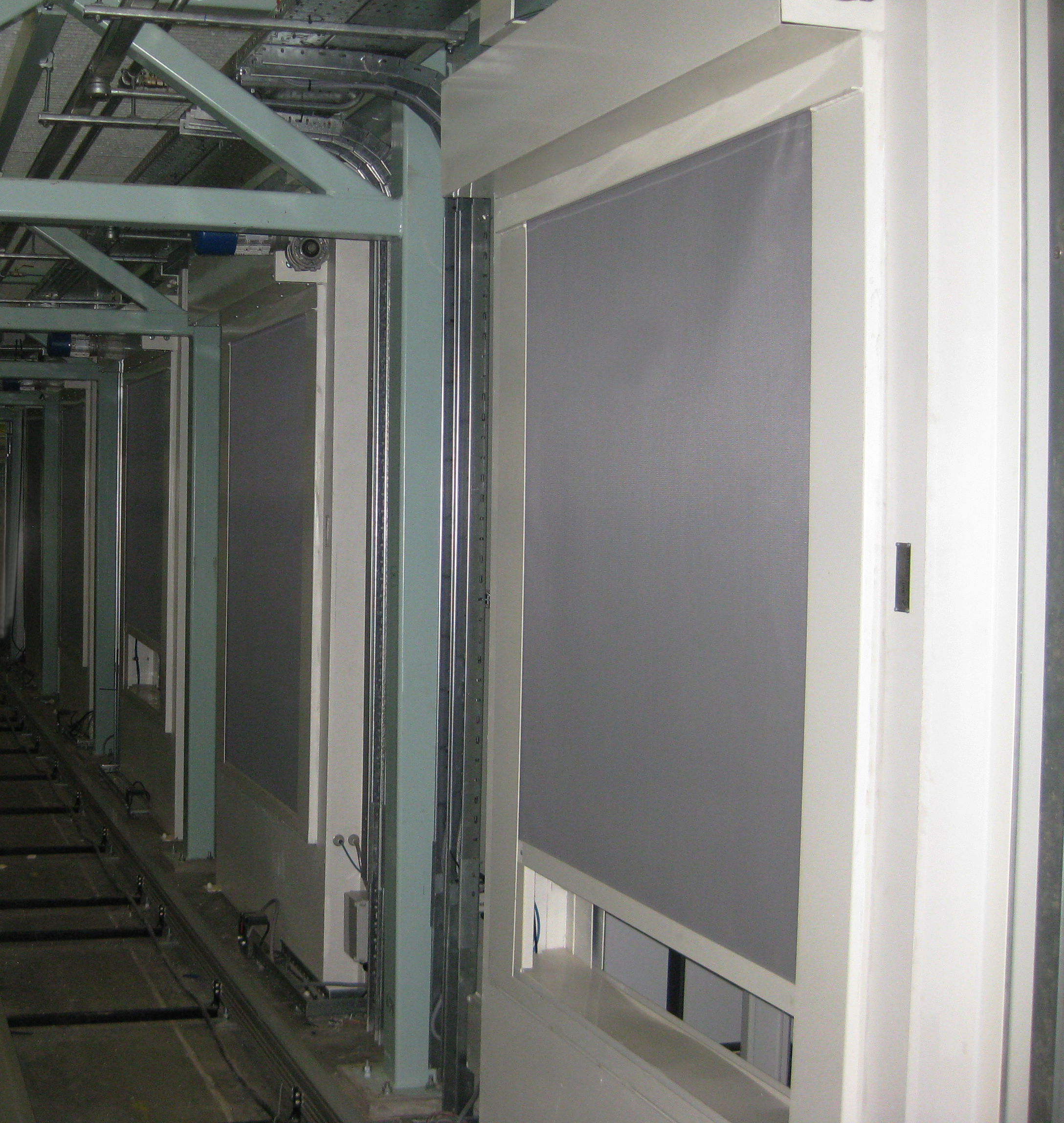
Inspecting the 16 pylon roller conveyors ahead of the skiing season involves checking the integrity of the conveyors bolting through torque checking and visual inspection.  A W2000X Enerpac Torque Wrench fitted with a hexagonal cassette in a range of sizes up to 46 mm is used, in combination with the XC-Pump battery pump. When inspecting the pylon roller conveyors, where the engineer is working at heights up to 25 m, the portability of the XC-Pump is vital.

“The XC-Pump is ideal for this kind of application in remote, and often difficult to access locations and where power may not be readily available,” says Silvio Di Matteo, Enerpac

Account Manager Tools – North Italy. “The combination of Enerpac torque wrench and XC-Pump allows both inspection and removal of the roller conveyors to be accomplished with a single tool set. It is also much safer for the operator by avoiding the use of manual wrenches with extensions to generate high torques (over 1200 Nm), especially when working at height.”

Typically, every five years the pylon roller conveyors assemblies are removed completely for detailed workshop inspection and maintenance, here too the Enerpac torque wrench and XC-Pump are used. In the workshop, the roller conveyors are disassembled to check the components that cannot be seen during interim inspections, especially the pins. Both visual checks and NDT (non-destructive testing) are carried out on the pins. Then, the pin bushings and the roller bearings are changed. In addition, all welds are checked with magnetoscopic and ultrasound examinations.

For more information on Enerpac Torque Wrenches and the battery-powered, XC-Pump, visit www.enerpac.com.

Construction 4.0 technologies key to improving sustainability of sector


Technologies forming part of the ‘fourth industrial revolution’ can improve the economic and environmental sustainability of an industry that contributes around 11% of all global carbon emissions, a new study shows.

Researchers including from the University of Exeter Business School examined how these Construction 4.0 technologies, including the Internet of Things (IoT), blockchain, drones, AI and self-healing materials, could impact on the sustainability of the construction industry.


By creating the first ever Construction 4.0 framework and testing it in a real-world setting, the researchers concluded that industry concerns such as high carbon emissions, low productivity and increased costs could be addressed with greater understanding and widespread adoption of these cutting-edge technologies.
The researchers expect their framework will help policy-makers develop interventions and support mechanisms to increase the deployment of Construction 4.0 technology while addressing any negative impacts.


It was tested through a case study of the construction industry in the United Arab Emirates, a country enjoying an unprecedented 9% growth in construction per annum, and where 75% of all solid waste comes from construction.


Informed by all available academic research on Construction 4.0 over the past 10 years, the authors’ framework identified which technologies are in use, categorising them under the headings of ‘digitalisation’, ‘automation and advanced manufacturing’, ‘integration and collaboration’, and ‘intelligent environment’.
Through interviews with senior industry professionals, academics and government officials and a survey sent to 1,000 industry professionals they established that the use of Construction 4.0 technologies is likely to increase by around 20% in all categories in the next five years.


The study highlighted several technologies as likely leaders in the transformation of construction over the next five years.
The Internet of Things (IoT), used to keep track of materials and equipment, as well as in smart sensors that can continuously monitor dust, hazardous fumes, noise, vibrations and motion detection, is likely to become more widespread as construction moves towards digitalisation.


‘Automation and advanced manufacturing’ technologies such as robotic technology, drones and 3D printing will also become a mainstay of the industry, as well as ‘integration and collaboration’ technologies such as the 3D modelling system BIM (building information modelling) and ‘intelligent environment’ technologies such as machine learning, artificial intelligence and smart materials.


Construction 4.0 was found to have a mainly positive impact on the environment, with real-time data through IoT and analytics cited as key to gathering accurate information on material usage and waste.
The study also highlighted new 3D modelling software as a way of reducing paperwork, the role of VR and AR in reducing carbon emissions, and a reduction of waste through a move towards prefabricating building components off site.


These environmental benefits were also found to translate into greater economic sustainability, with savings in energy, water, materials and human resources reducing the cost of construction projects and operational costs of buildings.
One of the main benefits of Industry 4.0 technology was found to be the potential reduction in costs, including manual labour, inspection and supervision and savings from the automation of routine administrative tasks.


However, respondents were wary about the amount of computational power required for technologies such as machine learning and AI algorithms, as well as the electronic waste generated at construction sites, and there was a more mixed reception for Construction 4.0 technology when talking about the social implications, with the likelihood of improvements to health and safety balanced by warnings of job losses.


Nazrul Islam, Associate Professor of Innovation/Entrepreneurship at the University of Exeter Business School, said: “This research demonstrates that Construction 4.0 has enormous potential to transform the sector and address some of its most pressing environmental and socioeconomic problems.
“Our comprehensive Construction 4.0 sustainability framework has huge potential to be adapted and applied to other countries, with several trends, conflicts, approaches, methods and gaps identified, all of which help to understand better and improve the adoption of Construction 4.0 technologies and guide future research.”

Need an Air Receiver on a short lead time? Think Hi-line

For any company looking to improve the life and energy efficiency of its compressed air system, Hi-line Industries now offers its range of class-leading Vertical Air Receivers from stock to help factories and plants quickly take advantage of these innovative devices. Hi-line’s high-quality painted and galvanised vessels are available immediately at extremely competitive prices.

Vertical Air Receivers are a type of pressure vessel that receive air from the compressor and hold it under pressure for future use. Storing compressed air allows the system to average the peaks in compressed air demand over the course of a shift, delivering steady air flow. The air in the tank is even available when the air compressor is not running.

Importantly, Hi-line’s Vertical Air Receivers can reduce the load/unload cycles on the system compressor, potentially extending its service life and reducing maintenance/repair. In addition, introducing an air receiver tank markedly improves the energy efficiency of a compressed air system, typically by reducing any wasted compressed air from excessive sump blowdowns and lowering the pressure requirements for the air compressor and air network. All of these benefits contribute to lower total cost of ownership (TCO).

Four sizes of Hi-line Vertical Air Receiver are in stock at to suit virtually any application: 300, 500, 1000 and 2000 litre variants. Immediate shipping or collection is available from the company’s UK headquarters and manufacturing facility, which is centrally located in Burton on Trent, Staffordshire, with excellent access to the motorway network.

This website is owned and operated by: MSL Media Limited

msl logo
www.mslmedialtd.com

Co. Number: 05359182

© 2005 MSL Media Ltd. All rights reserved. E&OE

ems logo mobile