|
|
|
|

|
|
|
|

In a previous editorial we looked at the importance of balancing rotating machinery (motors, pumps, fans, mixing vessels etc.) To summarise, unbalanced machines require a lot more energy to run and at the same time cause damage to their bearings. Essentially, by running machines that are out of balance, not only are you unnecessarily wearing out your bearings faster, but you are also paying EXTRA to do that!
But how do you know when a machine is out of balance? Basically, you will see a high level of vibration at the machine’s running speed. But what constitutes a high level of vibration? Fortunately, the International Standards Organisation (ISO) has drawn up a set of guidelines for acceptable levels of machine vibration. Modern low-cost vibration analysers like the TPI 9075 Bluetooth Wireless Smart Vibration Sensor (pictured) are available, pre-programmed with the ISO levels, to give a traffic light system of colour coded vibration readings. Basically, if it’s in the red it needs balancing!
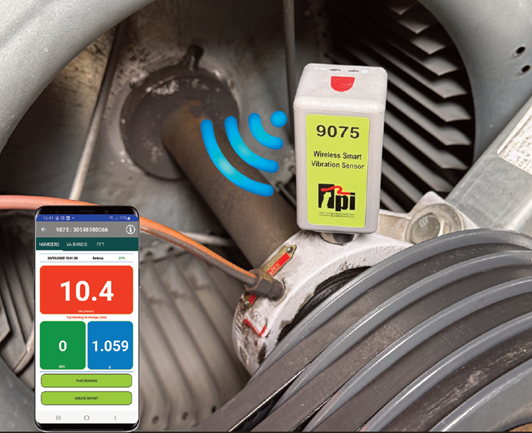
There are two techniques commonly employed in balancing. The no-phase balancing technique (a.k.a. the 4-run method) allows you to approximately balance a machine by using a series of four runs, three of them with a specified trial weight attached to the rotor. The sensor (e.g. TPI 9075) attached with a magnet, stays in the same place for each run. By positioning the trial weight around the rotor’s circumference in 120-degree increments and measuring the resulting vibration, The balancer software can automatically calculate the location and equivalent weight of the “heavy spot” around the rotor‘s circumference. It then calculates what weight, and at what position, will re-balance the motor, pump or fan. This is then done either by adding the weight to the rotor at a position opposite the heavy spot or sometimes easier still, by drilling holes to remove the equivalent weight adjacent to the heavy spot. The balancer software can also calculate how deep to drill for any given drill bit size.
For machines that require more precise balancing or for dual-plane balancing (e.g. for longer rotors that need to be simultaneously balanced at both ends) we require more precise measurement of the unbalance. This is done by providing a reference position on the rotor’s circumference, known as a “key-phasor” input. Often this can very easily be obtained from the machine’s tacho signal or alternatively, simply by affixing a piece of reflective tape to the rotor and using a low-cost laser tacho (e.g. TPI 505L) to give a reference pulse, once per revolution. This reference pulse is then used by the balancing software to more accurately determine the location of the heavy spot around the 360 degrees of rotor circumference and calculate precisely how to counterbalance it.
It doesn’t take very much to unbalance a machine, e.g. dirt build-up on fan blades or a chipped pump impeller. Thankfully, it also doesn’t take much to re-balance it either, provided you have the right instrument. These days that’s not a problem, as simple to use, low-cost, precision field balancers are now available that take you through the process on an easily followed step-by-step basis. For example, TPI’s Ultra App is now available for use on smartphones or tablet PC, with both no-phase and single/dual plane key-phasor balancing. For the latter, the 3-channel TPI 9043 Wireless Vibration Analyzer with included TPI 505L laser tacho (as pictured) can be used with the TPI Ultra App to precisely re-balance the motor, pump or fan.

For more information, please contact TPI Europe on +44 1293 530196 or www.tpieurope.com or email This email address is being protected from spambots. You need JavaScript enabled to view it.

As industrial operations continue to digitalize, maintenance strategies must evolve beyond traditional reactive and even predictive models. Smart Maintenance 5.0 represents the next step a fully integrated, human-centric approach that combines the power of artificial intelligence, real-time data, and digital technologies to transform maintenance into a strategic performance driver.
Building on the foundations of Industry 4.0, Maintenance 5.0 brings humans and machines closer together, allowing teams to make smarter, faster, and safer decisions through enhanced connectivity and intelligent systems.
This approach doesn’t just focus on preventing breakdowns it focuses on optimising the entire lifecycle of industrial assets while aligning with broader goals such as sustainability, workforce efficiency, and digital integration.
AI tools now sift through terabytes of machine data to uncover hidden failure patterns. This allows teams to move from “fix it when it breaks” to “fix it before it fails with confidence.
A digital twin replicates a physical asset in a virtual environment, allowing engineers to simulate wear, test maintenance strategies, and assess performance risk-free.
User-friendly platforms, voice-enabled commands, and AR-assisted repair workflows reduce human error and support a new generation of maintenance professionals.
Smart Maintenance relies on seamless data sharing across the shop floor and cloud platforms ensuring decisions are informed by real-time data across locations.
Connected machines that communicate and react in real time to operational conditions form the backbone of a responsive maintenance environment.
Smart Maintenance 5.0 delivers measurable benefits across the board:
⏱ Reduced Downtime: Faster, smarter decisions cut unscheduled stoppages
💰 Cost Optimisation: Maintenance is scheduled based on actual asset condition, not guesswork
🌍 Sustainability Gains: Less waste, fewer emissions, and smarter energy use
🧑🔧 Workforce Empowerment: Simplified tools and actionable insights support faster training and better safety
A global manufacturer in the food & beverage sector implemented Smart Maintenance 5.0 across five plants. By integrating AI diagnostics and mobile maintenance dashboards, they reduced breakdown frequency by 37% and saw a 20% improvement in technician response times all within the first year.
Smart Maintenance 5.0 is not just a buzzword it’s a necessary response to the modern industrial challenge. With aging equipment, rising energy costs, and pressure to meet ESG goals, maintenance must be smarter, not harder.
At Engineering Maintenance Solutions, we’re committed to showcasing the latest innovations helping our readers unlock performance, reliability, and efficiency in a rapidly evolving landscape.
Want to explore Smart Maintenance 5.0 solutions or share your success story?
📩 Contact our editorial team or feature your technology at
👉 This email address is being protected from spambots. You need JavaScript enabled to view it.
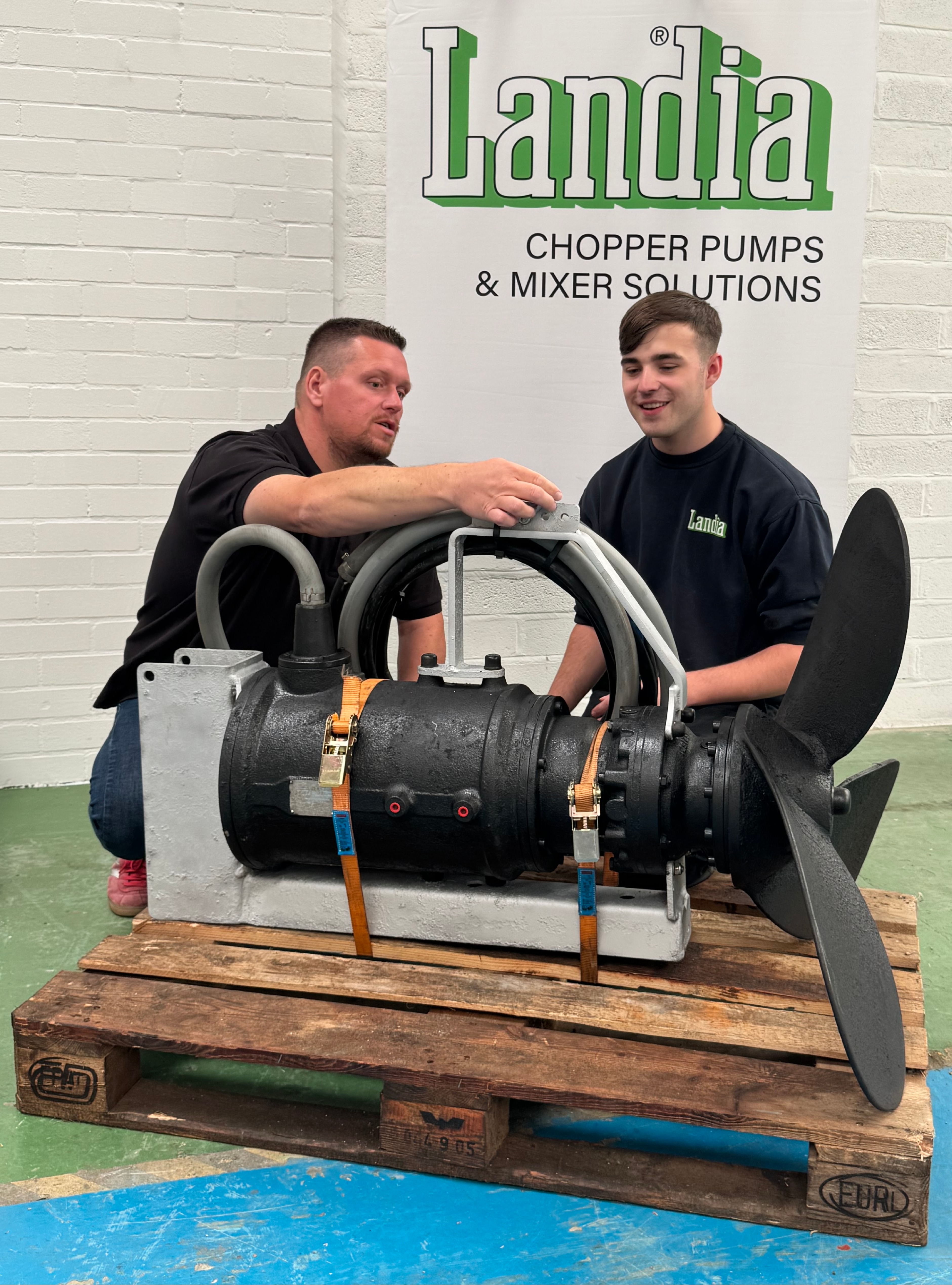
Landia, the leading pump and mixing manufacturer, has welcomed government moves to invest in tens of thousands of new apprenticeships and training opportunities.
At a time when around one million 16-to-24-year-olds are neither working, nor in full-time education or training, Landia believes that its consistent success in developing highly tailored opportunities creates huge benefits for a business and those young people keen to carve out a career.
Speaking for Landia, Tamas Rieder (Service and Aftersales Manager), who steers Landia apprentices through their journey from beginning to end, commented:
“To reap the rewards of seeing homegrown apprentices mature into skilled employees, companies must now take full responsibility and realise that your workforce is only going to be as good as you train them to be.
“Arm your apprentices with the proper tools to do the job, encourage them, give them time and proper hands-on experience.
“There’s no doubt that this is a long process, but it is very rewarding and totally worth all the effort. It is a big win-win; young new engineers who already have first-class skills and the right attitude towards serving our customers. In addition to our five fully qualified apprentices (three of whom have been Landia for over a decade) our current apprentice, Will Lewis, is soon to complete his first 12 months with us.”
He continued: “Gone are the days when smaller firms would just cash in for free on a flood of new apprentices that came out of the big businesses hungry for work. Those big industry names simply aren't there anymore.
“Anything the government can do, as they say, ‘to back the next generation by giving young people more opportunities to learn a trade, earn a wage and achieve and thrive’ should be welcomed.
“Successive governments decided that it was far cheaper to import skills than help train our own children, so no wonder we have so many unskilled, unmotivated young people in the UK because nobody has trained them. It is high time to put this right.”
Built on key design principles identified in collaboration with law enforcement and public safety professionals, Scout Pro II/III signals a new dawn in thermal imaging performance.
Thousand Oaks,— FLIR, a Teledyne Technologies company, today is introducing its Scout Pro II and III thermal monoculars: the latest Scout Pro models designed to help law enforcement and public safety professionals quickly survey vast urban or rural areas without losing focus on observed people or objects. Replacing the existing Scout II/III, LS and Scion series, the next-generation Scout Pro II and III simplify tasks that include surveillance, search and rescue, evidence gathering, and active pursuit and intervention. Exceptional situational awareness, wide coverage, and long detection ranges combine to provide the vital intelligence required to patrol areas safely or locate missing or injured people quickly.
Developed in partnership with industry professionals, FLIR’s Scout Pro II and III are built on a trio of key design principles: streamlined interaction, mission-critical reliability, and efficient human detection.
Different by design Streamlined interaction allows users to focus time and attention on law enforcement and public safety, rather than buttons and controls. Key here is the simplified, intuitive, and efficient live image interface for continuous focus on observed objects and areas. The flat menu of Scout Pro II/III with toggle function provides efficient zoom, mode selection, and brightness adjustment.

This monocular’ s robust, compact design is drop-rated to 2 meters (6.7 feet) and has the waterproof IP67 rating needed to withstand harsh operational environments and deliver mission-critical reliability. FLIR’s robust design is built around a rugged cast metal body, rubber front and rubber keypad. Support comes from six-hour battery life with USB Type-C connector and power bank charging options.. FLIR Scout Pro series thermal monoculars feature image optimisation for highly efficient human and 1/2 anomaly detection, thanks largely to FLIR’s Digital Detail Enhancement (DDE) and additional proprietary image-enhancing technologies. Professional performance Like the existing, flagship Scout Pro model, the new Scout Pro II and Scout Pro III offer 640 x 480 thermal resolution for clear, high-quality imaging. However, the focal length extends to 35mm for the Scout Pro II and 50mm for the Scout Pro III. Longer focal lengths are better for capturing details at distance. The Scout II Pro also offers a narrower 18° horizontal FOV, which narrows further to 12° in the Scout Pro III. In contrast, the Scout Pro features a wide 32° field of view optimized for urban operations. Narrow horizontal FOVs enhance details in precision tasks like facial identification, whereas wider FOVs deliver maximum coverage, enabling quicker sweeps across large areas. Notably, the Scout Pro II and III can detect human targets at distances of 1,000 m and 1,500 m respectively manual-focus (500 m for Scout Pro fixed-focus). Four colour palettes help users identify objects in different environments.

“While the Scout Pro II is ideal for long-range observation in a mix of urban, rural and water scenes, the Scout Pro III presents extended range for wide open spaces and remote operations,” said Peter Dekkers, Director of Business Development, First Responder Solutions at FLIR. “Both thermal monoculars present role-enhancing opportunities for patrol officers, border surveillance staff, SWAT teams, coastguards, maritime police, search and rescue teams, customs officers, and investigators/detectives. In fact, anyone who demands high-quality, reliable, simple-to-use thermal imaging tools when seconds matter is set to benefit.” Real-time collaboration The FLIR Scout Pro APP provides users with the advantages of wireless camera management and video streaming functionality, enabling teams to collaborate in real time. Users can seamlessly update and add features to their thermal monocular via a mobile device or tablet, avoiding the need to connect the thermal monocular to a PC. In addition, users can stream videos in real time from camera to device, making the app ideal for covert surveillance. FLIR Scout Pro II and III thermal monoculars come with tactical pouch, eyecups, USB cable and Quick Start Guide. Optionally available is the new Scout Pro charging and docking station. A two-year warranty is standard, with a subsequent three years available free-of- charge upon registration.

AirBench have released further upgrades to our market leading WB wet downdraught bench for flammable dusts.
These changes are focussed on efficiency.
A move to high power EC fansets improves power consumption, allowing precision control of airflows and reducing start-up currents meaning easier installation, easier control, and lower energy usage.
EC fans use AC power and in internal inverter system to drive a DC motor meaning they operate at near peak efficiency at all speeds. Startup currents are low so there is no longer a need for over-sized circuits and breakers.
Continuing the theme of improved efficiency, further improvements to filtration mean that all units can be supplied with H13 final filtration with an improved modular housing.
These efficiency improvements bring the added benefit of reduced noise levels with all units now operating below the Lower Noise Action Level in typical installations.
Visit www.airbench.com/products/airbench-downdraught-benches/airbench-wb for more information, contact our team on This email address is being protected from spambots. You need JavaScript enabled to view it. for an on-site assessment – or call 01206 791191.

Rotech Vibration Sensor – VS4000 Series
Most modern screens are designed with the benefit of modern CAD & computer simulation techniques and can cope with a wide range of operational conditions under very different applications.
However, variations in feed rates and composition of the material being processed can, in some circumstances, result in an excessive amount of material being on the screen at any one time. If, as a result, the rate and speed of vibration of the screen slows down, even temporarily, problems can quickly occur, causing blockages, stoppages, downtime etc, inevitably leading to a major situation & proving to be very costly to rectify.
Material continues to be fed on to the screen at the normal rate but the slowdown causes the discharge rate to be reduced, a marginal overload can quickly enter a runaway situation with material arriving at the screen causing an ever-increasing overload and further slowdown.
Mechanical failure, V-belt "burn off" or the intervention of the drive motor’s electrical overload is often the first time the operator will know that all is not well.
Rotech’s Vibration sensor VS4000 fitted to a screen is designed to monitor its rate of vibration and will operate an alarm or switch the in-feed conveyor off if the screen slows down. Even a drop in speed of 5% for a few milliseconds can be detected and action taken almost instantaneously. On V-belt-driven screens the drive motor can be switched off the moment any slippage occurs, preventing extensive & expensive damage to the belts.
The VS4000 signal output can be connected to the Plant Control PLC/Computer or independently used with the Rotech Vibration Relay – SR4000 series.
Typically on a screen vibrating at 750 throws per minute, the SR4000 Vibration Relay is set at 725 TPM, if the screen speed drops below this level, the relay operates in less than 10 milliseconds, resulting in immediate protection of the plant BEFORE things start to go drastically wrong!
For details, contact:
+44(0)151 3563222
This email address is being protected from spambots. You need JavaScript enabled to view it.
www.rotechsystems.co.uk
Reliability, sustainability, and productivity are important and necessary qualities in the mining industry. “ROTECH SYSTEMS” has the experience and technology to meet these demanding requirements. From standard, simple encoders to robust extra heavy duty encoders.
Plant reliability is a key to achieve production targets. Improve the life and performance of your machinery regardless of the conditions — such as wet, heat, dust or vibration. Contamination is ever present and eventually it wears away at your machinery's effectiveness, often creating unplanned downtime.
“ROTECH SYSTEMS” With knowledge of the harsh operating environment of the cement industry offers a range of bearings options that meets the needs of such demanding environment.
All “ROTECH SYSTEMS” heavy duty encoders are fitted with two 5HP bearing with 2 Rubber seals on each bearing we also use a double lip oil seal inserted in the cap in front of the bearing to improve sealing and protect the bearing along with a compressed “O”ring for extra sealing and total protection of the bearings.
Cement

“ROTECH SYSTEMS” believes that unplanned downtime is not an option — Keep your machinery running all year round!
Working closely with the mining, cement, ready-mix concrete & aggregate industries we continue to build on our experience & knowledge of your industrial processes, applications and problem areas.
Through close partnerships with equipment manufacturers and end users, “ROTECH” engineers ensure they understand your requirements, environment and applications to help solve problems with reliable solutions. Our products are engineered to enable you to overcome unplanned downtime and give solutions to the inherent problems of contamination and vibration.
“ROTECH” offers products, services and solutions to work on the critical factors — reliability, quality and reduced maintenance — improving your uptime and your bottom line.
For the harshest of environments

MOLDED OIL BEARINGS
“ROTECH SYSTEMS” also offer encoders built with molded oil bearings.
Molded oil bearing are lubricated with oil-impregnated material, molded oil consists of lubricating oil and polyolefin resin that has an affinity for oil.
Oil slowly seeping from this material provides ample lubrication to the bearings for extended periods.
Advantages of molded oil bearings

Grease-free property with no oil refilling keeps operating environments clean
Operating life more than twice as long as grease lubrication, in water or dust-contaminated environments
Achieves extended maintenance-free performance as Molded-Oil provides a continuous supply of lubricant. Available for all applications
This is why “ROTECH” encoders last on average “SIX TIMES” longer than any of our competitors.
Find out more at www.rotechsystems.co.uk
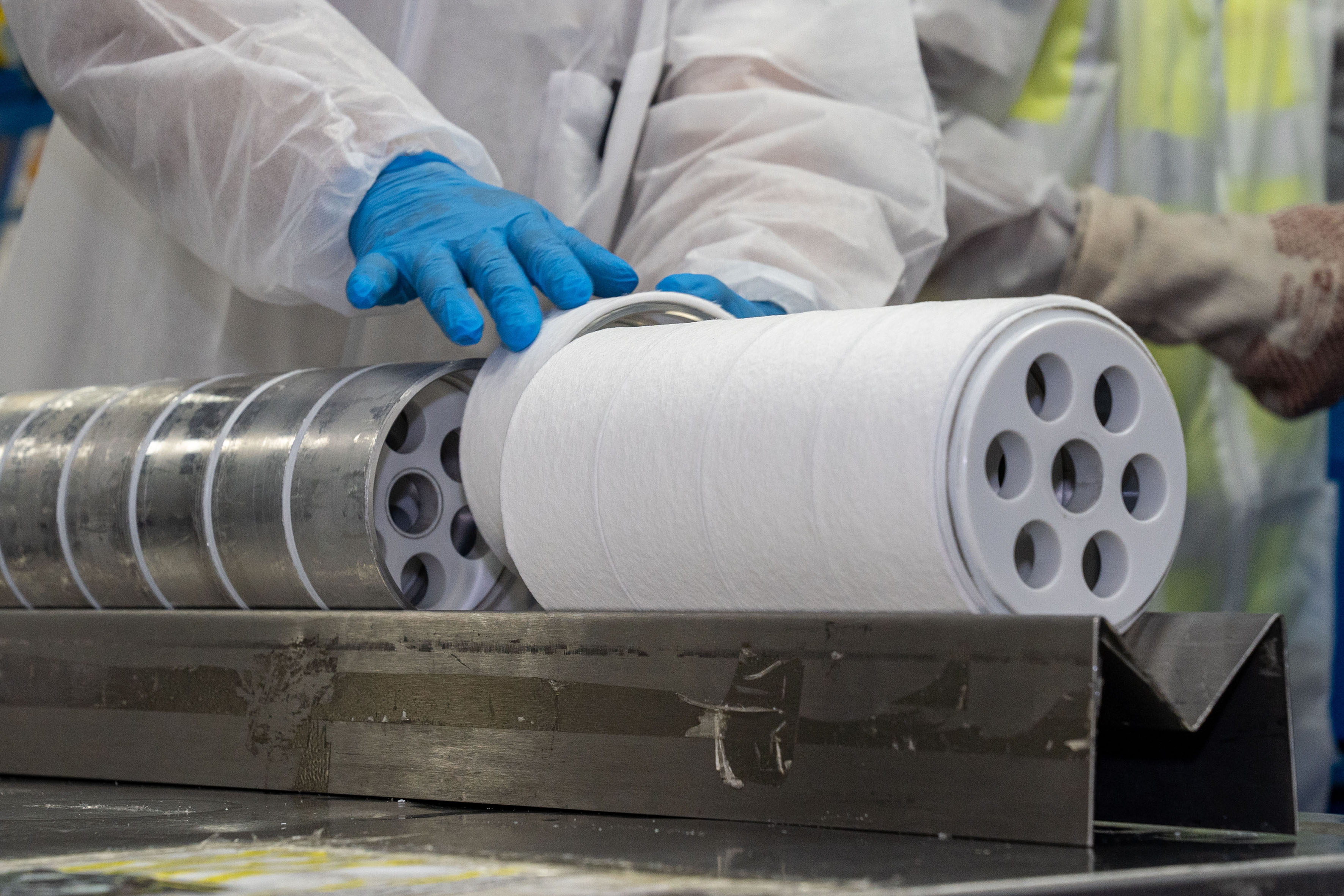
Process filters and housings made in the UK are set to feature in South Africa at a major industry event for the global energy industry.
Amazon Filters, a leading manufacturer and exporter, will highlight the benefits of its products and services at the forthcoming African Petrochemicals & Energy roadshow.
The one-day event, in Secunda, South Africa, on 31 July 2025, is designed to bring delegates together from across the petrochemical, oil and gas, and energy sectors.
Many attendees will come from supply chain businesses offering equipment, services and solutions to worldwide energy producers.
Amazon Filters is represented at the show by long-standing regional distributor partner National Separations (Pty) Ltd (Natsep), whose team will demonstrate technical aspects of the filters and housings and explain their efficiency and sustainability benefits.
Headquartered in Johannesburg and with marketing, sales, distribution and service hubs in Cape Town, Durban and Gqeberha, Natsep provides a range of solutions involving Amazon Filters products.
Core activities include laboratory water purification, process filtration technologies for clarification and sterilisation, and microbial and particle quality control testing.
Padrig O’Hara, Amazon Filters’ Project Specialist for the oil and gas sectors, said the products on display at Secunda will include SupaSep LGP, the latest evolution of the firm’s liquid-gas coalescers, and newly launched sustainable polypropylene versions of its flagship meltblown filter ranges SupaSpun II, SupaGard, Contour and Contour Gas.
Padrig said: “We aim to highlight how our design capabilities create advanced filter vessels and internal components that can aid critical filtration processes in the oil and gas, energy and renewables sectors.
“We provide essential filtration technology and energy-efficient solutions that enhance efficiency, performance and sustainability.”
It is the second year in a row that Amazon Filters and Natsep have partnered on a presence at a major South African energy industry expo.
In October 2024, the firms exhibited jointly at The Sasolburg Petrochemicals & Energy roadshow at Stonehaven on Vaal, Vereeniging.
This summer’s Secunda African Petrochemicals & Energy roadshow takes place at the Graceland Hotel, Casino & Country Club. For more information, visit www.africanpetrochemicals.co.za.

Delivering Safer, More Efficient Track Maintenance
The Enerpac TL248 Track Lift System, a compact, powerful, and precise hydraulic solution for lifting and supporting rail tracks during track maintenance, has received full Network Rail approval for use on Network Rail Managed Infrastructure. Compared to traditional track maintenance methods that rely on bulky, costly heavy lift equipment, the portable, self-contained TL248 system enables safer, faster work with greater precision and shorter, less disruptive possessions.
Registered with UK National Rail under Certificate of Acceptance PA05/08016, the Enerpac TL248 is an innovative hydraulic lifting system, specifically engineered to lift track from below. Designed for easy transport to remote or confined locations, the TL248 features four independent hydraulic jacks, each with a 62-tonne capacity, combining for a total lifting capacity of 248 tonnes. The jacks deliver accurate lifts with a precision of 3.2 mm, essential for the maintenance of track switches, crossings, turnouts, retarders, and hold bridge ends securely in place.
The TL248 is designed for ease and safety, featuring an intuitive, colour-coded central control panel illuminated by integral LED lighting for clear visibility in any conditions. Its built-in redundant safety systems, like manual needle valves and pilot-operated check valves, prevent jack drift and ensure secure operation under load. Engineered with built-in fork pockets and lifting hooks, the system is quick to transport and deploy, even in tight or remote locations. It is even a self-contained power unit that operates independently of external power sources, giving teams greater flexibility on-site and when in remote locations.
Eliminating Overhead Clearance Issues
The TL248 Track Lift System is optimised for the maintenance of rail tracks. By lifting tracks from below, the TL248 bypasses the challenges posed by overhead structures and power cables. This design not only mitigates clearance restrictions but also stabilizes the track to allow maintenance-of-way equipment to pass over when placed on the ballast. These features combine to dramatically reduce possession times and minimize disruption to rail services.
Thanks to the optimal jack placement and compact design, track excavation times are also significantly shortened. Deployed to the site on the back of a utility vehicle due to its small footprint, it replaces the need for cumbersome crane lorries. Substantially improving project timelines and efficiency, the Enerpac TL248 enables track maintenance crews to lift up to four diamond crossings or six turnouts per day.
“The key advantage of the Enerpac TL248 Track Lift System is its ability to transform complex track lifts. The current, traditional methods are often high-cost, time-consuming and labour-intensive. The TL248 meets these challenges head-on. We’ve seen track maintenance crews not only reducing project times but also achieving a return on their investment after as few as 10 to 20 lifts.” Comments Rob Bell, Global Vertical Market Director - Rail, Enerpac.
For more information on the Enerpac TL248 Track Lift System visit www.enerpac.com
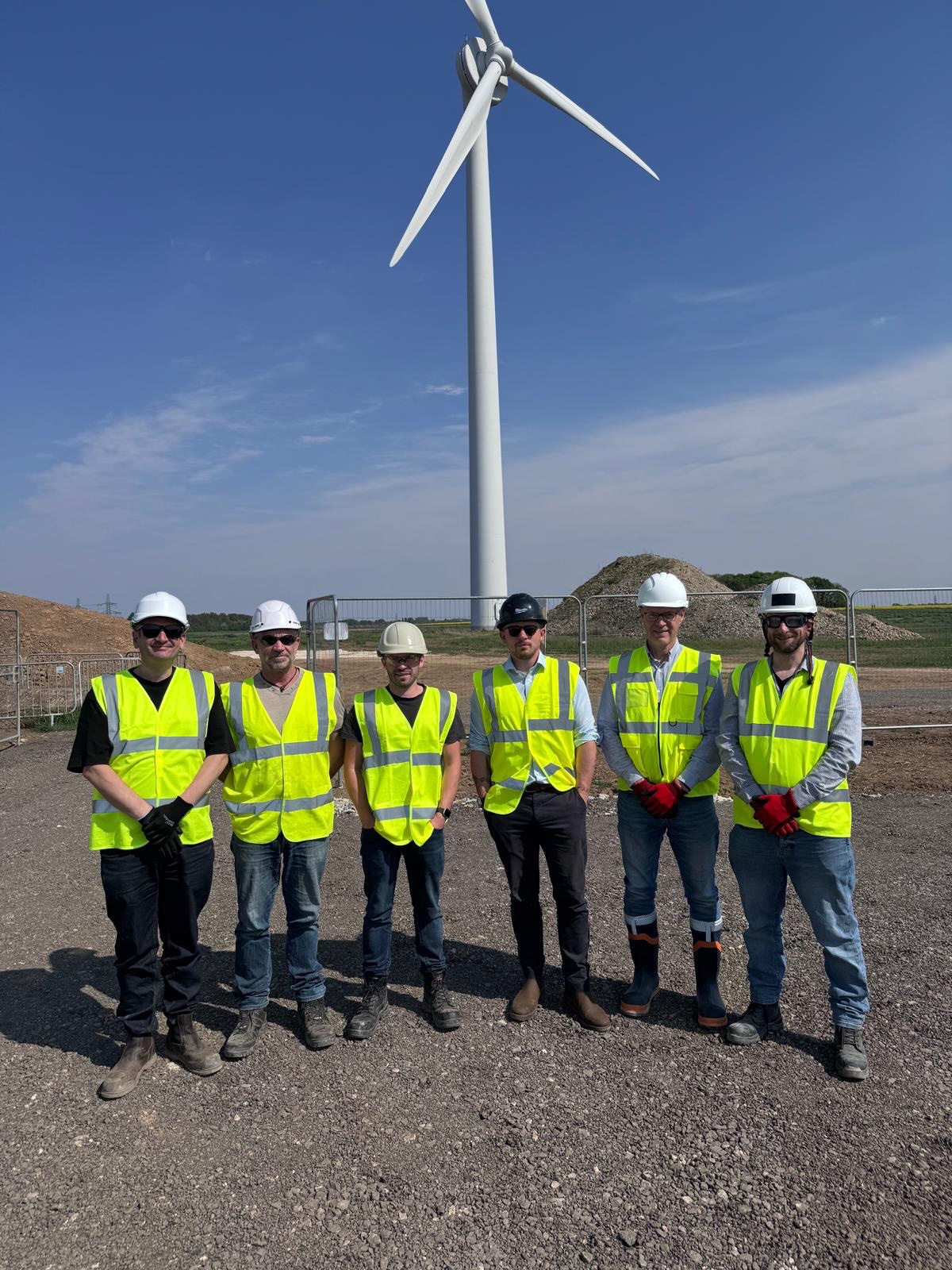
ProScope, the NetSuite native SuiteApp for managing complex projects, today announced that Novus Power, a UK-based high voltage infrastructure specialist, has selected ProScope to power its operations as it scales rapidly across the renewable energy sector.
Focused on delivering turnkey solutions across design, procurement, construction and commissioning of Extra High Voltage substations and Balance of Plant for renewable energy projects, Novus Power recognised the value in starting with a solution built on proven industry practices. By adopting ProScope from day one, the company is aligning its operations with the way the software is designed, setting a strong foundation for future growth.
“Starting strong was critical,” said Andreas Fritzsche, Founder and CEO of Novus Power. “Having experienced ProScope at a previous company, we knew it would give us seamless control over every phase of our projects, from planning to delivery. A single source of truth means better decisions and faster growth.”
ProScope will provide Novus Power with key project capabilities including subcontractor management with CIS compliance, project-based procurement, tracking of client and subcontractor retentions, resource scheduling and invoicing with support for applications for payment. In addition, ProScope will integrate with Microsoft Teams and SharePoint to enhance team collaboration and document control across projects.
Dean Gardner, Managing Director at ProScope, commented, “Novus Power’s rapid momentum in the high voltage infrastructure space is a great match for our solution. We’re very proud to provide the foundation that will support their vision and future growth.”
By implementing NetSuite and ProScope, Novus Power will benefit from a unified, scalable system that delivers a single version of the truth, enables data-driven decision making, and simplifies the management of complex projects, which are critical advantages in a competitive market.
About Novus Power
Novus Power was founded in 2024 by CEO Andreas Fritzsche, who previously launched and led a business that delivered approximately 20% of the UK’s battery energy storage projects. After selling his shareholding in 2023, he established Novus Power to bring a sharper focus to high voltage infrastructure and grid connection services.
The company specializes in 132kV grid connections and customer main substations for ground-mounted solar and battery energy storage projects.
Learn more at www.novus-power.com
About ProScope
ProScope is a native NetSuite SuiteApp designed for complex, project-driven businesses. Built for industries like construction, energy, and oil and gas, ProScope extends NetSuite’s capabilities with powerful tools for job costing, resource management, procurement, billing, HSEQ, and more. Its deep integration with NetSuite ensures a single, consistent view of your projects from cost to completion.
Read more at www.proscope.cloud
This website is owned and operated by: MSL Media Limited
Co. Number: 05359182
© 2005 MSL Media Ltd. All rights reserved. E&OE