


In the power industry, where transformers, reactors, and substations operate continuously under harsh environmental and electrical conditions, ensuring long-term reliability is essential. Often underestimated, one of the key factors contributing to equipment degradation is vibration. Cork-based vibration control solutions offer an effective way to enhance performance and significantly extend the operational life of power systems.
Power transformers and associated equipment inherently produce mechanical vibrations, mainly due to magnetostriction in the core materials, the operation of cooling system elements such as fans and oil pumps, and resonance between mechanical structures and electromagnetic forces.
These vibrations can lead to material fatigue and micro-cracking, structural damage to tanks and enclosures, loosening of mechanical joints, and accelerated aging of seals and insulation systems. Without adequate mitigation, the result is increased maintenance costs, unplanned downtime, and reduced equipment lifespan.
Amorim Cork Solutions is a leading developer of cork rubber materials for vibration control. Cork’s unique cellular structure, consisting of millions of microscopic air-filled cells, gives it inherent compressibility, elasticity, and damping properties. When combined with engineered rubbers, cork becomes a high-performance vibration isolation material that performs reliably in demanding transformer environments.
Designed to tackle both internal and external sources of vibration, Amorim T&D solutions are engineered for real-world challenges: internal pads protect key
transformer components by absorbing vibration and reducing mechanical wear; core clamping mechanisms prevent direct metal-to-metal contact, thereby reducing vibration transmission paths; compressed layer dampers dissipate structural vibration across the transformer tank walls, lowering noise levels and protecting the transformer’s integrity; and external vibration pads isolate the entire transformer from ground-transmitted disturbances and are particularly effective during transport between facilities.
These solutions deliver proven results: up to 10 decibels of noise reduction and more than 95% vibration isolation in real-world transformer installations. In fact, Amorim T&D materials such as VC2100 and VC6400 have achieved isolation rates of up to 98% in transformers weighing as much as 48 tons with excellent recovery and low creep.

Beyond performance, cork’s environmental credentials make it a uniquely sustainable material. As a 100% natural, renewable, and recyclable resource, cork plays a significant role in environmental sustainability. Each ton of cork harvested contributes to carbon sequestration, capturing up to 73 tons of carbon dioxide. This makes Amorim T&D's vibration control solutions not only technically robust but also aligned with environmental goals across the power industry.
Vibration control is not simply about reducing noise. It is a strategic function that enhances equipment durability and operational reliability across the power sector. With Amorim T&D’s advanced cork-based technologies, companies can safeguard infrastructures, increase time between maintenance cycles, and contribute to a more sustainable energy infrastructure.

Kimberly-Clark Professional Enhances WypAll® Industrial Cleaning Cloths with More Absorbency and Durability
Kimberly-Clark Professional has upgraded its WypAll® X70 Medium Duty and X80 Heavy Duty Cleaning Cloths, delivering stronger performance and better value for industrial and manufacturing customers. Both cloths now feature improved absorbency and nearly 10% larger sheets in Jumbo Roll and Pop-Up™ Box formats to handle spills more effectively and reduce downtime. The redesigned X70 absorbs up to 20% more oil and water, while the X80 introduces a tougher surface texture for superior durability. Backed by material science expertise and customer insights, these innovations give users greater confidence in tackling demanding cleaning tasks.
For more information, please visit https://www.kcprofessional.com/en-us/brands/wypall/right-purpose-wipes/x70-x80-cleaning-cloths


The disruption caused by the irrational, massive, change in Inheritance Tax on companies is far reaching and damaging, says Doug Hart, Chairman, Hart Doors. There has been much mention of the affect IT changes on farmers but not the devastating effect on manufacturing industry particularly those in family ownership.
The removal of the working capital under this tax regime weakens the fragile financial balance at best and could force a sale at worst. Many companies, frequently multi-generational, exist through hard work and long hours frequently all balanced on a knife edge of profit or loss while fighting for survival.
The imbalance of risk created by employee rights, increasing red tape, exponential increases in financial risk from inflation and legislation are a massive disincentive and these factors will take many out of business.
The backbone of the country is manufacturing and engineering, far from being a leech on society is a fundamental to a healthy society and if it is disincentivised and blead to death will be the total end for private enterprise causing total reliance on other countries exposing the economy of this country hugely.
Looking at World disruption now, ‘Great Britain’ will we become as a small, if hardly existent, player. The change in Inheritance Tax will accelerate this by effectively removing at best working capital and at worst forcing the sale of companies.
This could be through amalgamation, close down or relocation out of the country, destroying our manufacturing base a bit at a time. This ongoing erosion of small companies and their highly specialist skills is continuing at increasing pace.
In Newcastle in times past you could get anything in engineering done thanks to huge skills and capacity resource. This has virtually gone. We are increasingly buying foreign made product produced by multinationals from countries with advantages against us. We shall see our wealth creating manufacturing industry destroyed irrevocably.
The uncertainty currently through over spending by the Government as to where they are going to steal money from next in the upcoming budget is a major worry and is preventing developments going ahead.
It is interesting to note the great announcement about infrastructure and job creating projects which included the Scotch Corner to Penrith duelling project. Sadly this much needed project has now been ever so quietly shelved.

Emerging technologies like AI, machine learning (ML), and digital twins are rapidly transforming enterprise asset management (EAM), according to the latest Maintenance Trend Report from Ultimo. Yet, despite this technological leap, survey data emphasizes that effective asset maintenance remains, at its core, a human endeavor.
The survey of 200+ maintenance professionals worldwide shows a dramatic increase in interest in next-generation technologies since the last Ultimo EAM Trend Report in 2023. When asked which innovations will have the most positive impact on their maintenance and business practices, respondents named contextual intelligence (68%), up from just 8% previously, automation and robotics (49%), and machine learning (41%). Interest in digital twins has more than doubled since the last survey, now at 40%.
Despite these gains, workforce challenges continue to dominate organizational concerns. The aging workforce was identified by 63% of respondents as the most pressing trend impacting maintenance strategy, highlighting the urgency of knowledge transfer and workforce planning. Half (50%) of respondents said recruiting experienced staff was the primary source of disruption over the past year.
"From global instability to changing regulations, socio-economic and political shifts are creating uncertainty across industries. In this environment, agility is critical," said Berend Booms, Head of EAM Insights at Ultimo, an IFS company. “EAM can also serve as a catalyst for innovation. Internet of Things (IoT), AI, ML, digital twins, and predictive analytics are rapidly transforming industrial businesses. They unlock smarter decision-making, greater efficiency, and a sharper competitive edge.”
While EAM has long been a staple of asset-heavy industries, its potential is now being unlocked thanks to real-time insights from data captured and analyzed by technologies like IoT and predictive modeling - the latter of which has tripled in perceived impact since the 2023 survey. Still, almost half (49%) of respondents cite a lack of internal expertise as a key barrier to adopting these advanced tools.
The future of maintenance may be enabled by AI, but it will still be guided by people. Modern EAM systems have evolved from static log repositories into engines of foresight. By leveraging AI and maintenance data, they deliver actionable insights that help teams shift from reactive fixes to proactive strategies. From spotting recurring failures to optimizing workflows, EAM now acts as a strategic advisor driving efficiency, preventing downtime, and maximizing the impact of every maintenance dollar.
Ultimo is helping clients to capitalize potential with AI-powered EAM features that require no in-house model training or heavy infrastructure investments. These tools are designed to lower the barrier to entry while delivering immediate operational gains.
As Ultimo’s Maintenance Trend Report makes clear, technology alone isn’t the solution. It’s the blend of human expertise and intelligent systems that will shape the future of maintenance success. The report features insights from research firm Verdantix, as well as industrial AI and digital twin Cloud platform company, TwinThread, safety and risk management company, ABS Consulting, and asset performance management company, MaxGrip. Download a copy at www.ultimo.com/report.

Tough industrial-grade labels that stand up to UV, moisture, and more. Crisp, custom designs for any panel component, printed on-site with a Brady printer. Find the ideal labeling solution for your panels now!
Ensure the safety and efficiency of your electrical panels with Brady's industrial-grade labels. Engineered to withstand extreme environments, our labels won't fade or detach. With on-site printing solutions from Brady, you can create durable, compliant labels on demand using a Brady label printer and user-friendly software. Take control of your labeling process and enhance operational safety.
Electrical panels are the nerve center of operations, and clear identification is critical for both safety and efficiency. Brady's industrial-grade labels are engineered to withstand the harshest environments, from intense UV exposure to extreme humidity, moisture, and gas. Designed by expert R&D teams, these labels won't fade or detach, ensuring permanent legibility and reliable compliance with demanding industrial standards. Each product is backed by technical data sheet - detailing rigorous test results, giving you complete confidence in their performance.
Thousands of aesthetically pleasing options, you can bring immediate clarity to even the most complex panels. Brady labels feature crisp printing and a wide range of colors, sizes, and profiles, including raised options for tactile identification. This allows you to clearly mark and identify every component, from controllers and circuit breakers to cables and terminal blocks, mitigating safety risks and streamlining maintenance. Versatile labels ensure that anyone can quickly understand the layout and function of your panels.
Take control of your labelling process with our fast and easy on-site printing solutions. With a Brady label printer and a few rolls of labelling materials, you can create a vast variety of professional-grade labels right at your location. Brady systems offer the flexibility of both benchtop and portable printers, adapting to your workspace needs. Plus, the user-friendly Brady Workstation apps make it simple to design, serialize, and print the exact labels you need, on demand, eliminating the need for costly and time-consuming external services.

In a world first, NSK has introduced a new method of accurately predicting the lifespan of rolling bearings based on their size and the amount of non-metallic inclusions in the steel the bearings are made from. Going forward, NSK’s Angular Contact Ball Bearings, Cylindrical Roller Bearings, Deep Groove Ball Bearings and Tapered Roller Bearings will all see their lifespans increased, potentially even doubled, by this optimisation of basic dynamic load ratings.
Load ratings are governed by the ISO 281:2007 standard, which states that when you test a batch of identical bearings, nine out of every ten need to make it through those million revolutions without issue. ISO 281 does allow for an increase in the service life under certain conditions, but in the past any modifications to the bearing had to be followed by a further battery of tests. NSK, however, has developed a non-destructive testing method for exactly these sorts of situations which makes it possible to dispense with further testing and allows the end user to benefit from a fundamental increase in the service life of their bearings.
Generally speaking, most people use a manufacturer’s existing catalogue to calculate bearing life. Alternatively they can usually input the external loads and the bearing information into a calculation programme. The basic calculation, however, is still carried out in accordance with ISO 281.This type of calculation has become the standard worldwide. However, since the methods of determining a bearing’s lifespan were developed and introduced (all the way back in 1962), material purity and manufacturing capabilities have both come on leaps and bounds. As a result, the actual service lifespan of a bearing tends to be quite a lot longer than that which is suggested by testing under ISO 281.
NSK’s solution has been to simplify things, bringing in computer-aided models alongside empirical tests. The basic idea is that we use these models as a ‘digital twin,’ with the ultimate aim of being able to dispense with service life tests with real, physical bearings and to determine changes to dynamic load ratings purely by means of digital evaluations.
NSK’s own internal research has shown that the composition and quality of bearing steel, in particular the proportion of the steel which is made up of non-metallic impurities, has a huge impact on a bearing’s service life, indeed is actually a more accurate indicator of its lifespan than the above calculation methods. Our engineers realised that an evaluation method based on fracture mechanics (a field of mechanics concerned with the study of the propagation of cracks in materials) could provide more meaningful insight.
The company worked with Kyushu University in Japan to develop a quantitative evaluation method that could determine which factors influenced the process of crack
propagation in a PR Ref. C092024-N | 1/3 1/3 material, and to what extent. Notably, by combining the new method with an ultrasonic inspection technique that scans the non-metallic inclusions in a large volume of steel, NSK discovered it could predict the life of its bearings with much higher accuracy.
As a direct result, NSK has revised the basic dynamic load rating of many bearings with no change in design or materials, while still applying the appropriate safety margin to any uprated values. With this revision, the estimated life of radial roller bearings, for example, is up to twice that which it was before.
Even better, as the basic dynamic load ratings of bearings improves, they become suitable for use in higher load conditions, meaning that company’s can opt for smaller bearings which are still able to perform the same function of their larger counterparts. Obvious benefits include machine downsizing and weight reduction.
End users can rely on the fact that the new bearing life values are determined on the basis of a carefully studied methodology supported by an extensive empirical database. All new – and fundamentally higher – values will be within the safe range. NSK’s researchers and developers used a quantitative evaluation method to determine which factors or the number and size of impurities influence the process of crack propagation in a rolling bearing steel and to what extent. Computers with extreme computing power were used to run and analyse simulations.
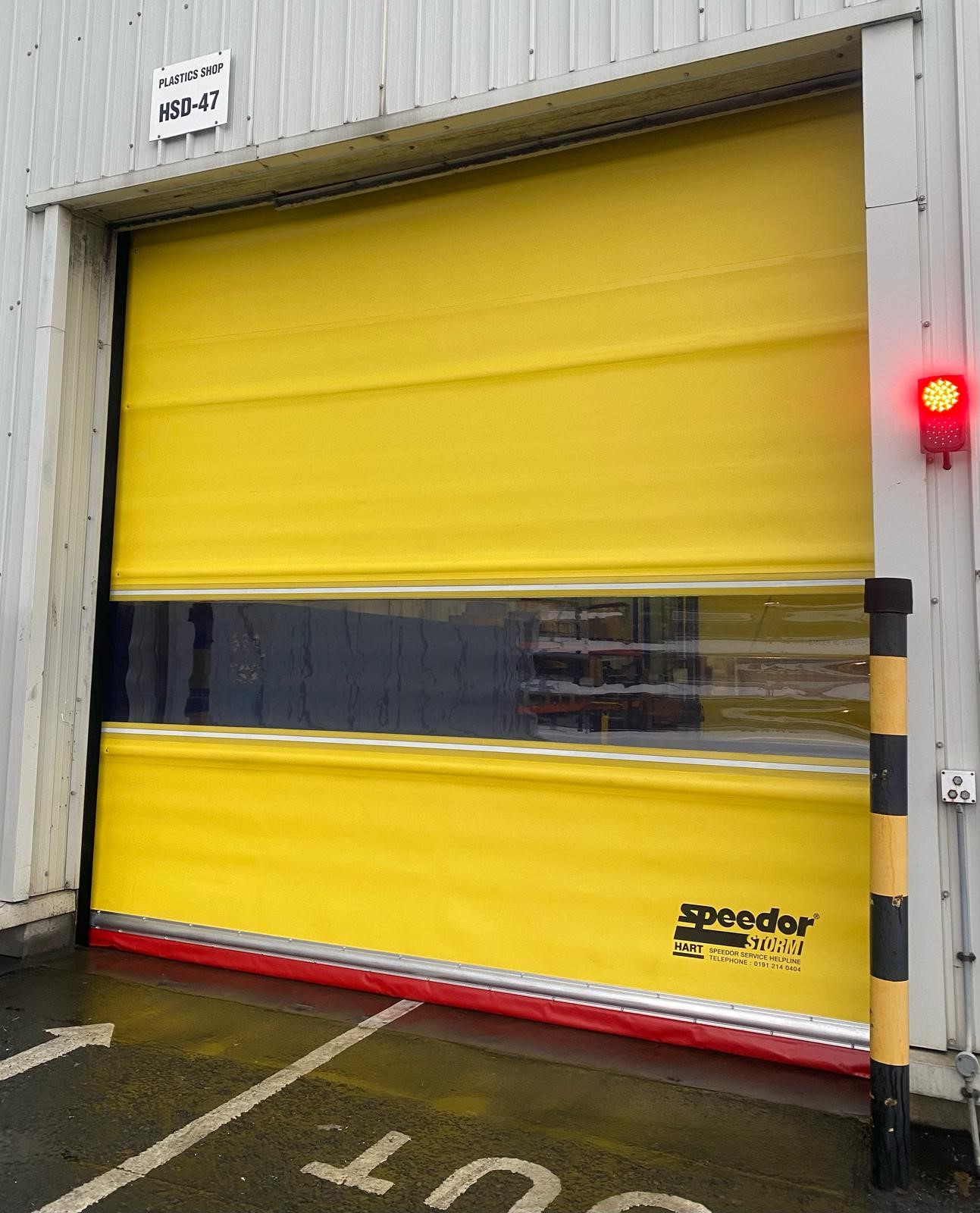
“It is of great credit to all who have developed the company, its products and markets from success to success over this extended period of time. The founder, my father Norman Hart, could not have envisaged the diverse range of specialist doors that have been designed, manufactured and delivered not only within the UK but all over the World including Europe, Russia, the Americas, the Middle East, Africa and Far East.
“We have moved to World-class door designs from our beginnings which were the design and manufacture of shop blinds,” says Mr Hart. “There is no substitute for hard work and maintaining the core values enabling us to make the best available.
“These principals got us into the position we are now in. It is with great humility and pride that the business has moved into the next generation’s capable hands with my son Nicholas successfully carrying out the role of Manging Director.
“I never forget for one moment at the start of each New Year, that we are a global business headquartered in Newcastle upon Tyne operating daily in over 50 countries world-wide such as the Falklands, North America, the Far East, Russia, the Middle East, Africa and Europe.
“Further our product range now totals 20 door models and shutters for a wide range of manufacturing sectors both in this country and abroad. Each year is a year of opportunity for us to continue along this amazing path of achievement.
One of Hart’s many features is its global reach which sees its Speedor range of high speed doors and shutters in much demand along with Hart’s Terror Screen range of security shutters and Typhoon shutters tested to the highest wind resisting standards.
The company operates from its Grade A office headquarters and the adjoining manufacturing facilities at Westerhope, Newcastle upon Tyne. The location offers rapid access to the region’s motorways and the nearby international airport.
“With continuing global uncertainties and the ever present debate on Climate Change I believe our leading Speedor and Typhoon brands have an important part to play in delivering suitable working environments and therefore both will continue to be in demand,” says Mr Hart.
“Fundamentals delivered by Hart continue to be quality throughout from manufacture to installation as well as service back-up. We are cognisant of Climate Change issues and the role played by both Hart and our clients to keep carbon footprints to a minimum and Speedor’s contribution by its high speed and automatic operation high to reducing carbon foot print is well known.”
“Our Speedor brand was Britain’s original automatic high speed door. Robustly engineered door system for frequent use in high-traffic situations, there are many thousands of Speedor installations in daily operation across the Globe.
“Built for long life, Speedors require low maintenance. Their high-speed opening and automatic action improve efficiency, the energy-saving potential of this high speed roll door is high, controlling internal temperatures, escaping dirt, odours and noise.
“Over long lasting robust construction, UK design and manufacture across all models, and storm offering large size and upgrades forand dirty environments coupled with a unique guide system offering exceptional wind resistance up to class 5 as defined by DIN EN 12424.
There are several model options with the Speedor brand namely ECO, Storm, Smart, Mini, Conveyor and Cleanroom which together hazardous represent Hart’s high-speed door offer, a roller door for all uses.
“Speedor Storm is Hart’s best-selling door, ideal for challenging applications where reliability is essential. Its increasing success is based on its improved, rugged, design predominately for external use up to 8m x 6m/6m x 8m often in robust operating conditions with high wind loads.
“We have always had quality and longevity as our prime driver and our success with new variants, not just in high-speed doors but shutters such as our new Typhoon range, the fundamentals are quality throughout manufacture to installation and service to comply with changing national and international safety standards.”
“Hart Door Systems is a global business supplying a range of door and shutter systems to sectors such as Airports, automotive, agriculture, communications, consumer foods, energy, environment, exports, food, logistics, manufacturing, power, sport, transport and utilities,” says Mr Hart.
“To underline our global success Hart’s doors can found in nearly 40 international airports, from Newcastle upon Tyne to the Falklands, from Aruba to Vladivostok. This is a remarkable achievement.”

Doug Hart

Process filter manufacturer Amazon Filters is set to feature at this year’s Oil & Gas Asia (OGA) industry conference and exhibition in Kuala Lumpur, Malaysia.
The UK firm is teaming up with regional distribution partner, a Bumiputera company and Petronas-registered vendor, Diamond Offshore SDN BHD.
Together the pair will share a stand and look to engage face to face with key decision makers in the oil, gas, energy and petrochemicals sectors.
Among the Amazon Filters exhibits on display will be a specially shipped 3D printed model of a mobile rental skid containing housing vessels and filter cartridges.
Mobile filter skids are versatile, integrated filtration units designed for rapid on-site deployment and emergency treatment across various applications.
In the oil and gas industries, skid usage includes reactor and catalyst protection, final product depollution, high-value process liquid recovery (amine), the maintenance of process water quality and proof of concept.
Specific filters under discussion on the stand will include SupaPleat, a high-flow, nylon-pleated cartridge product that supports fluid process applications at refineries including the filtration of solvents, acids, iron fines and hydrocarbons.
SupaPleat was the key product underpinning a solution implemented recently in a hydrotreating and hydrodesulphurisation process at a Malaysian petrochemical plant. Process engineers there had reported that their original filters had to be changed frequently.
Amazon Filters experts worked with them to test SupaPleat at production capacity and support their installation. Later analysis showed the solution had extended continuous onstream operational life by 600%.
Also being highlighted is a liquid/gas coalescer, SupaSep, designed to enhance efficiency and drainage performance in high-flow filtration and separation processes. It is ideal for the removal of entrained liquid droplets such as water, condensate, oil, glycols and amines from natural gas. SupaSep is shown to be 99.99% efficient at removing aerosol particles, enabling liquid levels down to 1ppbw (parts per billion by weight).
Other products under discussion include newly launched sustainable polypropylene versions of Amazon Filters’ flagship meltblown filter ranges SupaSpun II, SupaGard, Contour and Contour Gas which are all used in critical filtration processes in oil and gas.
In harsh offshore conditions, SupaSpun II’s SRP-optimised grades provide essential pre-filtration for sulphate reduction membranes. The cartridge structure is designed for optimal seawater membrane protection through decades of development. This ensures longer operating life and higher levels of performance compared with cartridges not tailored against this specific application.
And both SupaSpun II and the spun-bonded, nominal-rated SupaGard are supported by KilBac technology, featuring high-performance antimicrobial and antialgal additives. KilBac harnesses micron-sized particles containing active silver, zinc and copper which, combined with a base polymer, combat the growth of bacteria or algae. The resistance to biological growth extends the operational life of the filters by addressing the risk of ‘grow-through’ and subsequent downstream contamination.
Members of Amazon Filters’ Kuala Lumpur-based sales team, Mohamed Nizam Mohamed Hanifa and Muhamad Syakir Samsudin, will be at OGA along with senior representatives of Diamond Offshore.
Nizam said: “We look forward to speaking face to face with oil and gas operators, from upstream to downstream, including oilfield service companies who support FPSOs and deepwater drilling. It’s all about helping customers to maximise processing and refining performance, improve output purity and stay cost effective. By aligning with the imperatives of durability, energy savings, sustainability and local support, we aim to position Amazon Filters and Diamond Offshore as not only suppliers but long-term partners.”
Fazli Ibrahim, Diamond Offshore’s Malaysian-based Chief Executive, said: “Together we will demonstrate a suite of advanced filtration products designed to meet the demands of global oil and gas operations. We will highlight the benefits of innovative, energy-efficient filtration solutions for performance, productivity and sustainability in the most challenging operating environments and across upstream, midstream and downstream processes.”
Now in its 21st year, OGA includes exhibitions, conferences and networking sessions with involvement from partners such as the Malaysian Petrochemicals Association and the Malaysian Oil, Gas & Energy Services Council.
OGA takes place at the Kuala Lumpur Convention Centre, Malaysia, on 2 to 4 September 2025.
For more information on how Amazon Filters benefits the oil and gas sector, visit www.amazonfilters.com/oil-and-gas-filtration.
This website is owned and operated by: MSL Media Limited
Co. Number: 05359182
© 2005 MSL Media Ltd. All rights reserved. E&OE