Latest News

IGS Acquires Thermal Spray Business from Liquidmetal Industrial Solutions

IGS_Globe.jpeg

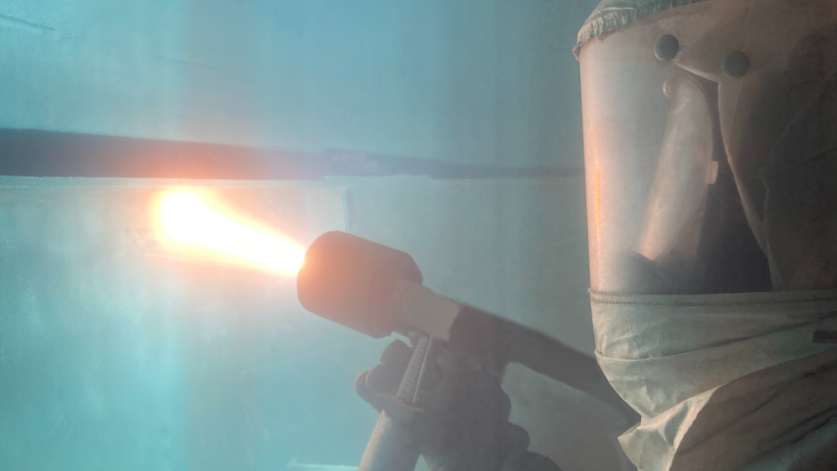
Integrated Global Services, Inc. (IGS), a leading provider of proprietary asset integrity and environmental and efficiency technologies, is pleased to announce the acquisition of the engineered coatings and materials business of Liquidmetal Industrial Solutions. Based in Chattanooga, Tennessee, the coatings and materials business specializes in high-performance thermal spray application services and materials.

IGS leverages its physical presence across six continents to provide a global customer base with robust, purpose-built surface enhancement solutions across a diverse set of equipment and end markets.

This acquisition expands IGS's asset integrity technology portfolio, enhancing IGS's ability to offer customers the optimal thermal spray solution for their unique needs. Several North American personnel from Liquidmetal Industrial Solutions will be joining IGS.

"We are excited to welcome the experienced team from Liquidmetal into the IGS family," said Rich Crawford, President and CEO of IGS. "IGS's technology leadership, engineering excellence, and global operating platform – combined with Liquidmetal's innovative line of patented Armacor® and other material technologies – create compelling opportunities for continued global adoption of HVTS® across a wide range of industries."

"IGS is excited to support former Coatings and Materials Business customers," Hayden Hill, COO of IGS, added. "We will continue to offer the same technology they have relied upon in the past. These customers will benefit from greater operational and technical resources, as well as a broader suite of capabilities."

Liquidmetal Industrial Solutions will continue to offer a range of unrelated mechanical and inspection solutions after the divesture of its engineered coatings business to IGS.

Congratulations to our winners

leea.jpeg

Lifting Equipment Engineers Association (LEEA) Chair, Oliver Auston, welcomed guests to the LEEA Awards 2024 at the world famous Dorchester in London on the evening of 16th October. He proclaimed the event, celebrating its 6th year, to be the biggest yet with more people at the ceremony, a record number of high quality entries from LEEA members around the globe as well as more finalists. The winners of the awards are as follows:

  • Emerging Talent Award: Bradley Seaman, IMES International Ltd
  • CEO Award for Services to Learning and Development: Andy Dowd, Speedy Hire
  • Trainer of the Year - The Craig Morelli Award: Ashley Hall, Kito Crosby
  • Excellence in People Development: Jo Stamp, Sunbelt Rentals
  • Technical Excellence and Professionalism Award: Anton van der Zalm, Van Beest
  • Excellence in Leadership: Hadi Al Sagour, Saudi Aramco
  • Sustainability Excellence Award: Bunzl Safety and Lifting
  • Excellence in Service Innovation: Test & Inspection Department, Select Plant Hire
  • Excellence in Product Innovation: RUD Twin Trigger ROV Hook, RUD Chains Ltd
  • Excellence in Safety: Bunzl Safety and Lifting
  • Excellence in Lifting Operations: Beryl Alpha Lifting Team, Apache Corporation

Guests were introduced to LEEA’s chosen charity, Demelza, which delivers extraordinary care to extraordinary children facing serious or life-limiting conditions, providing support for all the family. Special guest, former Special Forces Sergeant Jason Fox, then regaled the audience with stories stretching from his time in the forces to his recent experiences in the world of TV.

Thanking the Board for continuing to seek excellence, LEEA CEO Ross Moloney, who co-hosted the evening with Oliver Auston said: “Lifting is an outstanding and crucial part of the economy. It is about problem solving, making dreams come true and, at the end of a shift, that we go home safely. Congratulations to the eleven recipients of our trophies. You are designated representatives of excellence, built on pillars of innovation and safety. I thank all the nominees as well as the sponsors and judges for their essential contributions. See you at the LEEA Awards 2025.”

Winners in detail

Details about the LEEA Award winners 2024 are as follows:

Emerging Talent Award, sponsored by Bridger Howes Limited, celebrates individuals who show exceptional promise, initiative and potential for future success, serving as role models and inspirations to others.

The winner is Bradley Seaman, IMES International Ltd. Brad is an absolute credit to IMES and to the Lifting Industry as a whole. He has exactly the right attitude and drive that the industry needs right now and the company is very much looking forward to helping him develop into the new era of Lifting Equipment Technician and beyond.

The judges said: “Brad is the epitome of emerging talent” and “appears to be a very energetic and proactive person and is obviously keen to learn and develop his knowledge and skills.”

Runner up was Rory Stewart of Europa Engineering Group.

CEO Award for Services to Learning and Development. Ross Moloney, CEO of LEEA said: “Sometimes there are candidates for the awards who are worthy of special recognition outside of the category for which they applied. How we develop pathways for our new recruits and then how we support our students as they progress onwards in their career is one of the most important challenges faced by the industry.


The winner is Andy Dowd, Speedy Hire. Andy is the Lifting, Training and Development Manager at Speedy Hire. His commitment to education, mentorship and excellence has made a significant impact on the Speedy organisation. He has been a key figure in developing their lifting engineers, nurturing the next generation of talent and elevating training programmes.

Moloney added: “Andy Dowd is clearly an outstanding example and advocate of learning and development in the industry. In addition to completing four LEEA Diplomas himself, Andy is the Speedy main contact for the LEEA Accredited Training Scheme, which has ten approved courses. He is a member of the LEEA Learning and Development Committee and has been shortlisted three times for the trainer of the year. His determination to innovate in terms of teaching methods and mentor apprenticeships really stood out, and I believe it is wholly fitting that we recognise his service to the sector both in and out of the classroom.”

Trainer of the Year - The Craig Morelli Award recognises and celebrates trainers from the LEEA Accredited Training Scheme who excel in their profession and make significant contributions to the development and success of others.

The winner is Ashley Hall, Kito Crosby. Ashley has worked within the Lifting Industry for 31 years, 16 with Crosby, and has been training for over 10 years. He is a member of the LEEA Technical Committee, an Accredited Training member and has been a board member for four years. He is also a member of the Crane Forum in Aberdeen and the ILLAPG (Industry Lifting Lead AP Group).

Deeply passionate about safety and committed to ensuring that everyone understands the importance of proper training, Ashley’s dedication inspires both customers and colleagues. Recognised as a subject matter expert within the industry, he combines extensive training and practical experience, approaching his role with the utmost seriousness.

Ashley is the main custodian of the Kito Crosby Rig Safe, Rig Crosby trailer, promoting safety within the Lifting Industry. The trailer is a key element in the company’s training programme and Ashley travels throughout the UK and Europe for seminars, open days and training sessions.

The judges said: “Having witnessed Ashley at work I believe he is an excellent candidate for the award.” Also: “The onsite trailer and Ashley’s delivery is a major progressive step in training and the overall result is one of consistency and excellence.”

Runner up was Russell Reid of Boilermakers Lodge 146.

Excellence in People Development celebrates people and organisations that prioritise the growth and development of their people, particularly where they foster a culture of learning, innovation and excellence.

The winner is Jo Stamp, Sunbelt Rentals. With a 35 year career in the hire industry, including 9 years with Sunbelt Rentals, Jo showcases dedication to encouraging development and growth of people within the organisation and the wider industry.

Jo has demonstrated her commitment to mentorship and personal development by mentoring numerous employees, guiding them towards professional success and personal development. This dedication was recognised at the 2024 CPA (Construction Plant-hire Association) awards, where Jo received the ‘Highly Commended’ Award for her outstanding mentorship.

Jo’s influence extends beyond formal mentorship. She is known for her personal support to colleagues, always available to offer her expert advice, discuss projects, address issues or assist with customer enquiries, regardless of the time of day. Her open door policy and approachable nature have made her a trusted teammate and advisor within the industry.

The judges said: “Jo has developed a real skill for people progression,” and is “an experienced, talented and knowledgeable people-manager… it is very clear that Jo is highly thought of in Sunbelt.”

Runner up was William Hackett Ltd

Technical Excellence and Professionalism Award recognises individuals who not only excel in their technical abilities but also demonstrate professionalism, leadership and a commitment to continuous improvement in their field.

The winner is Anton van der Zalm, Van Beest. Anton is a technician from the heart. With his background as a teacher in physics and chemistry, sharing technical knowledge is what he loves most. Working with Van Beest for 20 years, he is now VP Corporate Research & Development with responsibility for all technical challenges, choices and developments. Within the company, this is the highest technical position and part of the ‘Leadership Team’. Safety procedures, testing and quality control are his highest priorities.

The judges said: “Anton has made a great contribution to Royal Van Beest and the Lifting Industry over many years. He deserves this award.” And: “Anton is shown to be very professional and his technical abilities are well known, a very impressive nominee.”

Runner up was Jim McDonald, IMES International Ltd.

Excellence in Leadership, sponsored by Hoist Magazine recognises an individual who has proven to be effective in improving or growing their firm. It seeks evidence of vision, ambition, dynamism and marrying the sometimes competing factors of strategy and day to day operations.

The winner is Hadi Al Sagour, Saudi Aramco. Hadi Al Sagour is the Manager of the Engineering and Technical Support Division within Aramco Mobility and Logistics Services Department. In this role he has made significant contributions that greatly improved Aramco crane and lifting services activities. He has had a noticeably positive influence on the Lifting Industry, building on both his strong technical background and management role within his company. His excellent leadership skills encourage his team to follow him.


Hadi’s journey in the Oil and Gas Industry has been nothing short of remarkable. From humble beginnings to a distinguished leader, his contribution has not only propelled the organisation forward but has also set new benchmarks for industry standards. His innovative approach, coupled with rich experience and unique influence has earned him a reputation as a visionary leader.

The judges said: “Hadi is highly accomplished and his successes far surpass other applicants. Not only is he a leader in business but Hadi is a leader in the Lifting Industry and the Middle East’s safety developments in various industry sectors.” He is “making a great  contribution to the success of Aramco.” And: “A clear industry leader in a large organisation.”

Runner up was Simon Luke of Reid Lifting.

Sustainability Excellence Award looks for evidence of successfully wrestling with any type of sustainability related challenge, be it related to workforce, energy use or supply chains. The shortlisted candidates have all demonstrated success in improving business practices to improve their longevity and lower their impacts.

The winner is Bunzl Safety and Lifting. Bunzl’s sustainability strategy was created following in-depth research and wide consultation with key stakeholders. This produced a four pillared approach: supply chain, people and community, products and customers, and environment and climate change. Eight key targets ensure progress in delivering the aspirations of the company, which include phasing out single use plastics, creation of an equitable and inclusive working environment, establishing a compliant network of suppliers and at least half of operational waste being recycled.

The entry showed clear evidence of action as well as aspiration, with case studies showing improvements in how the company is eliminating plastic waste, switching to renewable materials and reducing pallet wrapping.  Where there may be uncertainty about the balance between the costs and benefits of sustainability, Bunzl showed how a commercial business can be focussed on sustainability.

The judges said: “Bunzl is the outstanding nominee in this category.” It’s “sustainability programme is well detailed.” The entry was “a very thorough and professional display of a modern company making a positive difference to the world they trade in”.

Runner up was Speedy Hire.


Excellence in Service Innovation seeks to celebrate services that have improved in an innovative way. It looks for creativity, originality and either improvement or creation of brand new services that give added value to the customer.

The winner is Test & Inspection Department, Select Plant Hire. Select Plant Hire has invested significantly in its T&I department to ensure clients, both internal and external, are provided with the best possible services, solutions, innovations and the highest standard of independent inspections. The natural growth and development of the department means more T&I services have been brought back in-house (tower and crawler cranes) while ensuring they are always operating with the current legislation and industry guidance.


The judges said: “Bringing the service back in-house is commendable. A high standard is set and to some degree higher than required.” It is “a well thought out and comprehensive service package that benefits everyone in the chain.”

Runner up was RiConnect Rental Module, RiConnect UK Limited.

Excellence in Product Innovation, sponsored by International Lift and Hoist, seeks to highlight the new and creative products that are entering the marketplace from our members. Shortlisted candidates have all created products that take the lifting world forward. Their innovative products mean that the world can go higher, further and safer in tougher environments.

The winner is RUD Twin Trigger ROV Hook, RUD Chains Ltd. Historical data shows frequent offshore incidents involve a hook snagging on rigging and the unintentional release of the load, known as shedding. The RUD Twin Trigger ROV Hook has been engineered to surpass the industry’s stringent safety and efficiency standards, reducing operational downtime and associated costs. This hook boasts a unique outward opening safety mechanism with just two moving parts, enhancing both safety and ease of use.

The judges said: “The RUD ROV Hook has been designed to set itself aside from other products on the market for subsea application and focuses on safety and ease of use to streamline subsea tasks. This product is deployable across the global market and could be developed to solve similar issues in other sectors”.

Runner up was VisionTek, Bridon International Ltd.

Excellence in Safety, sponsored by Rigging Services applauds the organisations that prioritise the health and safety of their employees and demonstrate leadership, innovation and continuous improvement in safety management. 

The winner is Bunzl Safety and Lifting. Bunzl’s corporate wide commitment to safety was hugely impressive. Irrespective of position or seniority, all of its staff and customers benefit from numerous initiatives designed to deliver safety. These include an Incident and Reporting App, a culture where all staff are involved in reporting incidents, intra-team Bunzl games used internally to drive through the safety culture and clear reporting by branch. Bunzl provided numerous examples of the steps it has taken to ensure safety within its workforce, both in terms of investment in infrastructure and equipment and in recent changes to how pre-set checks on machinery help to manage risk. Work to support field inspectors was also extremely impressive.

The judges said: “I like the idea of using a positive message to achieve progress over something that is negatively perceived, such as inter-branch competition.” And: “The B safe inspections are very good and ensure that all people have to make the correct safety checks before using the equipment.”

Runner up was Lifting Department, Select Plant Hire.

Excellence in Lifting Operations, sponsored by IMES, recognises and celebrates individuals or teams that excel in conducting lifting operations safely, efficiently and in compliance with regulations and best practices.

The winner is Beryl Alpha Lifting Team, Apache Corporation. In 2023, a motor within a gas compressor on the Beryl Alpha failed, limiting natural gas export from the platform in the North Sea. Located in an extremely cramped and enclosed space, the repair could not be conducted safely in location and the motor had to be removed and shipped onshore, an extremely complex process never attempted in the platform’s 47-year history.


What ensued was a remarkable feat of lifting mastery in just 37 days. With only 50 mm clearance either side of the motor for removal, high ambient temperatures and working at height in proximity of a live plant containing hydrocarbons, full proof planning and flawless execution was essential. With intricate planning and outstanding teamwork, no accidents or incidents were recorded for the removal and reinstallation. An incredible team accomplishment.

The judges said: “A classic well thought through lifting operation. I liked the use of multiple methods, such as jacking, skidding, lifting and pulling.” And it was “a well planned and executed lifting operation with safety at the forefront.”

Runner up was UniShore Lifting Truss, MGF Trench.

For more information, visit leeaint.com and awards.leeaint.com

Potentials and limits of AI

The transformation in companies, which is made possible by the potential of artificial intelligence, represents one of the key challenges and opportunities of the future. The key technology of AI offers considerable potential for value creation, which is reinforced by the rapid advances in the field of large language models (LLMs). These developments are leading to a fundamental disruption of previous approaches in the AI sector.

Generative LLMs such as ChatGPT, Bard or LLaMA use advanced deep learning techniques and huge data sets to recognise, interpret and generate human language and complex data. The impressive results in text generation and other creative areas are not only milestones for the optimisation and digitalisation of existing processes, but also make a decisive contribution to the transformation of new areas of application by automating them and thus fundamentally changing the way we work and communicate.

Many companies are currently still in an experimental or pilot phase, trialling the latest AI applications in various business areas to test their efficiency and effectiveness. Nevertheless, their transformative power will bring about profound changes in the way companies work and communicate in the long term.

Five examples of current and future AI use cases

Below are some examples of how AI can be used in various industries and business areas today and in the future to optimise operational processes and enable new business models. These examples range from general applications to specific niche applications that demonstrate the versatility and potential of AI.

1. Analysing and evaluating large amounts of data

The use of AI for analysing and processing large volumes of data opens up a wide range of possibilities and applications that go far beyond the limits of traditional methods: For example, it can help to better design individual services and products. For example, the AI sub-area of natural language processing (NLP) can already be used in the insurance industry to analyse patterns and trends in data and compare documents at content level. Changes to general insurance conditions can be recognised in this way or an insurer’s services can be compared with the current market offer. Due to their complexity, these tasks are particularly time-consuming and error-prone when performed manually. With machine support, complex documents can now be automated, analysed and compared at a semantic level, significantly reducing errors and effort.

2. Customer communication in specific industries

One example of a specific niche application is the use of AI in customer communication. The use of large language models in particular offers an improvement in customer interaction through natural language dialogue systems. In sectors such as banking, insurance or telecommunications, this can help to process customer enquiries more efficiently in future through a high degree of automation and offer hyper-personalised advice and customer contact. Well-trained LLMs can respond even more individually to customer needs, suggest suitable products or services and feed findings back to the company in order to collate this customer information in compliance with data protection regulations.

3. Enterprise asset management and predictive maintenance

A special use of AI can be found in the area of enterprise asset management. AI is already being used in industry today to predict and carry out maintenance before faults occur. This predictive maintenance is based on the analysis of sensor data and other relevant information in order to recognise patterns that indicate possible equipment failures. In this way, specialists are informed before a fault occurs that a particular component is worn and should be replaced. Intelligent image processing systems are another field of application for AI in industry. These support quality control by automatically recognising errors in certain manufacturing processes.

4. Software development

In the field of software development the use of AI will help to speed up development and make it more efficient in the future. Application scenarios include the automation of routine tasks, the generation of standard code or the use of large language models (LLMs) as intelligent tools for answering technically demanding questions.

Current challenges and limits of AI

Investing in innovative AI-based systems can give companies a significant competitive advantage by using data-driven insights and automation to optimise processes or open up entirely new areas of business. However, these advances also bring with them ethical and data protection challenges as well as security risks that need to be addressed appropriately in each use case.

AI applications are only ever as good as the quality of the models and training data they use. Large language models in particular are currently dependent on a huge amount of high-quality training data, which could soon run out. At the same time, these new generative AI applications still raise unresolved questions regarding data protection and privacy rights as well as compliance with the General Data Protection Regulation (GDPR), which are currently being examined by the European data protection supervisory authorities.

AI hallucinations are also a known problem of generative language models, where the chatbot provides incoherent or incorrect answers. Risks also lie in possible distortions with regard to criteria such as origin, gender or other characteristics that can be reproduced based on historical data and the prejudices contained therein.

In the field of software development, there are currently concerns about AI-generated software being used incorrectly without human supervision and expertise. This is because poorly written code by AI systems could cause more damage than help solve problems in the future due to the resulting potential security vulnerabilities.

Human expertise remains essential

The current challenges and technical limitations make it clear that artificial intelligence is a valuable tool to support specialists in companies in their work. However, in critical or sensitive use cases, such as the evaluation of promotions, accounting and controlling processes or claims settlement in the insurance sector, which have a significant impact on customers, decisions should not be left exclusively to AI. For business-critical decisions, human expertise and experience remain essential to safely and effectively utilise the current capabilities of AI. This connection between human and machine is crucial for business transformation as it increases efficiency while ensuring the quality of decisions.

Author Martin Hinz, CEO and co-founder of Convista, has been with the Convista Group for over eleven years. Since 2012, Hinz has been a member of the Management Board of ConVista Consulting AG. He has more than 20 years of experience in software development in the insurance business. He is available for interviews as an expert concerning digitalization as well as it - and business transformation related topics.

OPTIME helping prevent 360 hours of downtime

Producing several million sustainable beverage cans per hour across its European plants, a can manufacturer needed to avoid unplanned machine downtime; the company was looking for a condition monitoring solution that was easy to operate and provided a simple way for the maintenance team to keep a close eye on all the machines.

Schaeffler’s certified service partner Faber Industrietechnik recommended their OPTIME Condition Monitoring (CM) solution. More than 5,000 sensors now monitor process-critical machines in all the customer’s European plants. In approximately two years, OPTIME CM has detected more than 500 critical faults and has provided numerous early warnings. In this time, a total of 180 unplanned downtimes (360 hours) have been avoided.

Challenge

The customer produces several million beverage cans a day at one of its plants in Germany. Depending on requirements, up to 20 process steps may be required to manufacture the beverage cans from aluminium coils. Process-critical machines such as the deep-drawing (cupping) machine, body maker, printing machine and auxiliary units such as motors, fans and pumps are heavily stressed in the process. The machines operate in shifts around the clock seven days a week.

It is not possible for impending damage on machines to be “heard” because it is a “loud” process. In addition, the machines are sometimes difficult to reach. For safety reasons, some machines are protected behind a protective guard or grid. Keeping an eye on numerous drives also poses new challenges every day for the maintenance team.

In order not to jeopardise the operational processes and to avoid unplanned downtime, the company relied on regular manual measurements, which were performed by Faber Industrietechnik until 2020. If a machine fails unexpectedly, part of the production facility has to be stopped. This incurs extremely high costs in terms of personnel, material and scrap. Manual measurements are no longer sufficient for reliable planning. The customer needed a European-based solution that could be expanded to all world-wide locations for can and lid manufacturing.

Solution

What started as 50 OPTIME CM sensors installed in the first plant has turned into more than 5,000 sensors installed across several European plants by September 2023. Initially, only a few machines were monitored using OPTIME CM. After the initial successes, the solution was expanded to other European plants. In addition, lubrication monitoring using the Schaeffler OPTIME C1 is also used in some of the customer’s plants. 

Case 1 – Plant in southern Germany: 24 hours of unplanned downtime avoided

In a plant in Germany, auxiliary units such as main drives, pumps, gearboxes and fans on critical machines have been monitored with OPTIME CM since May 2021. Around six months after installation, several faults were displayed on the dashboard. Among these were, for example, bearing damage on the main drive motor of the exhaust air treatment unit, pump defects in the wet system, and various faults on other machines. 

Damage detected on an exhaust air motor

Shortly after the OPTIME sensors were installed, motor damage was detected. The maintenance team confirmed this. When the motor was inspected during a planned replacement, the bearing was found to be damaged due to passage of electrical current. Without OPTIME CM, the defect would not have been detected until much later. High consequential costs were therefore avoided.

Case 2 – Plant in eastern Germany: 31 hours of unplanned downtime avoided

In another plant in Germany, critical auxiliary units such as motors, gearboxes, fans, pumps and drives, as well as air extraction, air supply and air recirculation fans on all machines (i.e. the pin oven, decorator, body maker, and more) have been monitored with OPTIME CM since February 2022. From February 2023, the OPTIME C1 lubricator has been used primarily to supply pin ovens and exhaust fans with the necessary amount of grease.

Numerous faults have been detected at an early stage and several cases of unplanned downtime have been avoided. Here is an example:

Alarm on decorator 2

Two weeks before the main alarm limit was exceeded in April 2023, a slight rise in the ISO value on the guide roller on the decorator was seen on the dashboard display. The maintenance team confirmed that a defective bearing was the cause of this. The bearing was replaced as planned. This saved 7 hours and cost savings were in the 5-digit range. After the bearing was replaced, the machine ran as normal without further problems.


Successful project

Thanks to the close cooperation between Faber and Schaeffler, the can manufacturer was completely satisfied with the CM solution. Through Faber, OPTIME CM was made available to all countries and provided installation support in Germany, with Schaeffler supporting across Europe with the installation. Plans to extend the monitoring solution are underway.

schaeffler_1.jpeg

The customer produces several million beverage cans per hour across its European plants.

schaeffler_2.jpeg

Sensors monitor the main drive motor of the exhaust air treatment unit.

schaeffler_3.jpeg

Sensors monitor the decorator.

www.schaeffler.com


Spotless Performance From Dirty Water Pump

landia_Octobr.jpeg

In Northern Lincolnshire, a Chopper Pump made by Landia has completed five years of continuous service at the main, 2MW biogas plant run by Singleton Birch, who for over two hundred years, have produced high quality lime products.

Working underground as part of an automated system for dirty run-off water, the Landia pump chops up maize and other particles that end up in the drainage; sending the recirculated liquid to the site’s lagoon, or back to the digesters as and when required.

“The Landia Chopper Pump does an excellent job,” said Danny Mason, Renewable Energy Supervisor at Singleton Birch, where the AD plant’s three 2800m3 digesters use a feedstock of maize, chicken litter and sugar beet.

He added: “The pump is very easy to maintain and has really helped us out with drainage on site, chopping up solids that would block up lesser quality pumps. Landia take care of the full servicing, and always ensure that there isn’t any downtime.”

Invented by Landia in 1950, the Chopper Pump is designed with an external knife system that continuously reduces solids.

In addition to this Landia unit at Singleton Birch, Landia has numerous Chopper Pumps installed at biogas plants as part of its digester mixing system. These include Scottish Water, Eco Verde Energy, and Republic Services in California.

www.landiaworld.com

What is Envelope Demodulation and how does it detect bearing faults?

TPI_October_1.jpeg

If we look at the vibration time waveform from a damaged bearing, as detected by a vibration sensor (accelerometer) for instance, it will typically look like that shown below.

TPI_October_2.jpeg

The numerous high amplitude “spikes” are caused by the damaged bearing parts knocking against each other. Because the bearing noise spikes are of very short time duration, they produce high frequency components in the resulting vibration frequency spectrum. Consequently, examining the high frequency content of a vibration waveform is a very good indication of bearing wear. This is precisely what is done when the bearing noise is calculated in Bearing Damage Units (BDU). The waveform is firstly high pass filtered to remove any low frequency run-speed vibration signals and then the magnitude of the resulting signal is calculated to determine the bearing wear.

A reading of 100 BDU corresponds to 1g RMS (average) high frequency vibration and is pretty much indicative of a worn or damaged bearing. In other words, it may be helpful to think of the BDU figure as being very roughly equivalent to “percentage” bearing wear.

However, an even better measure of bearing wear can be achieved by looking at the Envelope Demodulated vibration waveform (DeMod). Although complex to explain mathematically, DeMod is relatively easy to implement on a high-end vibration analyser.

Such devices used to be prohibitively expensive, but not anymore. For example, the Test Products International TPI 9043/Ultra III costing from £5,000, combines a high resolution (24-bit ADC) three channel data capture unit (TPI 9043) with easy-to-use display software (Ultra III) that runs on any Android device (tablet or smartphone). With its 51,200 lines of resolution, the TPI 9043/Ultra III combo can produce DeMod frequency spectrum resolution of better than 0.1Hz, more than sufficient to enable clear identification of bearing fault frequencies.

The DeMod technique works on the principle that the component parts of worn bearing strike against each other as they spin and cause localised “ringing” in the bearing. This is exactly like striking a bell, where the harder the bell is struck, the louder it rings. By demodulating the vibration waveform, it is possible to determine how hard the bearing parts are being struck and therefore how badly the bearing is damaged.

By examining the DeMod frequency spectrum it is also possible to determine the frequency at which the bearing components are being struck and therefore identify the likely cause of the fault. For example, a peak at the bearing’s ball pass outer frequency (BPFO) would indicate a fault on the outer race of the bearing.

The DeMod spectrum for our damaged bearing clearly shows a series of peaks at harmonics of 152Hz, which corresponds to the BPFO for this particular type of bearing running at 50Hz. As you might have guessed, this bearing had a damaged outer race!

TPI_October_3.jpeg

Another major advantage of the DeMod technique is that it tends to localise the bearing noise and make it easier to pinpoint the source. The localisation is due to the “disco effect” where, just like the music at a discotheque, the higher frequencies do not travel as far as the lower frequencies. This is why you only hear the low frequency sounds outside a disco. In the same way, the “ringing” noise due to bearing wear detected by the Demod method, does not travel as far as the other lower frequency bearing noises detected by the BDU reading.  This additionally makes DeMod a very useful tool for localising bearing faults on rotating machinery.

Many modern vibration monitoring software packages, such as TPI’s C-Trend II, can automatically overlay the bearing fault frequencies on the DeMod plots by looking them up in a bearing database. This makes bearing fault identification even easier, but that’s going to have to be the subject of a future article…

For more information please contact TPI Europe’s head office on +44 1293 530196 or take a look on the website at www.tpieurope.com or email This email address is being protected from spambots. You need JavaScript enabled to view it.
Why effective parts management is critical to your maintenance success

mmoct.jpeg

Picture this: A critical piece of equipment suddenly breaks down. You need a specific part to get it running again - but nobody knows where it is, or if it's even available. Downtime costs pile up, production grinds to a halt and stress levels rise. Sound familiar?

The challenge of spare parts management

This scenario is all too familiar to maintenance professionals. Managing spare parts is a challenging task - the balance between overstocking and running out is delicate. Effective spares management is key to minimising downtime, controlling costs and keeping production running smoothly. But traditional methods often fail to give you real-time information, visibility and control. That's where maintenance software like MaintMaster comes in.

How MaintMaster can transform spare parts management

Dedicated maintenance management software, such as MaintMaster, transforms the way you manage spare parts. With everything in one system, your team always knows where the parts are, how many are available and when they need to be reordered. No more manual tracking or sifting through paperwork. MaintMaster's powerful search functionality makes it easy to find parts, and its integration with procurement ensures that the parts you need are always available when you need them.

What sets MaintMaster apart is its ability to integrate and its flexibility to adapt to different processes. It connects seamlessly with other business systems, ensuring that all information - from suppliers to finance - flows smoothly. Need to track parts across multiple warehouses or sites? MaintMaster has you covered. Want to automate re-ordering to avoid stock-outs? It's all possible, tailored to your unique maintenance workflow.

MaintMaster also provides detailed analytics to help you understand usage patterns, optimise inventory levels and make data-driven decisions. With better visibility of your spares, you can reduce excess inventory, save costs and ensure the right parts are available when needed. This level of control helps to extend equipment life and improve overall operational efficiency.

MaintMaster's flexibility means it can adapt to the specific needs of different industries, from manufacturing to facilities management. It's designed to support the way your team works, with custom fields, workflows and reports that can be tailored to your exact requirements. This means you don't just get a software solution - you get a system that grows and evolves with your business.

Take the first step to smarter spare parts management

Improving your spare parts management doesn't have to be overwhelming. By implementing a system like MaintMaster, you can gain better visibility, reduce downtime and make your maintenance processes more efficient. Take the first step towards smarter spare parts management - start by assessing your current processes and exploring how a tool like MaintMaster can help address your challenges.

Contact:

MaintMaster Systems Ltd

Plexal, 14 East Bay Lane

Here East, Queen Elizabeth Olympic Park,

E15 2GW London, United Kingdom

Phone: +44 749 332 8466   E-Mail: This email address is being protected from spambots. You need JavaScript enabled to view it.
Reduced energy consumption thanks to regular filter changes

AERZEN_Oct.jpeg

A brand-new filter has a pressure loss of approx.10 mbar. The degree of contamination increases continuously as a result of operating the plant – and with it the pressure loss. A clogged or partially clogged air filter causes increased energy consumption and leads to a significant reduction in energy and cost efficiency. The increased electricity consumption quickly adds up to £10,000 per year. These costs can be avoided with a regular filter change.

Filter solutions for every application

AERZEN offers filters in a series of options tailored to a wide range of machine technologies, such as positive displacement, screw and turbo blowers as well as screw compressors and room air conditions. For example, the F7 filter solution for demanding applications. The filter cartridge is identical in design to the standard filters. It can therefore also be easily replaced in existing Generation 5 machines. To operate blower and compressor packages safely in potentially explosive areas, AERZEN has designed suitable zone separation filters for the various ATEX requirements and zones. The change interval for the air filter depends on the degree of contamination of the sucked-in medium and can be determined precisely using the maintenance indicator.

Let’s Talk - email us at This email address is being protected from spambots. You need JavaScript enabled to view it. for more information.
Fluke delivers unmatched Safety to Solar professionals with tools specifically designed for high-voltage solar environments

FLUKE_October.jpeg

The new Fluke 283 FC True-RMS CAT III 1500 V Digital Multimeter and a283 FC Wireless Current Clamp provide the safety and accuracy to work in high-voltage solar environments with capabilities that streamline technician workflows  

Fluke, a global technology leader in the manufacture of compact, professional electronic test and measurement tools and software, announces the introduction of the  Fluke 283 FC Solar Digital Multimeter and the Fluke a283 FC True-RMS Wireless Clamp  which enable Solar professionals to work more confidently, without compromising safety in high voltage environments such as a testing individual panels, strings or invertors in a utility-scale solar photovoltaic (PV) array.

The new 283 FC Digital Multimeter from Fluke is designed to enhance safety and increase productivity, while also providing technicians with accurate, reliable, and repeatable results.

The Fluke 823 FC/PV Solar Kit includes CAT III 1500 V DC safety rated accessories that enable technicians to work confidently in high-voltage environments.  With Staubli MC4 test leads, professionals can quickly make reliable, secure connections to modules or strings to test DC voltage up to 1500 V DC, well suited to utility operations.

The TL175-HV CAT III 1500 V / CAT IV 1000 V rated silicone test leads offer flexibility for testing voltage, millivoltage, resistance, continuity, and capacitance on inverters, combiner boxes, PV arrays, and individual PV modules.

"Our digital multimeters are renowned for their exceptional accuracy, durability, and safety features making them the preferred choice of professionals across various industries for reliable and precise measurement,” said Jason Waxman, President of Fluke Corporation. “The Fluke 283 FC is uniquely positioned to cater to this market with both CAT III 1500 and CAT IV 1000 ratings prioritizing features that increase efficiency safety and reliability. It’s a powerful all-in-one tool for solar professionals."

Fluke 283 FC/PV Key Features and Benefits:

  • Highly Accurate Measurements: Provides precise voltage measurements for accurate frontline troubleshooting.
  • 60 A AC/DC Current Measurements: Safely troubleshoot individual strings of modules with the a283 FC wireless current clamp.
  • Visual and Audio Polarity Indicators: Help prevent accidental module wiring issues.
  • User-Defined Limit Gauge: Quickly make go/no-go troubleshooting decisions.
  • Unique Multimeter Readiness Self-Check: Ensures your meter is ready to test, providing confidence.
  • Large bright backlit display and illuminated keypad: ideal for working in dark environments.

The a283 FC True-RMS wireless current clamp simplifies the troubleshooting process without compromising safety and reliability. It measures both AC and DC current up to 60 A, ensuring precise readings for solar installations, electrical systems, and industrial equipment. Its thin jaw is designed specifically for cramped spaces like combiner boxes or inverters. Prioritizing safety at every step, the non-contact design allows for safe connections without touching live wires, plus wireless connectivity eliminates the hassle of tangled wires, allowing for measurements from a safe distance.

With the Fluke 283 FC digital multimeter and a283 FC wireless current clamp, technicians can measure voltage and current simultaneously and automatically calculate VA power. This feature eliminates the need to change the measurement setup, providing seamless and efficient data collection in the field.

Utilizing Fluke Connect with the Fluke Cloud Storage capability provides 283 FC users with an enhanced troubleshooting experience by allowing the 283 FC to transmit measurements to a smartphone or tablet for detailed analysis that is uploaded to the cloud.

For more information on the Fluke 283 FC True-RMS Solar Digital Multimeter and a283 FC Wireless Current Clamp, please visit Fluke 283 FC.

Revolutionizing oil analysis: Traditional vs Cutting edge technology

By Sanya Mathura (Strategic Reliability Solutions Ltd) & Neil Conway (Spectrolytic)

In our last article we focused on the question of whether oil analysis was still relevant today? While this is an age-old process, the benefits of oil analysis still continue to live on today although the methods involved have significantly evolved since its inception. In this article, we will do a deeper dive into the traditional methods of oil analysis versus some of the new cutting-edge technologies which exist today and whether we may see a replacement of one method over the other or a union moving forward.

If you’ve ever performed an oil analysis you know that this process follows certain standards which are listed in the report.  These standards govern the world of oil analysis and form the basis of how these tests are executed. There are committees dedicated to revising these standards to ensure that they are still relevant to the applications of today, one such committee falls under the ASTM body (American Society for testing and Materials).

Equipment has changed over time where oil sumps have become smaller but now produce more power. Oils are under more stress as they are expected to perform at higher temperatures under elevated environmental conditions and still protect the equipment. Global oil manufacturers work together with OEMs (Original Equipment Manufacturers) to ensure that the oils developed can work with their components in these increasingly harsher conditions. But what constitutes an oil “working properly”?

This is where oil analysis / sample testing plays a crucial role. Oil analysis tests have been standardized through authorized committees to ensure that the same test can be performed in different parts of the globe using the same procedures. This ensures that there can be a fair comparison of the results of these tests across the globe. These tests should also be repeatable (or get the same results every time they are performed). 

Typically, these tests are usually carried out in a laboratory environment, using state of the art equipment to achieve / maintain the required standards. However, sample taking, sample shipping and other human factors often result in misleading and / or extremely delayed reporting of the results. This is where emergent technology can alleviate some of these challenges.

Emerging technology – FluidInspectIR®

Spectrolytic’s FluidInspectIR-Inline is a comprehensive fluid monitoring system that uses an array of sensors (MIR, OPC, wear, viscometer, conductivity) to provide real time data on oil and fluid degradation parameters. At the heart of the system is a novel mid-infrared (MIR) sensor that measures the chemical composition of the fluid with parameters such as; TAN, TBN, ipH, oxidation, sulphation, nitration, water, glycol, soot, fuel dilution and additives. These can be measured, as a first in the field, with the same accuracy and in the same units as conventional labs.

There are a couple of areas where the FluidInspectIR can offer advantages as compared to traditional oil analysis. Here are a few of them:

Real Time Monitoring and Faster Results – with these online monitoring devices, users can readily get data throughout the day without waiting for the sample to be taken, shipped to a laboratory and then tested there. This significantly reduces the time between making decisions which could negatively impact the equipment’s performance. Within our industry, this time is absolutely critical as the cost of unplanned downtime for the affected assets can be millions of dollars.

Cost-Effectiveness – every time a sample is taken, there is a cost involved. The sample taking process is usually quite lengthy as often permissions have to be obtained since more organisations are trying to reduce potential health & safety risks by minimizing human-machine interactions.
Once a sample has been obtained it needs to be shipped to a laboratory. This not only has costs attached to it, but many couriers are now making it very difficult to ship oil samples. In addition, each shipment of a sample carries also an implied CO2 footprint.

fig1_Oct.jpeg

Figure 1: Comparison of different routes of oil sampling

As shown in figure 1 the resulting cost savings from utilizing real time inline sensors compared to other methods can be summarized as follows:

  • Human assets can be utilized more effectively without allocating time for them to take oil samples
  • Trend analysis based on real time; laboratory equivalent data allows the end customer to move from a time-based maintenance process to a data driven maintenance process
  • Early failures can be spotted very easily and unplanned down time, the nightmare of every asset manager, can be minimized
  • Oil drain intervals can be extended in a safe and controlled manner which can result in significant operational efficiency gains and reduced CO2 footprint

Accuracy and Reliability – getting an accurate representative sample using conventional oil sampling methods can be challenging at times. If the sample is taken at the wrong point (right after the filter or at a dead leg), it might not be representative of what is happening on the inside of the equipment. As such, it can completely derail the trend being established for that component and allow the users to believe that something is terribly wrong with that component.

With the FluidinspectIR online monitoring system, the sample delivery to the sensor is automated and standardized ensuring that the sample is delivered to the sensor in the correct way every time. Therefore, the users can rest assured of getting the sample taken at the right location (ensuring a proper representation of the system), at the same location (ensuring an accurate trend of the data) and with the same technique (which completely avoids any variation from human operators).

 As the FluidInspectIR uses mid-infrared spectroscopy which is identical to the technique used by laboratories (FTIR), the data provided by the FluidInspectIR system has, at least, the same accuracy as those produced by a laboratory as shown in figure 2 below.

fig_2_Oct.jpeg

Figure 2: Comparison of the FluidInspectIR technology to periodic oil checks using a laboratory (red circles)

Actionable data and improved maintenance – with real time data, failures can be prevented and major unplanned downtime eliminated. With the online monitoring system, it is easier to trend an increase in wear metals, change in viscosity, water ingress or any other parameter changes which would warrant some form of maintenance intervention. This provides users with the information they need at the right time without any further delays due to shipping of samples or an inaccurate sample being sent off as shown in the case study in figure 3 where a diesel engine on a dredging vessel saw spiked concentrations of water that coincided with the vessel being moored in harbour. With the quick action of the inline sensors, they were able to save £115k over 9 months.

fig_3_Oct.jpeg

Figure 3: Case Study for Diesel engine customer  

Data Integration and Remote Monitoring – traditionally, oil analysis results lived in databases which could be accessed electronically, or they were emailed and stored in a filing system. But these results are only available after a sample has been taken and sent off to the lab. This is how FluidInspectIR takes it a step further where assets can also be monitored remotely, in real time.

Imagine being able to monitor the conditions of a particular component while being offsite or multiple components for various sites. This can be particularly useful when trying to troubleshoot an issue related to a system process, especially across sites. This is one area that traditional oil analysis would not be able to mimic as the sample may not be taken at the exact same time as the ongoing system process therefore not allowing a correlation. 

Of particular importance is the ability to trend data across multiple assets. This can be critical if there is a significant environmental factor influencing the condition of the oil which may affect many of the components in the fleet. Being able to easily and quickly detect this can be the difference between a productive day and one that has gone into unplanned downtime.

The above offers some advantages of using these inline sensors but what really sets the FluidInspectIR apart?

Historical inline sensors have employed dielectric or impedance-based sensing. Impedance based sensing is slightly more advanced than dielectric sensing but still only measures a few electrical parameters such as oil resistance, capacitance and inductance which assist in detecting the polar molecules in the oil.

However, complex algorithms are usually used to convert the electrical data into a meaningful value such as TBN or develop a trend based on a dimensionless value. Laboratories use MIR Spectroscopy which is the same technology utilized by FluidInspectIR. As such, the data / results are given in the same units and accuracy as labs.  

The FluidInspectIR technology analyses the spectra in the wavelength ranges which have a chemical meaning for the application in which the sensor is being used, such as turbine oils, EALs, gear oils, engine oils etc. This specificity in the MIR spectrum, coupled with several mechanical and electrical design features allow lab accuracy in the field.

Fig_4_Oct.jpeg

Figure 4: Market validation and asset examples

The Hybrid approach

While the FluidInspectIR Inline sensors can provide actionable data required for preventive maintenance strategies, there are some parameters where a lab analysis would certainly be advisable. These are more specialized tests such as Air separation / Demulsibility or FZG loading tests which require some fairly complexed processes in which the oil has to stand for some time during the procedure or different loads have to be added until a particular characteristic is met.

With that being said, inline OCM technology has made significant advancements and the FluidInspectIR is currently considered state of the art providing lab equivalent data in real time. In addition, it is also capable of measuring nonstandard properties, such as oxidation by-products which can relate to varnish by-products or the potential to form varnish as well as monitor the quantity of antioxidants. The monitoring of these parameters could not have been done a decade ago as the technology simply wasn’t available.

The future of oil analysis will certainly be a hybrid approach where inline sensors continuously monitor the fundamental parameters and when limits are reached (either below or above), or the trending analysis shows a peculiar behavior, then specialized additional testing can be pursued using the lab infrastructure and expertise.

In this way, resources are conserved when the oil appears to be within its limits and functioning as it should. However, when these limits are reached and the component could be in danger, specialized resources will be deployed to ensure that the component does not suffer a fatality. The way forward for oil analysis is definitely a hybrid approach mixing the traditional with some of the cutting-edge technologies.

Bio:

Neil Conway – Applications Manager, Spectrolytic

Neil is the Applications manager for Spectrolytic where he develops and manages new and current measurement applications for all the product lines. Neil is also extensively involved in sensor characterisation, product development, customer training, and technical marketing.

Previously Neil has held Process Engineering positions in semiconductors with Motorola and Atmel and operated as Wafer Fabrication Manager with IR Sensor company Pyreos where he developed and commercialised the first thin film PZT IR sensor manufacturing line. 

Neil is a chartered Engineer (CEng) and Scientist (CSci) and corporate member of the Institution of Chemical Engineers (MIChemE) and holds a BEng (Hons) in Chemical & Process Engineering from Strathclyde University.

Bio:

Sanya Mathura, REng, MLE

Founder, Strategic Reliability Solutions Ltd

Sanya Mathura is a highly accomplished professional in the field of engineering and reliability, with a proven track record of success in providing solutions to complex problems in various industries. She is currently the Managing Director of Strategic Reliability Solutions Ltd, a leading consulting firm that specializes in helping clients improve their asset reliability and maintenance practices.

Sanya holds a Bachelor's degree in Electrical & Computer Engineering as well as a Masters in Engineering Asset Management from The University of the West Indies and has over 15 years of experience in the industry. She has worked with several well-known companies and has been recognized for her exceptional work in the field of reliability and lubrication engineering. Her expertise in developing and implementing asset management strategies, risk assessments, and root cause analysis has earned her a reputation as a subject matter expert.

As the head of Strategic Reliability Solutions Ltd, Sanya leads a team of highly skilled professionals who provide a wide range of services to clients across various industries, including oil and gas, manufacturing, and transportation. Under her leadership, the company has expanded its services and is now recognized as a leading provider of reliability engineering services in the industry across the globe.

In addition to her work at Strategic Reliability Solutions Ltd, Sanya is an active member of several professional organizations, including the International Council for Machinery Lubrication and writes technical papers for several organizations. She is also a sought-after speaker and has presented at various conferences and seminars on the topics of reliability engineering and lubrication. She is also an avid advocate for women in STEM.

MILWAUKEE® Introduces the Future of Precision Fastening for the Solar Industry

Developed and tested for the solar industry, M18 FUEL* ONE-KEYTORQUE-SENSE ½” Controlled Mid-Torque Impact Wrench with Friction Ring and M18 FUEL ONE-KEY TORQUE-SENSE ½” Controlled Compact Impact Wrench with Friction Ring are the industry’s most repeatable impact wrenches.

TORQUE-SENSE™ torque control overcomes common variances seen on the job site, maintaining target torque better than competitive products that use blow counting algorithms. This performance is enabled by new to world sensors designed in house by MILWAUKEE®, that feed sophisticated machine learning algorithms. Every trigger pull is recorded, and data can be downloaded via the ONE-KEY** application for customisable reporting to ensure confident installation. This product is ideal for utility-scale solar projects were eliminating the 2-step method on the jobsite can deliver up to 3X faster installation speed. MILWAUKEE® offers best-in-class performance and application speed with M18 FUEL technology, enabled by POWERSTATE brushless motors, REDLINK PLUS tool intelligence, and REDLITHIUM battery technology. Operating torque range for the Compact version is 68 – 203 Nm and 68 – 338 Nm for the Mid-Torque option.

Served by large construction companies that purchase large quantities of tools and support equipment, this segment’s growth requires complementary expansion in EPC (Engineering, Procurement and Construction) capacity. For industries serving these EPCs, important opportunities are consequently created, requiring significant growth in solar farm construction to meet this growing demand and innovative equipment to support this acceleration.

MILWAUKEE® is committed to improving productivity by providing performance-driven and trade-focused solutions so users can perform an entire day's work on one battery system. The M18 FUEL* ONE-KEY TORQUE-SENSE ½” Controlled Mid-Torque Impact Wrench with Friction Ring and M18 FUEL ONE-KEY TORQUE-SENSE ½” Controlled Compact Impact Wrench with Friction Ring are fully compatible with the entire M18 line, now offering more than 290 solutions.

*M18 FUEL is engineered for the most demanding tradespeople in the world. Delivering unrivalled performance, all M18 FUEL products feature three MILWAUKEE®-exclusive innovations—The POWERSTATE Brushless Motor, REDLITHIUM Battery Pack and REDLINK PLUS Intelligence Hardware and Software—that deliver unmatched power, run-time, and durability on the jobsite. Simply put, M18 FUEL tools are the most powerful 18V cordless tools in their class.

 **ONE-KEY is the first digital platform for tools and equipment. By integrating industry-leading tool electronics with a custom-built cloud-based program, ONE-KEYprovides a new level of control and access to information that revolutionises the way work gets done. The ability to customise, track and manage through ONE-KEY fundamentally changes the way users interact with their tools.

Specifications

M18 FUELONE-KEY TORQUE-SENSE ½” Controlled Mid-Torque Impact Wrench with Friction Ring

M18 ONEFMTIW2FC12-0X

  • Battery Type: Lithium-ion
  • Battery System: M18 FUEL
  • Impact Rate: 0 – 1800 / 0 – 2300 / 0 – 2800 / 0 – 3400 ipm
  • Max Bolt Diameter: M22
  • Max Torque: 338 Nm
  • No Load Speed: 0 – 1250 / 0 – 1725 / 0 – 2000 / 0 – 2400 rpm
  • Nut Busting Torque: 746 Nm
  • Tool Reception: ½” Square
  • Weight with Battery Pack (EPTA): 2.5 kg (M18 B5)

Kit Includes: (1) M18 FUELONE-KEY TORQUE-SENSE ½” Controlled Compact Impact Wrench with Friction Ring

 M18 FUELONE-KEY TORQUE-SENSE ½” Controlled Compact Impact Wrench with Friction Ring

M18 ONEFIW2FC12-0X

  • Battery Type: Lithium-ion
  • Battery System: MX FUEL
  • Impact Rate: 0 – 1650 / 0 – 2475 / 0 – 3000 / 0 – 3500 ipm
  • Max Bolt Diameter: M22
  • Max Torque: 203 Nm
  • No Load Speed: 0 – 1125 / 0 – 1525 / 0 – 1850 / 0 – 2325 rpm
  • Nut Busting Torque: 298 Nm
  • Tool Reception: ½” Square
  • Weight with Battery Pack (EPTA): 2.0 kg (M18 B5)

Kit Includes: (1) M18 FUELONE-KEYTORQUE-SENSE ½” Controlled Mid-Torque Impact Wrench with Friction Ring

Perfect Match

M18 ONEFMTIW2FC12 & M18 ONEFIW2FC12

SHOCKWAVE™ IMPACT DUTY impact sockets – ½” PACKOUT Impact socket set - 16 pc (4932480943)

To find out more about M18 FUELONE-KEYTORQUE-SENSE ½” Controlled Mid-Torque Impact Wrench with Friction Ring and M18 FUELONE-KEY TORQUE-SENSE ½” Controlled Compact Impact Wrench with Friction Ring, see video footage of it in action or find your nearest store, please visit https://uk.milwaukeetool.eu/.

Visit Milwaukee Tool UK's Instagram and LinkedIn for further information.


This website is owned and operated by: MSL Media Limited

msl logo
www.mslmedialtd.com

Co. Number: 05359182

© 2005 MSL Media Ltd. All rights reserved. E&OE

ems logo mobile