Latest News

New Emerson Pressure Valves Ensure Flexible, Accurate Control for High-Precision Manufacturing

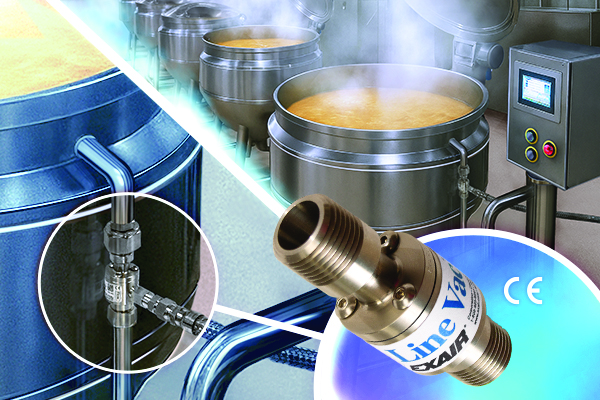
AVENTICS Series 625 Sentronic electronic proportional pressure control valves and data acquisition software enable quick startup, monitoring and control directly on a PC
 

Emerson today announced the new AVENTICSTM Series 625 Sentronic Proportional Pressure Control Valves. With a control deviation of less than 0.5%, the new valves are designed to deliver highly accurate, electronic proportional pressure control and provide the flexibility needed to support sophisticated pneumatic control engineering applications. Data acquisition software (DaS) software included with Series 625 Sentronic valves also make it possible to quickly startup, monitor and control valves directly on a PC.

“In high-precision equipment, such as that used for flame cutting and laser eye surgery, accuracy and control are critical,” said Nicolas Jacquet, director of product management for Emerson’s discrete automation business. “Series 625 Sentronic valves are engineered to precisely control pressure, flow rate, power, speed, distance and angular positions. As part of the extensive AVENTICS portfolio of cylinders, valves, air preparation and pressure regulators, the Series 625 Sentronic is a core technology for factory automation.”

Four valve sizes from 1 millimeter up to 20 mm support a comprehensive range of flow rates, from 55 liters per minute to 4,700 l/min. Pressure capabilities range from vacuum levels up to 50 bar, which can reduce the overall number of valves required for a machine design. Housing material is available in brass, aluminum or stainless steel and sealing material in nitrile (NBR) or fluoroelastomer (FKM) options. There are also three sets of connectors, M12 5-pin, M12 8-pin and M16 7-pin.

As development and manufacturing phases continue to get shorter, fast startup procedures and reliable, controllable manufacturing processes are more important than ever. Using the DaS software, operators can diagnose, control, repair or individually configure valves. They can also perform cascade controls when applications require exceptional precision and other complex control loops. The expanded range of diagnostic and monitoring functions include input pressure, commanded pressure, internal temperature and ethernet communication.

To learn more about AVENTICS Series 625 Sentronic Proportional Pressure Control Valves, please visit www.emerson.com/en-us/catalog/automation/industrial-factory-automation/proportional-pressure-control-valves/aventics-625-en-gb.

https://www.emerson.com/en-us/news/2024/05-aventics-625-sentronic-proportional-pressure-control-valves

Decoupling the instrument display

 1.jpeg

 A significant proportion of the cost of a portable instrument is taken up by its built-in display. Even with modern developments in display technologies such as high-resolution OLED touch screens, this often results in a trade-off between cost and display capability that inevitably imposes limitations on instrument usage. A good solution is to deliberately decouple the display from the instrument, resulting in a rugged instrument head that communicates wirelessly (e.g. Bluetooth) with an App running on a tablet PC or smartphone. All too often the display is the Achilles’ heel of an instrument, with a significant proportion of write-offs involving display damage. By decoupling the display, the instrument can be further ruggedised making it even more suitable for use in hostile environments.

This approach not only brings significant benefits such as improved display capability (high res, colour, touch screen, zooming), data sharing (Internet, email, Cloud), easier and safer physical access to measurement points (through safety guards/gates etc.) but also reduces the cost! The cost reduction coming about through the economies of scale achieved by the tablet PC and smartphone manufacturers. These ubiquitous devices are produced in vast quantities for consumer markets, hence significantly lowering their cost. In fact, by implementing the instrument’s control and display as a graphical user interface (GUI) running as an Android or iOS App, most users will find they already own the instrument’s GUI hardware!

2.jpeg


Decoupling the instrument display

Test Products International (TPI) produces a wide range of “smart instruments” that exploit this strategy through the FREE TPI View App for Android/iOS platforms. Recent additions to the range include the TPI 9043 Wireless Vibration Analyser and the TPI 9075 Wireless Smart Vibration Sensor.  Both devices, which also incorporate wireless charging, are designed to work with the TPI Ultra III App running on Android/iOS platforms and feature very high spectral resolution (up to 51,200 lines) with 24-bit ADC sampling to enable condition monitoring of a wide range of machinery, including both high speed and very low speed bearings.

The TPI 9043 Wireless Vibration Analyser with its 3 simultaneously sampled +/- 30 volt general purpose inputs can be used with a wide range of sensors, including IEPE accelerometers, proximity probes, tachometers, temperature sensors etc. Coupled with Ultra III, in addition to top-of-the-range vibration analysis for the detection of unbalance, misalignment, looseness and bearing wear, the TPI 9043 includes the full range of high-end analyser benefits such as envelope demodulation, phase and orbit analysis, single and dual plane balancing etc.

The TPI 9075 Wireless Smart Vibration Sensor with its built-in accelerometer can also be used with the FREE TPI View App to implement a wireless vibration analyser from £1250.

Ultra III in combination with the TPI 9043 or TPI 9075 is also available with C-Trend II PC-based trending and reporting software featuring everything needed to implement a full condition-based maintenance strategy, including automatic email notification of alarms and report generation.  Measurement routes and readings can also be transferred to/from Ultra III via the Internet, allowing service personnel to be sent routes and return readings no matter where they are in the world. 

For more information please contact TPI Europe’s head office on +44 1293 530196 or take a look on the website at www.tpieurope.com or email This email address is being protected from spambots. You need JavaScript enabled to view it.

3.jpeg

Experience premium label printing with BradyPrinter i7500

Fed up with old-school high-volume label printing? The new BradyPrinter i7500 reimagines 76mm core high precision label printing. No calibration, no formatting, no ribbon fumbling, no trial & error, no waste - the new i7500 redefines the 76mm core premium printing experience in electronics, electrical, manufacturing and laboratory industries.

The identification specialist Brady Corporation’s new BradyPrinter i7500 for 76mm core label rolls automatically adjusts all of its settings when new consumables are loaded. Ready to print in just 40 seconds, the printer also removes all calibration waste by printing the first label right.


Set up, don’t touch?

The approach in most industries to high volume, high precision thermal heat transfer 76mm core (3’’ core) label printing to date has almost always been “set it up and don’t touch”. Crucial for traceability and compliance, yet excruciating to set up and calibrate, the 76mm core label printing experience has been a notorious pain point for many manufacturing, electronics, electrical and laboratory industries.

Ready in 40 seconds

Not anymore. In a new proprietary printer model, global identification specialist Brady Corporation removed all label printing hassle to redefine the 76mm core label experience. “The new BradyPrinter i7500 does not require users to adjust sensors, heat settings, define label dimensions or waste labels in calibration”, says Ömer Adisen, Product Manager benchtop printers & software at Brady Corporation. “We call it LabelSense. The technology reduces the frustrating trial and error of manual printer calibration to print readiness in just 40 seconds. That includes loading Brady consumables, designed so they can only be loaded the right way.”


Efficient, flexible printing

The new BradyPrinter i7500 with LabelSense technology makes high precision 76mm core label printing a lot more intuitive, and efficient. There is no need to maintain multiple printers just to avoid the classic consumable and calibration hassle. “All optimal settings are already preloaded and the printer automatically recognises every Brady consumable. The i7500 offers considerable print flexibility by enabling users to switch from printed circuit board labels to rating plates, raised profile labels and cable sleeves, or between relevant specialised laboratory labels, in just 40 seconds. Even when loading the tiniest 3.18mm QR-coded labels, the i7500 prints the first label right, reducing waste and supporting sustainable label printing practices.”


Open core

In addition to auto-calibration, the BradyPrinter i7500 can print 76mm core labels from any manufacturer in manual mode. “When considering a switch to the new label printing experience provided by the BradyPrinter i7500, there is no need to devalue current label stock. The BradyPrinter i7500 can print any 76mm core labels, from any manufacturer, with great speed and precision.”


Software compatible

When combined with Brady Workstation label design, the software instantly recognises the dimensions of loaded Brady consumables for fast and intuitive label creation. Next to label design protection, Brady Workstation also includes an easy scan to print app and a data automation app to print labels at the right time with the right ERP-system data. The BradyPrinter i7500 supports print languages like ZPL, and can print labels via other label design software.


Premium printing redefined

“The new BradyPrinter i7500 defines a new premium high precision printing experience for 76mm core labels”, Ömer says. “Fully automated calibration enables printing on different consumables within 40 seconds. Supported by a clear user interface on a large on-board screen, the i7500 prints a wide range of labels without any hassle. We can provide a hands-on demo at your premises to show your teams just how intuitive label printing can be.”

Discover the BradyPrinter i7500 >>

Are you wondering how to choose the right label for your application? Download the free guide now >>

New Guideline on Air-Coupled Ultrasonic Testing Published – SONOTEC Contributes Expert Knowledge

The German Society for Non-Destructive (DGZfP) has published the “ACUT Guideline: A Guide to Performing Air-Coupled Ultrasonic Testing“. The document was developed by the DGZfP Ultrasonic Testing Committee, Subcommittee on Air-Coupled Ultrasonic Testing (ACUT). Martin Fuchs, development engineer at SONOTEC GmbH, was actively involved in its creation.

The guideline provides a comprehensive introduction to non-contact ultrasonic testing and has been available for free download since January 2025.

Air-Coupled Ultrasonic Testing – Contactless & Efficient

 Air-coupled ultrasonic testing (ACUT) is a non-destructive testing method that utilizes ultrasound waves transmitted through air. This technique enables material inspection without direct contact or coupling media, making it particularly suitable for sensitive, porous, or hard-to-reach materials such as composites, wood, foams, and ceramics.

Key Topics Covered in the Guideline


  • Fundamentals of ACUT
  • Requirements for Testing Systems
  • Testing Methods & Application Areas
  • Data Evaluation & Interpretation

Martin Fuchs, an expert in air-coupled ultrasonic testing systems at SONOTEC, contributed his extensive experience to the development of the guideline: “ACUT demonstrates its strengths in areas where conventional contact-based ultrasonic testing is not feasible. Our goal with this guideline was to create a well-founded, practical document that facilitates the introduction to ACUT and optimizes existing processes.“

Guideline Now Available for Free

 The guideline is now available in German for free download on the DGZfP website: https://www.dgzfp.de/leitfaden-zur-durchfuehrung-von-luftgekoppelter-ultraschallpruefung/

Optimized Surfaces for High-Performance and Long-Lasting Components

The choice of the right machining process significantly impacts the quality and lifespan of technical components. In many industrial applications—ranging from automotive and aerospace to energy generation—precisely machined components are essential for minimizing friction and wear. Optimized surface characteristics can make components more compact, efficient, and durable.

 The Impact of Machining on Friction and Wear

A comparison of turning, grinding, and superfinishing reveals significant differences in frictional properties, wear behavior, and surface topography.

Turning is a conventional cutting process with defined cutting edges, allowing for efficient material removal. However, it tends to leave a relatively rough surface structure. This can be problematic in sliding and rolling contacts, as the load-bearing surface area is often only around 40%.

Grinding significantly improves surface structure, increasing the load-bearing ratio to approximately 70%. However, the high temperatures generated in the grinding zone—where coolant is often ineffective—can induce tensile residual stresses in the surface. Additionally, the formation of a "soft skin" (temperature-induced material property alteration) may counteract the advantages of a better load-bearing surface, ultimately accelerating component wear.

Superfinishing addresses these challenges by combining high surface quality with minimal thermal stress. Operating at very low cutting speeds, this process raises the workpiece temperature by only a few degrees. The tools maintain continuous contact with the workpiece surface, creating an exact topography with a high load-bearing ratio through overlapping movements. Surfaces with a plateau structure offer particular advantages, forming oil retention pockets that enhance sliding and rolling friction properties.

 Superfinishing: Precision Meets Cost-Effectiveness

Superfinishing offers numerous advantages but does not achieve the high material removal rates of hard turning or grinding. Consequently, it is primarily used as a finishing process. To maximize cost efficiency while ensuring outstanding component quality, parameters such as feed rates, dressing cycles, and tool change intervals can be optimized, and surface roughness can be adjusted. Additionally, superfinishing significantly reduces the geometric accuracy requirements of prior machining steps—a crucial advantage in production workflows.

A standout feature of superfinishing is its robustness against fluctuating input tolerances. This ensures consistent process reliability and top-tier surface quality. The results speak for themselves: reduced friction losses, lower heat generation during operation, and extended component lifetimes. This not only translates to reduced maintenance and lower operational costs but also enhances reliability—a critical factor in industries where downtime is costly.

 Practical Applications: Energy and Medical Technology

The benefits of superfinishing are particularly evident in applications demanding maximum efficiency and durability. In energy generation, such as offshore wind farms, components must operate reliably for decades under extreme conditions. A prime example is large rolling bearing components, where superfinishing achieves roundness values of 1 µm and surface roughness below Ra < 0.2 µm. Such precision minimizes maintenance requirements and prevents costly downtime.

In medical technology, implants like artificial hip joints benefit from highly polished, finely machined surfaces. These reduce deposits, facilitate cleaning, and lower infection risks. For instance, roundness values of 0.5 µm are achieved, and surface structures become measurable only through advanced reflection systems.

 Striking the Right Balance Between Technology and Cost Efficiency

"The selection of optimal superfinishing parameters, tool types, and processing solutions depends on the preceding machining process and the specific application requirements. Our goal is to work closely with customers to find the ideal balance between technical feasibility and economic efficiency," explains Christian Feuchter, Project Manager & Technical Sales. To achieve this, modern machines, precise measuring instruments, and experienced specialists are at their disposal.

Thanks to superfinishing technology, friction losses are minimized, heat generation is reduced, and component lifetimes are significantly extended. In industries where maximum precision is essential, this process provides a decisive competitive advantage.

bearing ratio through overlapping movements. Surfaces with a plateau structure offer particular advantages, forming oil retention pockets that enhance sliding and rolling friction properties.

 Superfinishing: Precision Meets Cost-Effectiveness

Superfinishing offers numerous advantages but does not achieve the high material removal rates of hard turning or grinding. Consequently, it is primarily used as a finishing process. To maximize cost efficiency while ensuring outstanding component quality, parameters such as feed rates, dressing cycles, and tool change intervals can be optimized, and surface roughness can be adjusted. Additionally, superfinishing significantly reduces the geometric accuracy requirements of prior machining steps—a crucial advantage in production workflows.

A standout feature of superfinishing is its robustness against fluctuating input tolerances. This ensures consistent process reliability and top-tier surface quality. The results speak for themselves: reduced friction losses, lower heat generation during operation, and extended component lifetimes. This not only translates to reduced maintenance and lower operational costs but also enhances reliability—a critical factor in industries where downtime is costly.

 Practical Applications: Energy and Medical Technology

The benefits of superfinishing are particularly evident in applications demanding maximum efficiency and durability. In energy generation, such as offshore wind farms, components must operate reliably for decades under extreme conditions. A prime example is large rolling bearing components, where superfinishing achieves roundness values of 1 µm and surface roughness below Ra < 0.2 µm. Such precision minimizes maintenance requirements and prevents costly downtime.

www.nagel.com  


A new chapter for Rotork’s service business

Rotork is excited to announce that Rotork Site Services is now officially Rotork Service.

The decision to rebrand reflects its commitment to growth and ambition to become a stronger, more unified global service provider.

The goal is to evolve beyond traditional site-based services and offer a Full Lifecycle Experience encompassing all stages of the customer journey, from installation and upgrades to ongoing support and predictive maintenance.

This new identity aligns with industry terminology and showcases the full range of services. Rotork Service is focusing on enhancing the value it brings to customers by expanding its capabilities, embracing digital solutions, and delivering higher-margin services.

Rotork Service will continue to deliver the same high-quality service and support customers have come to expect. The rebranding is about evolving its approach and expanding its offerings, not changing the exceptional customer service people know and trust.

With the new focus on a Full Lifecycle Experience, it is integrating more digital services, including predictive maintenance and enhanced service solutions, to optimise customer operations.

As part of its ongoing commitment to service excellence, it is enhancing its service capabilities across all regions, backed by a network of over 300 skilled Field Service Engineers.

The offering will now be organised into four key areas: Connected Services, Field Services, Reliability Services, and Support Services. This will enable more targeted, tailored solutions for customer needs.

As Rotork Service continues to grow and innovate, it will remain focused on providing customers with the highest standard of service and support.

www.rotork.com


Accuracy you can trust, building standard compatibility you need: Sensirion launches upgraded photoacoustic CO2 sensor

We are excited to announce the upcoming launch of SCD43, the latest Photoacoustic NDIR CO2 sensor from Sensirion. SCD43 is compatible with ASHRAE 62.1 Draft Addendum d and will be available to customers and via Sensirion’s distribution partners in summer of 2025.

SD.jpeg

SCD43 CO2 sensor (Source: Sensirion AG)

Stäfa, Switzerland – SCD43 is a drop-in upgrade based on Sensirion's market-proven SCD4x platform. The sensor will offer customers a compact, high-accuracy CO2 sensor that fulfills the requirements of the most stringent building standards. This includes the requirements of the current draft of Addendum d to the American ASHRAE 62.1 standard for demand-controlled ventilation (DCV) systems.

SCD43 is the result of many years of experience with and continued research and development efforts into the SCD4x Photoacoustic NDIR CO2 sensor platform. Refined manufacturing and calibration processes enable a sensor specified to the industry's "best-in-class" measurement accuracy of +-(30ppm + 3% m.v.).

For more information, please visit the SCD43 product page

Key features of SCD43:

KEY_FEATURES.jpeg

More information and current key figures are available at www.sensirion.com


Teledyne FLIR Launches Prism Supervisor Software, Enhances UAS Autonomous Capabilities

AI-Based Automated Response at the Edge Improves Drone Mission Safety and Performance. Goleta, CA, – Teledyne FLIR OEM, part of Teledyne Technologies Incorporated, today announced the release of Prism™ Supervisor, the latest addition to its Prism embedded software ecosystem. Prism Supervisor integrates drone autopilot flight control systems with real-time, AI-based observations at the edge to improve mission safety, efficiency, and performance, enhancing the capabilities of unmanned aircraft systems (UAS).

Prism Supervisor software empowers mission planners with a flexible programming framework and software development kit (SDK) to facilitate custom, intricate mission scenarios. During flight, Prism Supervisor adapts its autopilot functionality in real-time, dynamically generating mission segments and flight plans on the fly, minimizing operator impact while improving mission success.

For example, a Prism Supervisor-controlled UAV flying a search mission pattern can autonomously circle and alert the operator upon the detection of a human or threat. 1/2 "From behavior and mission planning to dynamically adjusting in-flight operations,

Prism Supervisor represents a significant advancement for drone autonomy through AI," said Dan Walker, Vice President of Product Management, Teledyne FLIR. "It improves operational performance via single-click missions, opening up new possibilities for UAS operation from commercial to military use cases."

Prism Supervisor simplifies the operator experience with a user-friendly graphic user interface (GUI) for mission planning, real-time mission visualization, and execution. Available for desktop or mobile deployment supporting Windows, Linux, macOS, iOS, and Android, the supervised mission management application streams and records detailed, full-frame-rate video, path visualization, and metadata. It can facilitate collaborative behaviors and synchronized mission execution among multiple unmanned aerial vehicles (UAVs). Prism Supervisor expands Teledyne FLIR's Prism digital ecosystem of advanced AI and image processing. It provides a platform for deploying object detection, tracking, and computational imaging on low-power processors, enhancing UAS mission performance and reducing development costs. For more information about Prism Supervisor and the entire Prism ecosystem, visit www.flir.com/prism.

Speedor Storm, the high-speed door ready for large external openings

hdfeb.jpeg

Hart Door System’s wind-resistant, high-speed, industrial rolling door, Speedor Storm, is ready for business be it a factory, warehouse, storage facility or any kind of plant operation that has one or more large external openings which must be opened frequently for people and traffic.

With wind resistance available up to ‘wind class 5’, as defined by DIN EN 12424, in the closed position this high-speed door is ready for openings to a maximum 8 metres width or height subject to 48 square metres.

The ability to withstand substantial wind pressure means major entrances open/close automatically so avoiding a less than optimal working environment and the escape of heated air.

Speedor Storm is designed specifically to help with several areas of business notably:

  • Productivity – because entering and leaving a building can be done rapidly.
  • Creating a better environment in which to work because of the high-speed operation, even on large doors means there are no unnecessary open periods.
  • Delivering maintenance of temperature and environment by door preventing penetration by wind born debris.
  • By saving on the substantial cost of heating – important as the cost of energy shows little sign of improving.
  • Low cost of ownership because this is a robust design and construction
  • Made in the UK at Hart’s Newcastle factory from where its teams of engineers are available throughout the UK for installation of Speedor Storms and reliable servicing and maintenance thereafter.
  • The benefits of Speedor Storms come from its unique guide system in combination with other carefully designed features.

Speedor Storm’s strength and wind resistance comes from its multi-layer PVC and textile, both long-lasting and tear-resistant and its inbuilt horizontal curtain braces and no external cumbersome and noisy external wind bars.

There is a colour choice as well as ‘a with or without vision panel ’ which combine to deliver a good appearance, operational effectiveness and a performance product.

Speedor Storm is in particular demand from waste processing plants and renewable energy facilities such as Anaerobic Digestion (AD) plants that produce energy from waste. The ability to limit the escape of odour and noise and prevent pests entering is highly valued by such companies. Speedor Storms have also proved to be a great asset for ports, notably for grain tipping bays.

Safety features are of course paramount, and here they include a state of the art safety light curtain, anti-fall protection and sensors to activate the door. There is a range of operating methods that include hands free, floor loops, radar, photo beam, radio operation, movement sensors, handheld or vehicle-mounted radio transmitters,  or simple push button and pull cords.

The automatic operation can be set to include or exclude pedestrians as desired. If warning lights or klaxons are required, these can be incorporated in a complete door system and control panel which are designed for any conceivable need including integration into a Building Management System if necessary. This is delivered via its unique guide system in combination with other carefully designed features.

Little wonder Speedor Storms are so highly regarded.

www.hartdoors.com

Enerpac Announces Fast Retraction RC-Trio Hydraulic Cylinders

Enerpac announces the RC-Trio hydraulic cylinders range featuring a enhanced durability bearing system and hybrid spring-return system for up to 3x faster retraction. The general purpose RC-Trio range is the latest evolution of the Enerpac RC-Series cylinders; the company’s most popular cylinder and used every day in thousands of engineering and construction projects.

Durability
The driving force of the Enerpac RC-Trio cylinder range is the new Trio bearing system. The system includes up to four high-performance wear bands, offering increased resistance to damage, reduced bearing load, and longer cylinder lifespan. The hardened composite material of these bands increases bearing surface area for greater side load resistance, significantly improving cylinder life. Durability is also on display in new high-performance polyethylene seals that last longer than ever. 

Another part of the Trio bearing system is the Trio stop ring, which includes an additional wear band to absorb greater side load. The stop ring can take full cylinder extension force and, depending upon cylinder size, is manufactured in Nitrided Steel or High-Resistance Bronze, for increased durability. It also features a durable wiper to help prevent contamination from entering the cylinder during retract cycles.

Productivity
To enhance productivity, the RC-Trio features a new Trio spring system designed to reduce retraction time. This pre-tensioned return spring system provides up to 3X faster retraction (available on 50-, 75-, and 100-ton models). It uses high-strength steel wire to improve spring life. The spring retention design improves serviceability, while allowing higher pre-load during assembly. Additionally, the spring is easily removed without special tools.

Versatility
The RC-Trio is a general-purpose cylinder available in 41 models and is designed for use in all positions. Versatile features include collar and plunger threads and base mounting holes that enable easy fixturing (on most models), new base holes on 30- and 75-ton models, hardened plunger saddle that protects plunger end during all lifting operations, and optional tilt and smooth saddles as accessories. Plus, the RC-Trio maintains the same dimensions and connection threads, providing full compatibility with existing RC-Series units in the field.

To learn more about the Enerpac RC-Trio cylinder range, visit www.enerpac.com


The differences between low and high concentrations of H2S gas

Hydrogen sulfide (H2S) gas can be fatal at high concentrations. But even low concentrations can cause health issues, particularly with prolonged exposure. So how can you best protect workers and minimise downtime? We answer your common questions about H2S.

What is H2S gas?

Hydrogen sulfide is a highly flammable, toxic and corrosive gas found in several industries including oil and gas, wastewater and chemical processing. It’s sometimes called ‘sour gas’, ‘sewer gas’ or ‘stink damp’ because of the way it smells like rotten eggs. However, H2S can’t reliably be detected by smell as it quickly deadens the sense of smell (a process known as ‘olfactory desensitisation or fatigue’).

How dangerous is H2S?

Exposure to high levels of H2S can be fatal, leading to loss of breathing, coma, seizures and death. It’s the second most common cause of fatal gas inhalation exposure in the workplace, second only to carbon monoxide[1].

But H2S can also be harmful at low concentration levels, causing headaches, dizziness, nausea, breathing difficulties and a sore throat. These health impacts can become more serious with prolonged exposure.

Low concentration vs. high concentration H2S – exposure limits

The health impacts of H2S depend on how much is inhaled and for how long. The recommended exposure limit set by NIOSH (the US National Institute for Occupational Safety and Health) for ten minutes is 10 ppm[2]

However, some U.S. states have developed ambient air standards for H2S well below OSHA and NIOSH standards due to concerns about health risks from chronic exposure[3].

For longer exposures to H2S, the recommended limits are a lot lower. For example, if you’re exposed for up to 24 hours, the World Health Organisation (WHO) recommends a maximum exposure of 0.1 ppm.

In response to concerns about the risks of H2S to human health even at low concentration levels, some countries have introduced equally stringent guidelines requiring businesses to monitor H₂S at such concentrations. That’s why we’ve recently updated our ALTAIR io™ 4 Connected Gas Detector, offering the option of a low-concentration hydrogen sulfide sensor that can detect H2S at very low levels*.

H2S in industry – the different sector impacts

H2S creates safety challenges for many industries. But some industries are more likely to be affected. These include:

Oil, Gas & Petrochemical (OGP)

OGP facilities handle raw ‘sour’ gas and oil which are naturally high in H2S. Extraction and refining processes release H2S, which may accumulate in confined, poorly ventilated spaces like processing units, pipelines and storage tanks. Closed systems with high-pressure conditions amplify the risks for workers.

Balancing safety and operational efficiency is an ongoing challenge in the OGP industry. Some are tackling this challenge by integrating new technological solutions into their safety management practices.

Waste water management

Wastewater facilities such as closed pipelines and sludge tanks have low oxygen levels and so provide the ideal conditions for H2S buildup. This is because sulfate-reducing bacteria which break down organic material and produce H₂S as a byproduct thrive in anaerobic (low-oxygen) conditions.

One of the key risks for waste water workers is when they’re entering confined spaces like tanks and sewer lines. For many waste water management businesses, real-time monitoring of gas levels is considered a must-have.

Steel production

The steel industry’s use of high-temperature processes and sulfur-rich materials can lead to the release of H2S, creating hazards for workers. Confined, poorly ventilated spaces and desulfurisation units pose particular risks. 


[1] Guidotti TL, 2010. Hydrogen sulfide: Advances in understanding human toxicity. Int. J. Toxicol 29, 569–581. [DOI] [PubMed] [Google Scholar][Ref list]

[2] https://www.cdc.gov/niosh/npg/npgd0337.html

[3] https://ohsonline.com/articles/2007/10/human-health-effects-from-exposure-to-lowlevel-concentrations-of-hydrogen-sulfide.aspx

This website is owned and operated by: MSL Media Limited

msl logo
www.mslmedialtd.com

Co. Number: 05359182

© 2005 MSL Media Ltd. All rights reserved. E&OE

ems logo mobile