Latest News

Optimal maintenance safety in a standardised, worldwide approach (practical case example)

For optimal safety during machine maintenance, a large renewable energy producer implemented a worldwide standard approach to Lockout/Tagout. This life-saving procedure enables maintenance specialists to isolate machines from their energy supply while interventions are ongoing.

Challenge: Standard Lockout/Tagout procedures worldwide

The safety of its employees is a high priority at one of the world’s largest renewable energy producers. As a result, company sites in various countries started testing Lockout/Tagout at a site level to neutralise electrical circuits during maintenance interventions.

Lockout/Tagout requires written procedures that enable employees to fully neutralise machines from their energy supply using a blocking mechanism and padlocks. This procedure prevents premature activation of machinery, and any injuries caused by various forms of energy and moving machine parts.

The renewable energy company now wanted to globally standardise its approach to Lockout/Tagout, so that every site in every country could optimally benefit from company best practices, and achieve the highest levels of maintenance safety.

Solutions: 2 practical solution kits to cover worldwide needs

Brady proposed sets of relevant and dedicated Lockout/Tagout tools based on customer needs. Lockout/Tagout specialists

demonstrated and tested all proposed tools at a pilot site, to enable our customer to make a fully informed final selection.

Brady offers several solutions that can block circuit breakers in the off-position while maintenance is ongoing. They prevent shocks and burns caused by re-energising circuits prematurely. They can be locked in place with Brady’s Lockout/Tagout padlocks, including the SafeKey padlock, available in non-conducting nylon versions, complete with colour-coded padlock bodies and matching keys.

To meet customer requirements, 2 practical, standard maintenance safety kits were created containing the selected Lockout/Tagout tools. These kits were made available to customer sites anywhere in the world, to enable streamlined and safer machine interventions.

Results: Highly manageable maintenance safety

The large renewable energy producer’s maintenance specialists now use the same Lockout/Tagout tools in a standardised

approach to maintenance safety. This enables increased safety during maintenance anywhere in the world, fast sharing of best

practices, and a very efficient and centralised management of maintenance safety procedures.

Find out more about Brady’s Lockout/Tagout complete solutions >>

Brady Corporation

Link:

https://www.brady.co.uk/lockout-tagout?sfdc=7014V000002dGpP&utm_source=msl&utm_medium=web-advertorial&utm_campaign=sfid-loto&utm_content=loto-case-standardised&camp=display-uk-awareness-msl-sfidlotocase_wadv#Implementation

New mixers are lighter to handle and lighter on energy costs at Fairfield

Replacing anoxic zone mixers with units that are far more energy efficient is providing a Water Pollution Control Facility (WPCF) in Connecticut with annual savings of $22,433.

As is strides towards its goal of achieving Net Zero Carbon, the town of Fairfield (population 60,000), wanted to reduce the operating costs of its mixers that run 24/7, as part of a major Capital Improvement Plan (CIP) to replace aging assets with more modern and energy-efficient equipment.

“Like all treatment plants”, said John Bodie, Superintendent at Fairfield WPCF, “we have been a very big electricity user, but when we reviewed our energy usage and developed a full plan, it presented us with an excellent opportunity to adopt green design standards”.

And like most treatment plants, there often isn’t the available budget to comprehensively upgrade equipment at the rate that would suit best practice. However, as numerous wastewater treatment facilities are discovering to their considerable benefit, help is now at hand with grants and incentives available from energy providers; in this case at Fairfield with United Illuminating (UI), a subsidiary of Avangrid, who own and operate a portfolio of renewable energy generation facilities.

‘Smart energy improvements that would give us the greatest return at the lowest cost’

John Bodie, who has worked at Fairfield WPCF for 30 years, added: “When we plugged in the numbers, it all added up; smart energy improvements that would give us the greatest return at the lowest cost, as well as big savings for many years to come. The help we had towards capital costs from United Illuminating gave us every incentive to go ahead. The 12 existing mixers we had were never the most efficient, and we also found them very difficult to work on; mainly because of how heavy they were”.

At the 8.5 million gallons per day Facility, the mixers continuously suspend solids and mix the return sludge into the influent stream. The existing mixing energy input met industry-standard recommendations, but the single-point submersible propeller mixers left some dead zones in the denitrification process, as well as scum and foam formation – and also required high levels of maintenance and frequent rebuilds.

‘Much more user-friendly’

John Bodie continued: “After looking at several options, we initially invested in six mixers made by Landia, which came highly recommended as the best solution. At 2.4HP each, compared to the previous 6.5HP units, we of course expected to see a reduction in energy usage, but the added bonus is that despite being smaller, they do a better job than the old mixers (from a different manufacturer). The first six mixers from Landia have now been installed for just over three years, with no issues at all. Previously, when servicing a mixer weighing considerably more than one form Landia, we had to have three or sometimes four men to manhandle it to lift it out, and even then, it was very easy for someone to suffer a back strain. Now, with a Landia mixer, it’s so much more user-friendly; easy for just one person, so that’s also made a big saving on maintenance”.

Following the success of the first half-dozen mixers from Landia, a further six were installed 15 months ago at Fairfield, replacing units from a separate manufacturer but that were also using too much energy and proving time-consuming to maintain.


‘Substantial savings can be made in energy’

“The mixers’ annual electricity savings of over $22,000 equates to a reduction in energy usage of 182,383 kilowatt hours (kWh)”, said John Bodie. “The WPCF was constructed here in 1950, with upgrades made in 1968, 1972 and 2001. It’s always been a very well-run plant, but now the Capital Improvement Plan (CIP) of four years ago can show other treatment facilities what very substantial savings can be made in energy. We are very pleased with the Landia mixers, which provide many cost and operational benefits to Fairfield WPCF”.

In addition to the 12 new mixers, the long-term energy efficiency improvements also included a 2MW solar system at the nearby former refuse dump, and a 400kW fuel cell. A new 1.3MW natural gas generator was also installed, along with interconnecting switchgear, which allows the WPCF and surrounding town facilities to operate independently in the event of power outages.

For Landia (established 1933), this installation at Fairfield WPCF follows a large number of projects, where its submersible mixers have replaced other manufacturer’s inefficient or failing mixers. In some cases, Landia mixers have been installed in aeration tanks, to provide mechanical mixing of sludge, while reducing the aeration to just the amount needed for the biological process. In Chinook, Montana, two 5HP Landia mixers were purchased so that an energy-guzzling 50HP surface rotor aerator could be switched off during night hours of low BOD loading. As a result, the submersible mixers are now saving the wastewater treatment plant $18,000 per year on electricity, achieving payback on the entire installation in just over four years.

A switch to Landia mixers has also paid dividends at the wastewater treatment center in American Falls, Idaho. Here, the original mixers failed to move solids from the plant’s MBR – and there were constant seal failures. Now, despite only pulling half of the amps than the previous units, the Landia mixers, truly designed for mixing wastewater sludge, have immediately addressed the application – greatly reducing energy usage and are also proving far easier and more cost-effective to maintain.

www.landiaworld.com

Ultimo enhances efficiency and speeds up order processing with SAP S/4HANA integration

Ultimo’s Enterprise Asset Management (EAM) platform is now integrated with SAP S/4HANA, the leading Enterprise Resource Planning (ERP) software. This brings the benefits of two best-of-breed solutions together to help Ultimo’s customers using SAP improve work efficiency, speed up order processing and reduce administrative tasks, and SAP users futureproof their maintenance operation. The integration has been certified by SAP, confirming that Ultimo’s technical capabilities match the high requirements of the SAP S/4HANA software.

The certification currently covers 25 scenarios in Ultimo. Starting with importing and synchronising various master data, such as vendors and articles, the integration focuses on purchasing processes, including purchase requisitions, purchase orders, receipts and invoicing. Customers who use Ultimo to manage their asset maintenance and SAP S/4HANA for resourcing will now be able to seamlessly share data between the systems. Maintenance and asset information is logged in Ultimo, and any related requests for spare part orders can be raised through SAP.

The purchasing process is significantly simplified, with receipts registered in Ultimo and invoicing and payment managed in SAP. This eliminates the need for duplication of records and switching between systems, reducing the risk of manual errors and improving productivity.

“The new certified SAP S/4HANA integration simplifies order management for the maintenance teams and guarantees a sound administration for the finance team,” says Ewout Noordermeer, CMO, Ultimo. “Now, technicians don’t need to be familiar with SAP to process orders; they can do it in Ultimo with the same interface they use every day, while the CFO can trust the financial data to be correct and complete. That improves efficiency on a daily basis, but the benefits extend beyond enhancing the ease of use - this integration paves the way for a cloud-enabled future. By integrating our software with other leading technologies, we take our collaboration to the next level. Using our best-of-breed approach, we help customers accelerate their digitalisation journey and futureproof their maintenance operation."

As Ultimo is highly configurable, the integration with SAP S/4HANA is always tailored to individual customer requirements, including a bespoke interface. Ultimo consultants will work with customers to discuss their requirements and make any adjustments needed to optimise the functionalities for each application.

To find out more, visit www.ultimo.com.

Enerpac VLP and XLP Presses Offer Superior Performance

Enerpac announces two new series of workshop presses—the XLP-Series H-Frame Workshop Presses and VLP-Series Benchtop Presses. Whether for differential assembly in the automotive industry, gear components assembly in the aerospace industry, or bearing maintenance in the mining industry, the new Enerpac VLP and XLP presses offer superior performance.

New XLP-Series Workshop Presses

Available in 25-, 50-, and 75-ton models, the XLP-Series Workshop Presses feature adjustable side-to-side cylinder movement, a locking winch for easy height adjustment of the press bed, and high-performance manual, pneumatic or electric pump options with remote valve operation. The 25-ton press has a simple, welded design and the 50- and 75-ton presses have an open frame and bolted design. The 50-and 75-ton models come standard as unassembled kits, and include complete press frame, winch, cylinder, pump with gauge, couplers and hose.

New VLP-Series Benchtop Presses

Enerpac VLP-Series Benchtop Presses work with manual or air pumps. They feature a welded frame and are available in 10-ton models.

To learn more about the Enerpac VLP and XLP Presses, visit www.enerpac.com.

Fluke® helps customers put environmental and financial value on air-compressor maintenance with new tool

Working with Fluke’s new online CO2 emissions calculator, the LeakQ™ creates detailed air compressor leak reports from images captured by Fluke ii900 or ii910 acoustic imaging cameras.

Eindhoven, Netherlands. 30 June 2022: Fluke, a global technology leader in the manufacture of compact, professional electronic test and measurement tools and software, has today launched a new CO2 emission indicator to the online LeakQ reporting tool. In addition to the existing estimated leak size and costs, this new feature adds a third element: the estimated electricity related CO2 emission in relation to the identified leaks.

Maintenance engineers and sustainability managers who work with compressed air and gas distribution systems every day can be unaware of exactly how much gas and energy is wasted due to small leaks in the system. For compressed air applications, LeakQ used in conjunction with Fluke’s online CO2 emission calculator enables users to quantify the financial value and environmental impact of detecting and fixing leaks in the system by creating detailed reports from images that have been captured using the Fluke ii900 Industrial Acoustic Imager and ii910 Precision Acoustic Imager.

Environmental impact

Approximately 90% of all processing companies use compressed air in some aspect of their operation, such that it is sometimes referred to as the fourth utility. It is estimated that if there were no maintenance systems in place at all, the losses due to leaks in the network would be between 25-30%. Whilst desirable, it is highly unlikely that any plant will achieve an 100% leak free compressed air system.

Compressing air is an energy intensive process and as such any leaks in compressed air systems mean a significant proportion of the electricity used by a compressor to compress the gas should be perceived as energy waste. Due to the energy intensive process, and the potential environmental impact of electricity production, the ability to quantify the environmental and financial value of maintenance is helping companies drastically reduce their energy (costs) use and carbon footprint.

Detailed leak detection

Typical leaks to focus on are quick connect leaks in a joint or interface that isn’t threaded, open end leaks in large holes or open-ended pipes, threaded coupling leaks via metallic threads or weld cracks, and leaks in rubber, flexible and plastic hoses and pipes. Standard leak detection tools only measure dB on a narrow frequency band but LeakQ carries out an automatic scan of the full frequency spectrum and captures the actual frequency range that the leak is generating. This makes estimations far more representative of the real leak rate than those that are achievable using more traditional measuring tools.

Report generator

To develop a report and estimate the potential costs of leaks, the user simply transfers inspection data from the ii900 or ii910 to a computer, where they can be dropped into the online LeakQ report generator. The user then inputs the operating variables such as gas type, pressure, cost of electricity and System Specific Power ratio, which is a measure of compressor efficiency. The report generated will include a summary of all the leaks listed as well as their estimated individual and annual volumes, costs, and emissions. Leak images are also inserted into the report which can be shared as a PDF or downloaded as a .CSV file for importing into existing maintenance systems. A feedback option enables users to relay their experiences directly back to Fluke so that the company can continue to make the leak detection tool better and easier to use.

Prioritising maintenance

Tako Feron, Global Product manager Acoustic Imaging at Fluke said: “Being able to prioritise, quantify and cost leaks in such a simple way is a game-changer for maintenance engineers who will be able to see the full financial and environmental impact of even the smallest leak in a compressed air system. Having the ability to reduce electricity usage is clearly a major bonus at any time but particularly in this challenging climate regarding the cost of energy. At the same time, it is essential to minimise leaks in compressed air systems if we are to meet our crucially important sustainability targets.”

Feron adds: “It’s estimated that around 90% of companies use compressed air in some aspect of their operations and the majority of this is generated on site. That means it is down to the user to keep the costs of compressed air as low as possible and the LeakQ™ leak detection reporting tool provides an extremely powerful means of helping them to achieve that goal.”

Learn more about the LeakQ™ report generator here.

MARL’s  677 series LED panel indicator lamp

MARL’s  677 series LED panel indicator lamp is a resilient, high-performance, British-made indicator used in some of the most challenging conditions on land, sea and air.

MARL, based in Ulverston in Cumbria, designs and manufactures long-lasting, robust products which have proved their worth over more than four decades.

Mounting through an 8.1mm hole, the 677 series is sealed to IP67 - weatherproof, vandal-resistant, and durable to shock and vibration, providing a reliable status indication solution for all types of applications.

The 677 series is the panel indicator of choice for American company Asphalt Zipper® in its road grinding and milling machines.

An Asphalt Zipper spokesperson said: "We needed LEDs to indicate the state of functions on our machine. After looking around, we found MARL’s 677 series. These LEDs hold up really well in our high vibration application. They are easy to see even from far away and in the sun. They also endure rain, sun, grease and impacts, and keep on working. Using the 677 series LEDs was a great decision and we haven't looked back."

For more information or to enquire about our products, contact our team:

T 01229 484625

E This email address is being protected from spambots. You need JavaScript enabled to view it.

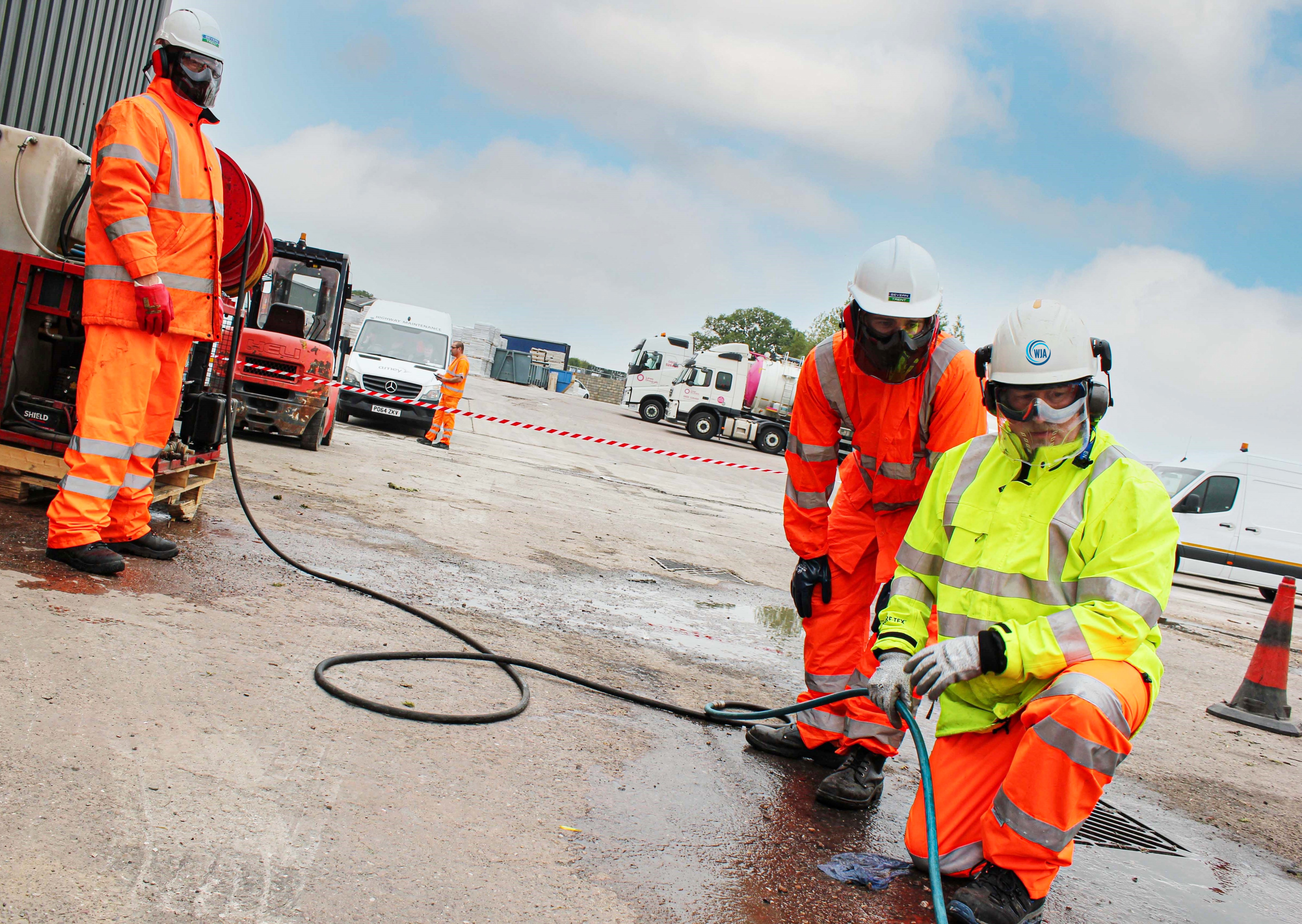
Pipe lining leaves shampoo effluent system shiny and manageable

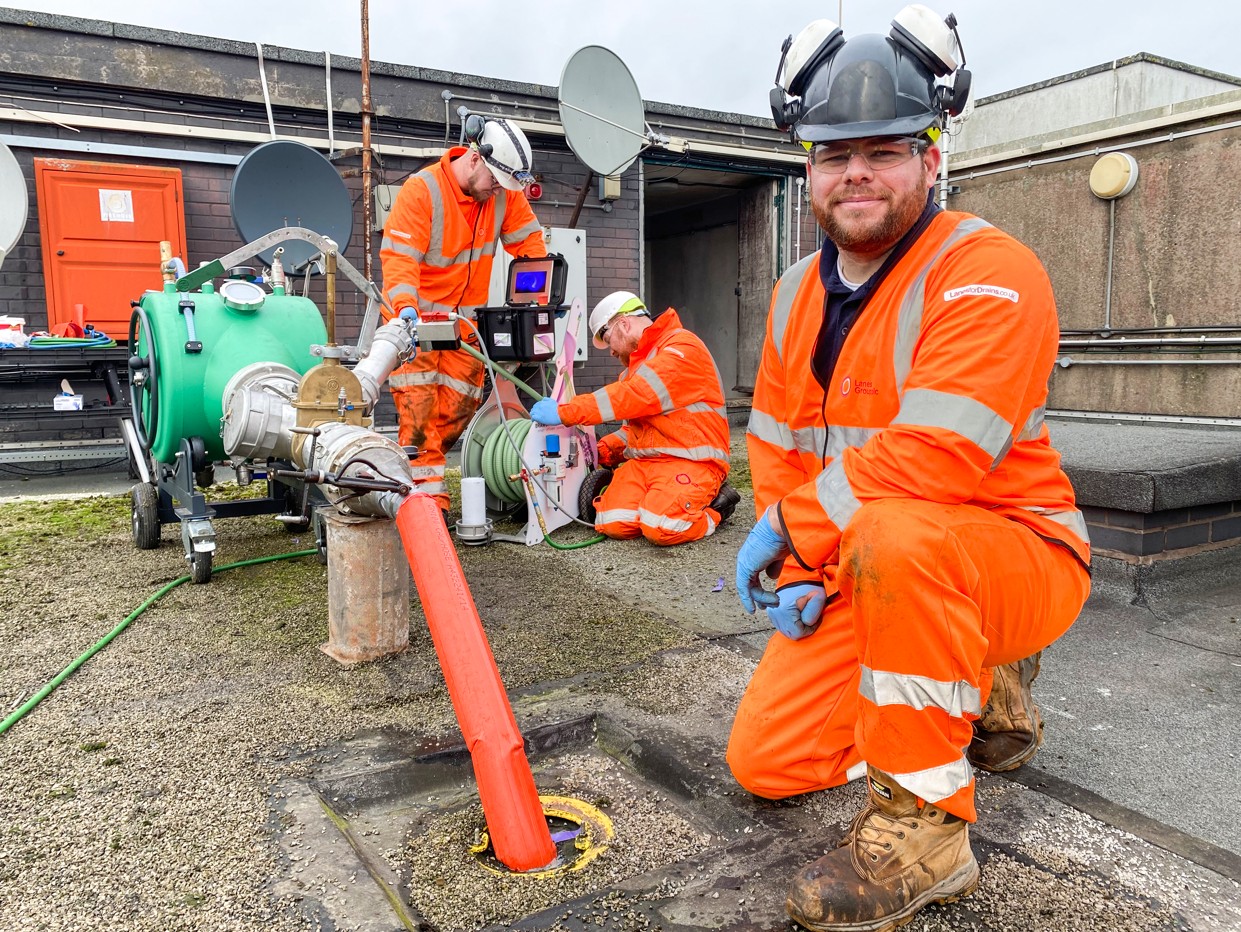
Pipe rehabilitation specialist Lanes Group plc has lined a main production waste pipe at a shampoo factory.

Ultraviolet liners have been installed in the 300mm diameter process pipe at the plant in South Wales.

The highly-sustainable no-dig project was designed to ensure the pipe will function to a high standard for decades to come.

Kyle Burgess, Area Development Manager for the Lanes Cardiff depot, said: “This was a good example of how no-dig pipe renovation technology can be of great help to our industrial clients.

“There was no real option to excavate and replace the pipe because of the need to maintain production and the high cost of such a solution.

“Lining the pipe was, by far, the best approach and Lanes had the technology and expertise to deliver it efficiently and effectively.”

The client, which manufactures shampoo for a global brand, commissioned Lanes to carry out the work as part of its planned and preventative maintenance programme.

It wanted to be sure process effluent could not escape from the concrete pipe into the ground.

The company also wanted to stop groundwater getting into the pipe, which would needlessly increase the volume of waste water being processed, adding to costs.

A team from the Lanes national pipe rehabilitation and lining division carried out the work, supported by drainage engineers based at company’s Cardiff depot.

Lanes has extensive experience in lining production pipes across a huge range of industrial sectors, including food and drink, chemicals, water treatment, and pharmaceuticals.

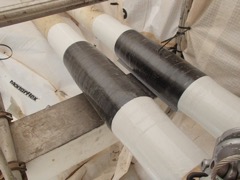
Working over two days, four separate ultraviolet liners were installed from manhole to manhole along the 181m pipe.

Overpumping was put in place, with water taken from upstream chambers and discharged into downstream ones through 6-inch and 4-inch hoses.

In this way, each section of pipe to be emptied and lined in turn, while allowing full production to continue at the factory.

The lining was carried out to the client’s selected specification, with 3mm thick plastic UV cured in place pipe (CIPP) liners installed.

Lanes uses the latest, most efficient, UV lining technology and can insert liners into pipes with diameters that range from 100mm to 1600mm.

Each liner is made up of layers of glass reinforced plastic (GRP) and resins containing a catalyst that reacts to UV light.

The liner is pulled along the pipe with a winch, then inflated with compressed air, pushing it against the pipe wall.

A UV light array, made up of a series of powerful UV lamps on wheeled trollies, is then pulled along the pipe to harden (cure) the resin layers in liner.

The power of the light array and the speed with which it is travels through the pipe is set by the system’s computer control system.

During the lining process, two lateral pipes leading into process effluent pipe had to be reopened. This was achieved using a remotely controlled robotic cutter.

UV CIPP lining is one of the most sustainable ways to rehabilitate industrial wastewater pipes, and can provide high levels of chemical resistance where it is needed.

Unlike hot water CIPP lining, UV lining does not create large volumes of waste water that needs to be disposed of at specialist sites.

Also, the UV lining process takes up less space and can be completed more quickly, reducing the risk of disruption in factories where continuous production is essential.

Teams from Lanes Cardiff provided CCTV drainage survey and jet vac tanker support for the project.

A post-lining CCTV survey demonstrated to the client that the liner had been installed correctly to the required quality standard, with a design life of 50 years.

www.lanesfordrains.co.uk

This email address is being protected from spambots. You need JavaScript enabled to view it.

General Motors Corporation Trials The LOBO Advanced Platform System


GM Ramos Arizpe Assembly in Mexico has chosen LOBO for its new plant paint shop.

The Chevrolet Blazer manufacturing plant has several production lines that require maintenance. Like many tasks of this nature, access to the awkward area is needed 24 hours, seven days a week.

Maintenance areas exist directly above the plant shop conveyor systems, and production downtime must be kept to a minimum. Work at height maintenance processes must be controlled and fall under strict OSHA compliance regulations.

The fast no tools assembly features of the LOBO System are a perfect fit - hence the trial. Moreover, LOBO can be configured quickly and efficiently into any shape or size. Engineers are product trained by LOBO, which adheres to OSHA and delegates are tested at the end to maximise safe use.

GM Wentzville in St Louis, Missouri, has been a successful LOBO customer since 2015, so the concept is not new. LOBO was used for general maintenance activities in and around pipework, robotics, and cabling throughout the production lines.

Boyd Wells, UAW Safety Director at GM Wentzville, Missouri, said, "Thank you for coming to our plant and giving us the training to use the LOBO system properly. We have used your system in various parts of our plant where aerial lifts cannot access. The different configurations and ease of use are what makes your system so appealing. 

I found that our skilled trades workers like the system because it gets them to places they otherwise could not get to and provides them with a sturdy platform to work from. The cost of your system is another appealing part due to the cost of renting traditional scaffolding. I would say we have recovered the cost of your system versus what we would have had to pay to rent scaffolding.

The updated training you gave us further enlightened us on the many uses and new ideas on what can be done with the LOBO system. I know we will use the system more often now that you have opened our eyes to the different uses. In addition, your training covered the aspects of the OSHA standard and GM's policies on guard railing, work platforms and accessing these areas. We have implemented an inspection process now and will be able to train our employees further.

With safety being the overriding priority within GM, I know your system should be in every GM plant. Because I know without it, our workers would be working harder and not smarter".

LOBO Systems CEO Robert Bokros says, "LOBO is a game-changer; it will reduce costs and reliance on outsourced scaffolding contractors and will increase safety with our detailed training process".

www.lobosystems.com

LEEA fulfils training ambition with new courses this year

Over the next six months, the Lifting Equipment Engineers Association (LEEA) will be launching a new suite of training courses as part of the Association’s Academy 2.0 Project. EUG (End User Guidance) will be the first course to arrive, on 7 July 2022  – Global Lifting Awareness Day #GLAD2022. EUG will be available via LEEA’s website, leeaint.com, as an open link accessible by all. Also on this day, the ILE (Introduction to Lifting Equipment) course will be available to LEEA members in the ‘Members area’ of leeaint.com.

On 2 August LEEA’s all new Foundation Certificate training course – FOU (Global), will be available to all members on subscription. This course is available in English, Arabic, Bahasa, Brazilian Portuguese and Simplified Chinese. FOU (Australia) will also be introduced, which is essentially the same as FOU (Global) but with regional variations. Online examinations will be available for FOU Certificate training in all languages stated.


LEEA’s all new Lifting Accessories Diploma training course, LAC (Global), will be available to all members on subscription on 5 September. Replacing the previous ‘Lifting Equipment General (LEG) Diploma’, the course is available in English, Arabic, Bahasa, Brazilian Portuguese and Simplified Chinese. In addition there will be LAC (Australia), LAC (NZ) and LAC (USA) courses. These will replicate LAC (Global) but with regional variations.

With all courses available on LEEA’s new e-Learning platform, members can carry out their training when they want, how they want and for as long as they want. The platform is suitable for any device and has an offline study capability with auto-sync updates once back online.  LEEA has made a substantial investment into a technology upgrade In its Huntingdon training centre, making e-learning a real option for learners. Now equipped with high tech cameras, speakers, microphones and other equipment enabling, LEEA staff can hold classes with delegates from across the world and deliver training via Zoom with maximum effectiveness.

Andrew Wright, Deputy CEO at LEEA, said: “Five years ago, I delivered a presentation to the Associations’ Annual General Meeting (AGM), which was held during the LiftEx 2017 exhibition in Telford. I spoke of constraints in the current LEEA Academy, and a range of opportunities that LEEA’s Learning and Development team would be working to deliver for our membership in the future. This included a state-of-the-art learning management system, incorporating a new suite of Certificate and Diploma level training courses; training courses available in languages other than English; online examination and a digital TEAM card. These new courses listed here are fulfilling the goal laid out at the AGM. In addition our digital TEAM card is now being produced and holders will begin to receive their new cards shortly.”

Incorporating new ‘smart’ technology, the new TEAM Card will enhance security, provide instantly verifiable data when required, and will be instantly updated by the LEEA team when changes occur such as new validation dates, change of employment details, a new photograph and when new qualifications are added.

For further information, please contact This email address is being protected from spambots. You need JavaScript enabled to view it..

EEMUA Industry 4.0 webinar

EEMUA Industry 4.0 webinar – Free and Open to All on 7 July – Live online – 14:00-15:45 UK time / 15:00-16:45 Amsterdam / 08:00-9:45 Houston – – Experts from Radio Data Networks and the University of Bristol explore: robotics developments; sensor design and use for a ‘control and quality revolution’ in a more connected world – more details and registration at  

#Freewebinar #roboticsdevelopments #connectedsensors #industry4.0 

British Compressed Air Society strengthens distribution


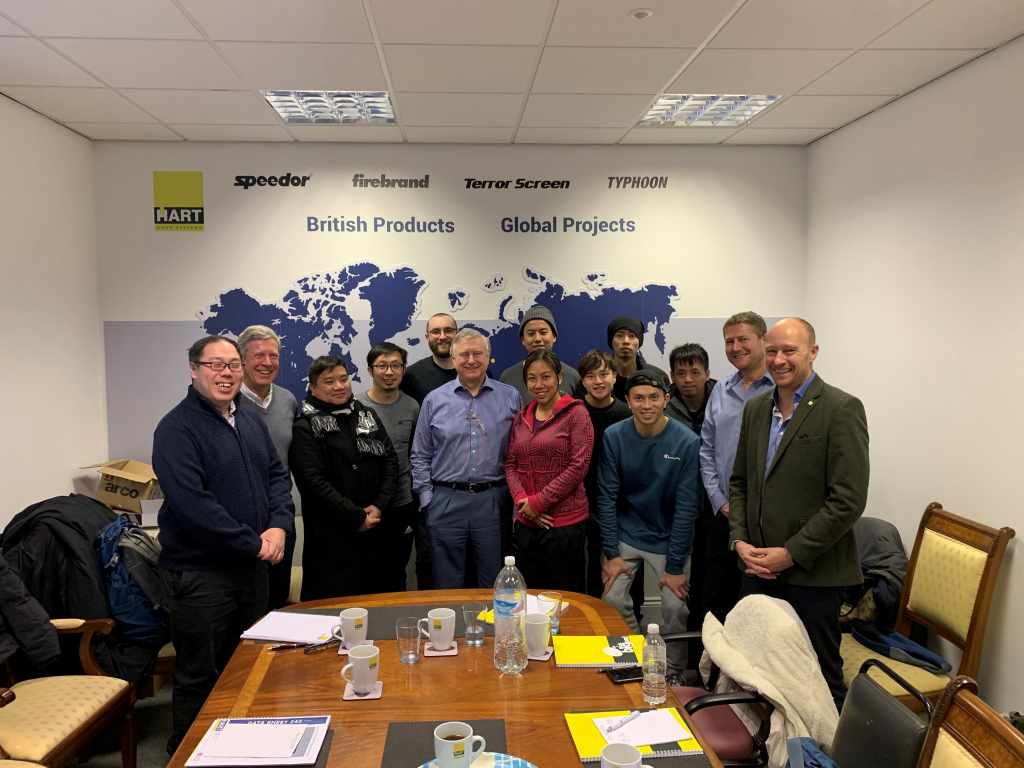
The British Compressed Air Society (BCAS) has elected two new board directors, to further strengthen its representation of small to medium compressed air distributor members.

Wendy Hayward, Managing Director of Aircare Compressor Services Ltd and Dean Horn, Sales Director at Wearside Pneumatics Limited have now joined the team, with a remit to help enhance the range of services and support provide to distributors, which comprise over 50 per cent of the society’s membership base.

Wendy Haywood

In 1994, Wendy joined Aircare Compressor Services Limited (Aircare), which at that time was a fledging family business set up by her father Brian in 1991.  Then, only four-people strong and operating from Brian’s family home, Aircare presented diversity, opportunity, and scope for Wendy in a new industry.  Wendy became Managing Director of Aircare in 2010 and the business now operates from branches in Corby and Nottingham, with x employees.

Said Wendy:

I am excited by the challenge.  Distribution is a thriving compressor sales channel in the UK, comprising many small to medium businesses that have built up impressive customer portfolios and technical knowledge over the years.  However, as SMEs they face numerous challenges, such as staying abreast of legislative and regulatory change and ensuring staff are trained and developed continually - all while managing their own business and employees.

I hope that with my 30 years' experience in distribution I can bring first-hand experience of these challenges to the board and work with the team to further support our distributor members

Dean Horn

Dean has been working in the compressed air industry since 2006, holding numerous roles for Wearside Pneumatics, include office management, branch management and latterly as Sales Director.

Said Dean:

After more than 16 years in the industry, I felt it was time to give something back and am delighted to have this opportunity to help further support our distributor network. 

BCAS has an excellent reputation for providing timely and accurate information, backed by industry-leading training to its members; helping them to stay compliant and safe.  I am hoping to provide insight on how this information can be tailored further to support distributors, especially around the areas of energy-reduction and legislative compliance.

Vanda Jones, BCAS Executive Director concludes:

We send a warm welcome to Wendy and Dean and congratulate them on their new appointments. 

The British Compressed Air Society is committed to helping compressed air users operate more efficiently, compliantly and safely, so it is essential that we communicate effectively with all our members. 

From providing guidance on mitigating health and safety risks, to implementing compressed air energy saving initiatives during a time of unprecedented price increases, our distribution members have a key role to play in shaping the future of our industry.  We look forward to working with Wendy and Dean to better support our members in these challenging times.

This website is owned and operated by: MSL Media Limited

msl logo
www.mslmedialtd.com

Co. Number: 05359182

© 2005 MSL Media Ltd. All rights reserved. E&OE

ems logo mobile