Latest News

New Electric and Diesel-powered Hydraulic Power Packs for Portable Machine Tools

Enerpac announces the new PP-Series electric and diesel-powered power packs to supply hydraulic flow to Enerpac portable machine tools, including flange facing machines, clamshell cutters, hot tapping machines and decommissioning tools. The hydraulic power packs are also compatible with other brands of portable machine tools.

The Enerpac PP-Series includes a total of four hydraulic power packs comprising two electric and two diesel powered models. Variable pumps within the power packs allow pressure and flow to be adjusted for specific applications.

Electric PP-Series Power Pack


Portable machine tool operators with access to an electric power supply can choose between the electric powered hydraulic power pack 11 or 15 kW models - each available with a choice of voltage options for use throughout the world.

Machine Specific Control Pendants

Many manufacturers of hydraulic power packs provide a simple general-purpose control pendant as standard with each unit. Although this is adequate for simple machining tools, it is of little use to control other machine types such as gantry mills, or 3-axis milling machines.

To meet these different applications, customers buying an Enerpac Electric PP-Series Power Pack can get exactly what they need. The range of pendant options offered provides a perfect match to suit the specific machine tool. In addition, for operator safety emergency stop buttons are provided on the power pack and the control pendant.

Diesel PP-Series Power Packs

For working in remote locations, customers have a choice of 19 and 44 kW units. These more powerful power packs are the optimum choice for larger machine tools used for operations such as hot tapping and decommissioning.

Both the Enerpac Diesel PP-Series PP19 and PP44 units are diesel powered and meet the EU Stage V and EPA tier 4 final regulations for emissions. Each includes a 50-liter diesel tank, which, in the case of the PP44, can provide up to 12 hours run time at maximum torque. Also included in the diesel power packs is a spark arrester for added safety in explosive environments.

Unlike the electric units which work with pendants to provide control, the PP19 and PP44 power packs require a separate hydraulic control panel and machine specific hose kits. The hydraulic control is connected to both the machine tool and the hydraulic power pack. The control panel houses all the controls needed for a specific machine’s requirement.  In addition, the Diesel PP-Series power pack features a pressure-less switch to remove pressure and flow.

Choice of Hose Kits

A 10-meter hose kit is supplied as standard and longer hose kits are available as accessories for single-supply, dual-supply and triple-supply applications. Triple supply hose kits allow three hydraulic motors to be connected to the power pack simultaneously, along with spindle control the operator can also select the required axis (x or y) from the pendant.

Machine operators choosing an Enerpac Electric PP-Series Power Pack can also benefit from an optional cart to enable easy positioning and storage within a workshop environment.

Site Ready

For ease of handling and deployment, the Enerpac PP-Series electric and diesel-powered power packs are enclosed within a protective frame and Forklift truck and vertical lift points

For more information on the Enerpac PP-Series electric and diesel-powered power packs, visit www.enerpac.com.

Meantime Brewing Replaces Boiler and Expands Capacity with Babcock Wanson

A Babcock Wanson BWD40 Fire Tube Boiler has been installed into Meantime Brewing’s Greenwich, London site, which is used in multiple aspects of brewery operation, from wort production through to packaging line operations. The 4 tonne BWD40 is a replacement for the existing 2.5 tonne boiler, which had come to the end of its working life.

Established in 1999, and based in Greenwich, London, Meantime Brewing Company is part of Asahi UK and has earnt a reputation as a modern pioneer of craft beer in the UK. It has an exciting line-up of core beers such as London Lager and Anytime IPA and innovative collaborations and seasonal beer releases throughout the year. 

In a recent refurbishment of its Greenwich site, to both increase capacity and reduce its carbon footprint, Meantime Brewery appointed industrial process heating specialist Babcock Wanson to undertake the boiler replacement works. This included supplying the BWD40 Fire Tube Boiler and carrying out all the mechanical and electrical works as part of a turnkey solution. Babcock Wanson developed the plans in close consultation with chief engineers from across parent company, Asahi UK, and ensured the site meets BG01 Guidance on the Safe Operation of Boilers. BG01 advises on boiler control technology and how to achieve the safety standards laid out in the HSE’s ‘Safe management of industrial steam and hot water boilers’ document (INDG436).

The Babcock Wanson BWD40 Fire Tube Boiler was chosen as the process heat source for this site due to its high efficiency, long life and low cost maintenance. Efficiency comes as a result of the optimised matching of the boiler shell and the burner, along with advanced burner head geometry which provides stable combustion with near constant efficiency throughout the complete burner modulating range. 

Longevity and reduced maintenance requirements are a direct result of the three pass design and use of a coaxially located furnace tube providing optimum distribution of mechanical stress in operation. This is an important feature for boilers that operate under variable steam load, such as at Meantime Brewing, and ensures long equipment life.

Further benefits of the BWD40 are lower total exhaust emissions. Using Babcock Wanson’s latest Optimo burner, the BWD40 has emission rates of less than 100mg/Nm3 NOx throughout the firing range when burning natural gas, making it one of the best performing burners on the market.

The new boiler in place, with its low NOx emission rates, readily meets the Medium Combustion Plant Directive (MCPD), which covers emissions of sulphur dioxide, nitrogen oxides and dust pollutants to the air. Babcock Wanson assisted Meantime Brewing with the required application for a new MCPD environmental permit, working with a third party who conducted a detailed boiler house risk assessment covering all relevant aspects - including steam, electrics, operations – and produced a written report.

Babcock Wanson offers a complete range of products and services for boiler houses and other process heating needs, from steam boilers, thermal fluid heaters, rapid steam generators and hot water boilers to VOC and odour treatment by thermal oxidation, water treatment or process air heating solutions. The company has extensive experience in the brewing and distilling sectors. 

For more information, please contact Babcock Wanson on 020 8953 7111 or This email address is being protected from spambots. You need JavaScript enabled to view it. or go to www.babcock-wanson.com/product-category/coil-type-steam-boilers/

ENDS


LOCTITE-SPONSORED TEAMS EXCEL AT FORMULA STUDENT 2022

All four university teams sponsored by Henkel and its industry-leading LOCTITE® products finished in top 20 positions at this year’s Formula Student 2022 competition, which took place at Silverstone on 6-10 July. The University of Southampton, University of Hertfordshire, University of Bath and University of Sheffield achieved 9th, 12th, 15th and 17th place finishes in the overall standings, with all achieving top 10 results in individual disciplines.

Formula Student is Europe’s most established educational engineering competition, an event that uses motorsport to inspire students. Backed by industry and high-profile engineers, such as patron Ross Brawn OBE, the competition aims to develop enterprising and innovative young engineers. Each team is tasked with producing a single-seat race car before presenting it to a hypothetical manufacturer, with all going through a rigorous testing process made up of static and dynamic events.

The University of Southampton, which entered its very first electric car in 2022, not only took a highly creditable 9th place overall, but finished 3rd in the design competition and 4th in the cost discipline. Among the innovative LOCTITE products contributing to this fine performance were LOCTITE 3090, a fast fixturing, gap-filling cyanoacrylate adhesive that works well on most plastics, rubbers and metals. The University of Southampton also took advantage of LOCTITE EA 9497 epoxy adhesive, LOCTITE EA 9466 epoxy potting resin paste, LOCTITE EA 9461 epoxy structural bonding adhesive and LOCTITE SF 7414, a blue, high-viscosity, fast-drying paste that allows the visual detection of any movement during the adjustment of parts.

The University of Hertfordshire was not far behind, finishing 12th overall, a result built on success in categories such as cost (5th), business presentation plan (6th) and design (10th). Again using an electric powertrain, the car leveraged the benefits of products such as LOCTITE 770-NC Frekote® as the mould release agent for composite components, all of which the team manufactured in-house. Further products in evidence on the race car were TEROSON® PU 6700, a polyurethane-based adhesive used for bonding composite structure panels to the chassis, while another important product was LOCTITE HY 4070, a fast fixturing cyanoacrylate/acrylic hybrid adhesive that the team used for bonding rubber around sharp composite edges.

Finishing 15th overall was the University of Bath, supported by highly noteworthy finishes in the design competition (6th) and cost category (7th). Based on mission statements for 2022 that included improvements in weight reduction, handling and reliability, the University of Bath tapped into the benefits of products like LOCTITE 770-NC Frekote epoxy mould release agent for advanced composites, LOCTITE Frekote B15 mould sealer, LOCTITE EA 9466 epoxy potting resin paste and LOCTITE SI 5910, a gasketing product for flexible flanges with good resistance to oil and joint movement.

Also managing a top 20 finish was the University of Sheffield, which was 17th overall supported by an impressive 8th place in the design competition. For this year’s race car, the University of Sheffield manufactured its first carbon-fibre monocoque chassis. Among other products, Henkel supplied LOCTITE EA 9497 for repairs to both the chassis and mould, as well as for sealing a number of aerodynamic components. Another important product was LOCTITE HY 4070 instant adhesive for structural bonding.

In addition, the teams deployed a myriad of LOCTITE threadlocking adhesives, gasket sealants, retaining compounds and cleaning products, all of which contributed to a highly successful Formula Student 2022. Plans and developments are already underway for the 2023 race cars.

For more information go to: www.henkel-adhesives.co.uk

Landia aerate the holiday park

Following three years of successful service by Landia aeration units at one of the UK’s most popular holiday parks, a leading water and wastewater asset management company has introduced an additional Landia unit to one of its customer’s other sought-after destinations.

As well as for the holiday parks it works with, the asset management company has also brought in Landia’s aeration equipment to serve customers in the food and beverage industries, including a dairy in the south west and a drinks manufacturer in Yorkshire.

The Landia AirJets, which mix and aerate wastewater in balance tanks, include the Landia Chopper Pump (invented by the company in 1950) and a venturi nozzle, which together can either reduce or eliminate the need for high-energy use blowers.

This latest order follows Landia’s successful work with Viridian Systems, where at a landfill’s leachate treatment centre, a new mixer has created annual savings on chemicals of around £85,000 ($101,000)

www.landiaworld.com

Ultimo and Additude sign a partnership to support industrial companies in the Nordics with asset management

Enterprise Asset Management (EAM) software vendor Ultimo extends its offering in the Nordics by partnering with industrial solution provider Additude. Based in Sweden, Additude is part of ICT Group, a leading European industrial technology solutions provider. The company offers innovation support, strategic consultancy, SW & HW development and complete IoT solutions for industrial customers. The partnership will benefit asset-intensive companies, as Additude can now offer them a single point of contact for all asset management challenges, helping streamline operation.

Additude offers the Ultimo portfolio as part of its extensive range of software solutions and services for the industrial sector. It can now deliver EAM software that not only delivers asset data but also defines actions to get the most out of the assets. This helps Additude’s customers, typically midsize and large industrial companies in the Nordics, improve asset performance and maintenance efficiency.

Marcel Leeflang, Head of Channel Sales at Ultimo, said: “With our leading Enterprise Asset Management platform, Additude will bring new value to its customers through a fully-integrated APM and EAM offering, which truly improves their asset performance. Our EAM solution can be tailored to the specific needs of each customer. The partnership will also accelerate Ultimo’s growth and enhance our presence in the Nordics, helping us support new customers with their maintenance and asset management challenges.”

Sam Aston, CEO of Additude, commented: “We focus on integrating data and adding value to our customers through smart industry 4.0 solutions. By joining forces with Ultimo, we now cover the maintenance part of the digital transformation and offer a complete solution including virtually-assisted remote maintenance, predictive maintenance and asset performance management. With Additude’s entrepreneurship and long experience in delivering engineering expertise, as well as tailor-made solutions and services for different industry sectors in the Nordics, working together with Ultimo is a logical step. I’m convinced that their wealth of experience in asset management will contribute to the success of our customers.”

www.ultimo.com

www.ictgroup.eu

Rittal Blue e+ S cooling units Cool successor with sustainable DNA

Rittal is expanding its smart cooling unit solutions by adding the new Blue e+ S range. Our latest generation of cooling units with their lower output categories of 300, 500, and 1,000 W have been designed for efficiency, ensuring a smaller footprint and lower costs – just like their “bigger brothers.” So it’s a win-win both for users and for our future.

Solutions that reduce our carbon footprint during production are in high demand. But at the same time, these solutions need to be intelligent and communication-enabled so that they can be easily integrated into digitalised manufacturing environments. Seven years ago, Rittal responded to this demand with its Blue e+ range of cooling solutions and launched extremely efficient enclosure cooling units, which provided on average energy savings of 75 percent. Now we have a new generation – the next generation – but still developed with that same design DNA. These new cooling units with their lower cooling outputs of 300, 500, and 1,000 watts called “Blue e+ S” add to the Blue e+ family and bring with them additional smart capabilities. And furthermore, this new generation offers innovative energy-saving features for the production process.

What’s behind this energy-saving and therefore cost reduction is the technology used, combining a heat pipe with inverter-controlled components. The heat pipe works without a compressor, expansion valve, or other regulating elements and so does not need any electrical energy except to operate the fan. Depending on the thermal energy generated in the enclosure and the current ambient temperature, cooling can be performed with the heat pipe alone. The additional compressor cooling only operates if a large amount of heat has to be dissipated from the enclosure or if the ambient temperature is very high. And what’s more – when it does operate, it is far more energy-efficient than conventional units. This is because the compressor and fans possess an inverter-controlled drive, which automatically adjusts their speeds depending on the requirements. As a result, the temperature within the enclosure remains constant, and the energy efficiency is significantly higher than with other more conventional cooling units.

Staying cool all the time

Alongside energy efficiency, another feature also reduces the carbon footprint: The new Blue e+ S series uses a refrigerant with a GWP (Global Warming Potential) that is 56 percent lower than those used in comparable cooling units. Furthermore, instead of the R-134a previously used, the cooling circuit in the new generation of units now runs with R-513A refrigerant.

Smart communication-enabled capabilities

With their additional smart functions, the new cooling units also help in the digitisation process. With a fully integrated IoT interface as standard, the cooling units can be intelligently monitored in digitalised environments and easily connected to Rittal's new Smart Service Portal. This optimises the service processes and increases efficiency through predictive maintenance. As a result, fewer unplanned downtimes occur which all helps to manage the high cost of production, especially with Industry 4.0 processes.


Production-friendly facelift

These cooling units in the lower output classes have also undergone a facelift. Their most striking feature is an integrated coloured LED light strip. This means that warning messages can be immediately seen, even from far away. A display on the front of the enclosure provides additional up-to-date information. Moreover, the cooling units are equipped with the familiar NFC interface, which enables them to communicate with mobile devices that have the Rittal Scan & Service app installed.

For further information on the entire Rittal range visit  www.rittal.co.uk or check out our linkedin page @rittal-ltd-uk

Industry-leading Speakers Announced at Europe’s Leading Lubricant Exhibition and Conference

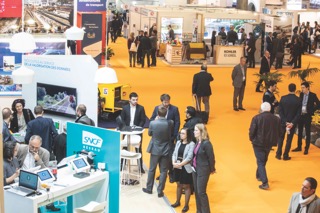
 Europe’s leading event for the lubricant industry, Lubricant Expo, has released details of its conference programme for 2022 featuring exclusive insight and leading global speakers.

The three-track conference, taking place on the 6th - 8th September 2022 at Essen, Germany, is free-to-attend and will connect lubricant solution providers with the full range of end-user buyers, as well as the entire chemical and equipment supply chain. The conference has attracted leading experts from global brands to share exclusive knowledge and insight.

Conference attendees can expect to hear both strategic and technical sessions focused on the innovations taking place in the lubricant industry, technologies requiring new, high performing lubricants, the global diverse market and how sustainability and cost remain the two key considerations. There will also be discussions on the current challenges the industry is facing such as the global supply chain issue

On day one (Tuesday 6th September) the conference will open with its first keynote session, ‘What is the Global Picture for Lubricants and How are Sustainability Targets Impacting the Sector and its End Users?’.  Dr David Whitby, CEO, Pathmaster Marketing Ltd will chair the session and Pranav Bhanage, CEO, PETRONAS Lubricants ( India) Pvt Ltd, Maurizio Abbondanza, Sustainability Director, Infineum, Annie Jarquin, Director of Global Business Development, Kline Industries and Andréas Osbar, Vice President of Transformation Lubricants, Castrol will provide a platform for industry leaders to discuss the challenges the lubricant industry is facing and discuss the opportunities for agile stakeholders to harness this new normal for lubricants.

The next keynote session focuses on ‘Managing the Rapidly Changing Landscape in the Lubricant Value Chain’. Steve Holland, Former CEO, Brenntag will chair the session and Apu Gosalia, Sustainability Expert, Fokus Zukunft and Dr David Whitby, CEO, Pathmaster Marketing Ltd are teaming up in a lively session to explore what possible trends we can expect to see from the global markets in the coming months and years and how they might impact the lubricant industry, its end users and their combined push for a more sustainable future.

This free-to-attend event is a unique opportunity for customers, industry-leaders, pioneers and peers to share insights, innovation and lively debate about how to support end-users of lubricants in the most eco-friendly and economical manner. Attendees will come away from this event understanding the most pressing challenges and promising solutions for the whole supply chain; and will be able share their own insight with peers on how the industry can look to stimulate growth and development - profiting the sector, its customers, and the planet.

Paul Hooker, Event Director says “Lubricant Expo will feature a dedicated program of presentations and panel discussions, equipping attendees with the knowledge and supply-chain opportunities needed to achieve sustainability goals, reduce carbon, improve efficiency, and meet end-user requirements. This event is uniquely positioned to drive the conversation on what the industry could look like as we move through this decade. The exhibition and top-flight conference will connect the brightest R&D minds with the commercial voices needed to amplify and cement growth. From across the end user and manufacturing spectrum, leading speakers will address how to turn world-class R&D expertise into commercial opportunity and output.”

Lubricant Expo is co-located with the hugely anticipated The Bearing Show, Europe’s first dedicated free-to-attend, in person exhibition and conference – connecting bearing technology providers with the full range of end-user buyers, as well as the entire technology, equipment and materials supply chains.

For the full conference programme, exhibition enquiries and to stay up to date on all the latest news about Lubricant Expo please visit https://lubricantexpo.com/ and https://bearing-show.eu/

Hart makes assault on car battery market

Much is being debated about the electrification of transport with a particular focus on the  motorcar. This deliberation has accelerated thanks to increasing evidence of Climate Change with a growing focus on carbon emissions from vehicles.

The arrival of battery manufacturers to the British market such as Britishvolt, with its huge battery plant being built at Blyth, Northumberland, illustrates the level of change underway led by Nissan, at nearby Sunderland, where the manufacture of electric cars and as a consequence batteries started some 10 years ago. 

As Nick Hart, managing director, Hart Doors, Newcastle upon Tyne, explains. “We were asked to work with the design team at the initial design stages of the battery facility to manufacture a bespoke door system that would integrate with Nissan’s own systems. There are now some 100 Hart doors now in the battery part of the plant.

“We developed a unique door capable of giving 60-minute fire resistance and also be capable of completing up to 400,000 open/close cycles a year. Further, the doors met strict air leakage criteria and resistance to sudden air-pressure increases.

“The doors also interfaced with third-party equipment such as conveyor belt controls and fire alarms. Each had an LCD display control panel that provided a quick and easy diagnosis of what each door was doing at any point in time.

“Quite clearly this was a complex challenge for a new door system that had to perform in a demanding manufacturing environment and importantly comply with British, European and American standards,” says Mr Hart.

“The oven doors were by far the most sophisticated with each requiring a self-supporting fire rated frame. Every door required two  curtains, one that provided 60 minute fire resistance while the other one allowed the door to comply with the air leakage rates on the ovens.

“An additional benefit of the twin curtain design was the increased thermal performance of the door system as a result of the cavity created between the two door skins.”

Hart also supplied Cleanroom doors to control the environment which was an essential part of the  manufacturing process where environmental control was down to the smallest detail to ensure zero contamination.

Where fire protection was essential Hart fitted 60 minute fire screens at entry and exits points enabling them to close under a fire condition but also comply with the requirements of the Clean Room standard as well as being assessed against releasing fine particles in static and moving conditions.

Contact www.hartdoors.com  t: 0191 214 0404   This email address is being protected from spambots. You need JavaScript enabled to view it.

Thorite becomes first UK premier partner for Norgren Valve Islands Move will reduce order turn-round to just 72 hours

Thorite has become the first UK company to be named a Norgren Premier Partner, enabling it to construct and distribute the world-leading valve islands from its Bradford headquarters.

The contract to build bespoke valve islands in-house means Thorite can reduce delivery times from roughly three weeks to just 72 hours from receipt of an order.

Thorite, the UK’s leading independent supplier of air and fluid power products, has a 60-plus year partnership with Norgren, a global leader in fluid and motion control technologies. It has invested £15,000 in testing facilities and stockholding at its Bradford headquarters to ensure it meets the same quality standards that Norgren are known for.

The recently launched webstore now features an interactive valve island configurator, allowing customers to specify their own bespoke manifold and send it immediately through to the system division for quoting and production using the company’s comprehensive stock of Norgren components.

Managing Director of Thorite, Stephen Wright, said: “This is another important ‘first’ for Thorite.

“Norgren has an outstanding reputation for manufacturing equipment which improves the productivity and efficiency of plant equipment. Selecting Thorite as its first UK partner for assembling valve islands is a clear sign of its confidence in the quality of our service.

“Customer service is a key priority for us and will be further enhanced by our ability to complete an order within a matter of a days rather than weeks.”

Norgren is a US-based company with manufacturing plants around the world and a sales and service network in 75 countries. It has UK bases in Lichfield and Manchester, as well as manufacturing plants in Bristol, Leeds and Poole.

The Norgren valve island contract marks another milestone partnership for Thorite, which recently became the first UK industrial supplier for Sheffield-based GWE’s Eco-Max voltage optimisers.

5 Technology and Engineering Trends for 2022

With scientists and engineers constantly striving to develop solutions for humankind’s problems, there are a plethora of exciting developments in the tech and engineering world that are making their way into the public eye.

From 3D-printed homes to brain-computer interfaces and efficient alternatives to traditional heating, 2022 has heralded the arrival and adoption of a wide range of new technology. Offering solutions to prominent humanitarian issues like housing costs and viruses, 2022’s latest technological developments have been nothing short of huge in encouraging a better future.

If you haven’t been keeping up-to-date with the latest advances in technology and engineering, not to worry. Innovation management advisors ABGI UK enable their clients secure funding to help accelerate innovation within their company, so it’s fair to say they know a thing or two about new technology. They’ve broken down five of 2022’s biggest technological breakthroughs, so you can stay informed on what the future holds.

Heat Pumps

One of the main contributors to global energy consumption is the energy we use to heat indoor spaces, such as offices, homes, and shops. Most heating methods rely on burning coal, gas or oil, and therefore contribute to global warming. Heat pumps offer a promising alternative to this conundrum, so expect to see more heat pumps employed – both commercially and privately – as we move towards Net Zero emissions.

Heat pump technology transfers thermal energy from a cooler space to a warmer space using the refrigeration cycle. In other words, heat pumps force heat in from the ambient air outside, in order to warm an indoor space – essentially, refrigerators working in reverse.

What’s more, heat pumps can also function as air-conditioning systems, and are capable of cooling down indoor spaces in the summer months. Because the technology merely moves existing heat around, heat pumps are incredibly efficient, and can be a legitimate alternative to traditional heating systems. With the UK government offering financial incentives for households to install heat pumps, it’s no surprise that they are growing in popularity compared to other methods of heating.

VR Fitness

Virtual Reality (VR) is mostly known for its gaming or design applications. Yet, developers are increasingly looking for other applications for this popular technology given VR’s ease of use and accessibility. One area of particular interest is the fitness sector. The ability of VR technology to combine the fun of gaming with physical activity makes it a natural choice to help encourage people to get fit.

VR’s mainstream viability has been accelerated by the pandemic, which closed down gyms and fitness centres across the country. As hardware prices continue to decrease, expect to see more widespread use of VR technology in the fitness sector. Game developers are taking note, with more and more games – sorry, virtual exercise plans – in the making, slated to be released this year.

The impact of VR in encouraging public health could be hugely important, particularly given the rising number of people who are either overweight or obese, and suffering from health issues as a result. By allowing people to train in their homes and incorporating video game elements, we hope we’ll see a healthier UK going forward.

HIV and Malaria Vaccines

For years, scientists and biologists have been aiming to find treatments for diseases such as Malaria and HIV. Both of these viruses are responsible for hundreds of thousands death globally. However, there are reasons to be optimistic that 2022 might be the breakthrough year in the fight against them.

2021 saw the announcement of a messenger RNA (mRNA) based malaria vaccine that is 77% effective. Drug manufacturers such as Moderna, are currently beginning trials for an HIV vaccine, which also relies on the mRNA technology. One silver lining of the ongoing pandemic might be that it heralds a golden era of vaccine development.

3D-Printed Houses

3D-printing technology has been coming of age in recent years, and its myriad potential applications are quickly exceeding initial expectations. Icon, a company based in Austin, Texas, is scaling up their 3D-printing technology to ‘print’ entire houses. Following a computerised blueprint, giant robots are used to construct the walls of a building by extracting layer upon layer of concrete mixture. Traditional construction is used for the roof, foundations, wiring and plumbing.

Printing walls is far faster that constructing them from bricks or wood, and limits the labour cost of construction. Furthermore, Icon states that the innovative structures are highly energy efficient and are better equipped to withstand natural disasters. This type of robotic construction is expected to play a huge part in the construction industry going forward, with suggestions that the habitat-building technology might be used one day on the Moon and Mars.

Brain Interface

A brain-computer interface (BCI) is a computer-based system that acquires brain signals, analyses them, and translates them into commands that are relayed to an output device to carry out a desired action. In other words, it is a device that allows one’s brain to connect to and control a computer device using the brain’s electrical activity.

Neuralink, a neurotechnology company founded by Elon Musk, made news deadlines in 2021 when it announced the development of a brain implant, which allowed a monkey to play a video game telepathically. In 2022, the company hopes to test its device in humans. The initial trials have shown encouraging results, suggesting at the technology’s potential healthcare applications. Early intended usage may enable people who are paralysed to operate a computer device.

Whether by forming a solution to public health crises or enabling people with severe disabilities to live a more independent life, the above technologies are all hugely exciting, and have the ability to make life far easier for people around the world. What is perhaps most exciting, however, is that we have not even begun to scratch the surface in terms of the impact these technologies could have in the future.

Dr Glenn Craib, Operations Director at ABGI, commented: “As we see more widespread implementation of large-scale 3D-printing and the development of brain interfaces, we may uncover new applications with a far greater impact upon humanity – and it’s our job to enable people to find these new applications.” 

How to Prevent Corrosion Caused by Renewables Conversion

Many oil and gas companies are repurposing refineries to produce renewable diesel, sustainable aviation fuel, and other renewable biofuels and products. The replacement of fossil fuels will help to decrease greenhouse gas (GHG) and CO2 emissions.

To incentivize the production of renewable fuels, the US Environmental Protection Agency’s Renewable Fuel Standard (RFS) Program requires that 36 billion gallons of renewable fuel replace or reduce the quantity of petroleum-based transportation fuel, jet fuel or heating oil by 2022.

Process equipment designed to refine crude oil products will now be faced with new chemical compositions, pressures, and temperatures. This new processing environment leads to new corrosion mechanisms which can all detrimentally affect existing carbon steel, stainless steel or internally clad reactors, drums, and other process equipment.

New Corrosion Mechanisms

Corrosion mechanisms in renewable diesel processing are unique. Conventional base materials of columns, towers, and reactors, as well as past corrosion mitigation strategies, are unsuitable in these new operating environments.

The processing of renewables, whether co-processing or switching to 100%, means that critical equipment, such as reactors, become susceptible to high temperature free fatty acids (FFAs). These are a type of carboxylic acid and will contribute to the acidification of the feed, increasing the total acid number (TAN), leading to corrosion. Other types of corrosion include CO2 corrosion, wet chloride corrosion, sulphidation and stress corrosion cracking.

Damage Mechanism Concerns in Petroleum vs. Renewables vs. Co-processing

100% Petroleum

100% Renewables

Co-processing

•       Sulphur is the major concern in the feed along with lower amounts of naphthenic acids and nitrogen

•       H2/H2S corrosion dominates in the hot section of the unit

•       Sulphur-to-TAN ratios can be leveraged to control corrosion of some materials

•       As the effluent cools, NH4Cl and NH4HS and wet H2S damage can occur

•       Fatty Acids are the major concern in the feed, resulting in Free Fatty Acid (FFA) corrosion

•       Pre-treatment of feeds may be necessary to remove catalyst poisons and extend run length

•       Pre-treating and lipid degradation can increase acid content; acids convert to CO2 and water in the reactor

•       As effluent cools, CO2 corrosion (carbonic acid corrosion) can occur

•       Depending on the blend, H2/H2S corrosion and fatty acid corrosion could occur in hot sections of the feed

•       In the effluent, alkaline aqueous species help to mitigate CO2 corrosion

•       Wet H2S damage and salting (from chloride contamination) are still relevant mechanisms

Repurposed equipment is faced with risks to asset integrity due to new corrodents and damage mechanisms. The original equipment design and/or mitigation strategy may no longer be sufficient to deal with any combination of Free Fatty Acid (FFA), Naphthenic Acid, Carbonic Acid, Chlorides etc. in the effluent and associated streams. Revised mitigation strategies must account for the differences between the old and new damage mechanisms, for both the asset base material and cladding (if installed). Depending on the process conditions, 3XX SS alloy overlays may not be resilient enough for these more aggressive service conditions.

Cladding materials based on alloys with a known tolerance (e.g. NiCrMo/W/XX), can provide the necessary corrosion resistance for renewable fuel processing.

To protect the existing equipment base material and pressure boundary, a metallurgy upgrade is required to prevent corrosion and potential asset integrity failure. There are several options available to achieve this.

Available Solutions

  • Replacement

This option involves replacing the existing assets with newly built equipment designed for the latest operating environment. Replacement of small items can be relatively quick and cost effective, but when operators consider medium/large processing equipment, such as pressure vessels, drums, reactors, columns etc., replacement becomes prohibitively expensive and slow, with lead times for the required high-nobility clad equipment often being many years.

  • Field Applied Weld Metal Overlay (WMO)

Welding is a commonly used solution in the wider oil and gas industry, both for rebuilding degraded areas of wall thickness and for providing a corrosion-resistant alloy barrier.

However, welding carries some fundamental drawbacks. A common issue is the potential damage of the vessel shell or any existing internal cladding, due to the heat input required for the welding process (preheating, welding (Heat Affected Zones) and post weld heat treatment or bake out). The process also necessitates additional mechanical support for the equipment during the process to mitigate the structural integrity risks e.g., loosening any flanged connections, cranes or laying the column down horizontally. A high degree of stress gets added during welding, especially on thinner wall vessels, which can cause distortion or failure. Additionally, the weld procedure, code, or environmental conditions will typically require heat treatment prior to and after the application, adding further time and cost to the repair solution.

There is also the question of time and cost. Welding is a relatively slow process with an application time of 10 – 16 ft2 (1 – 1.5m2) per weld head per shift and can cause additional delays in bringing the asset back into service. Depending on the time frame available for converting to renewables, using the method of welding for corrosion protection can have a significant financial impact.

Field Applied High Velocity Thermal Spray (HVTS)

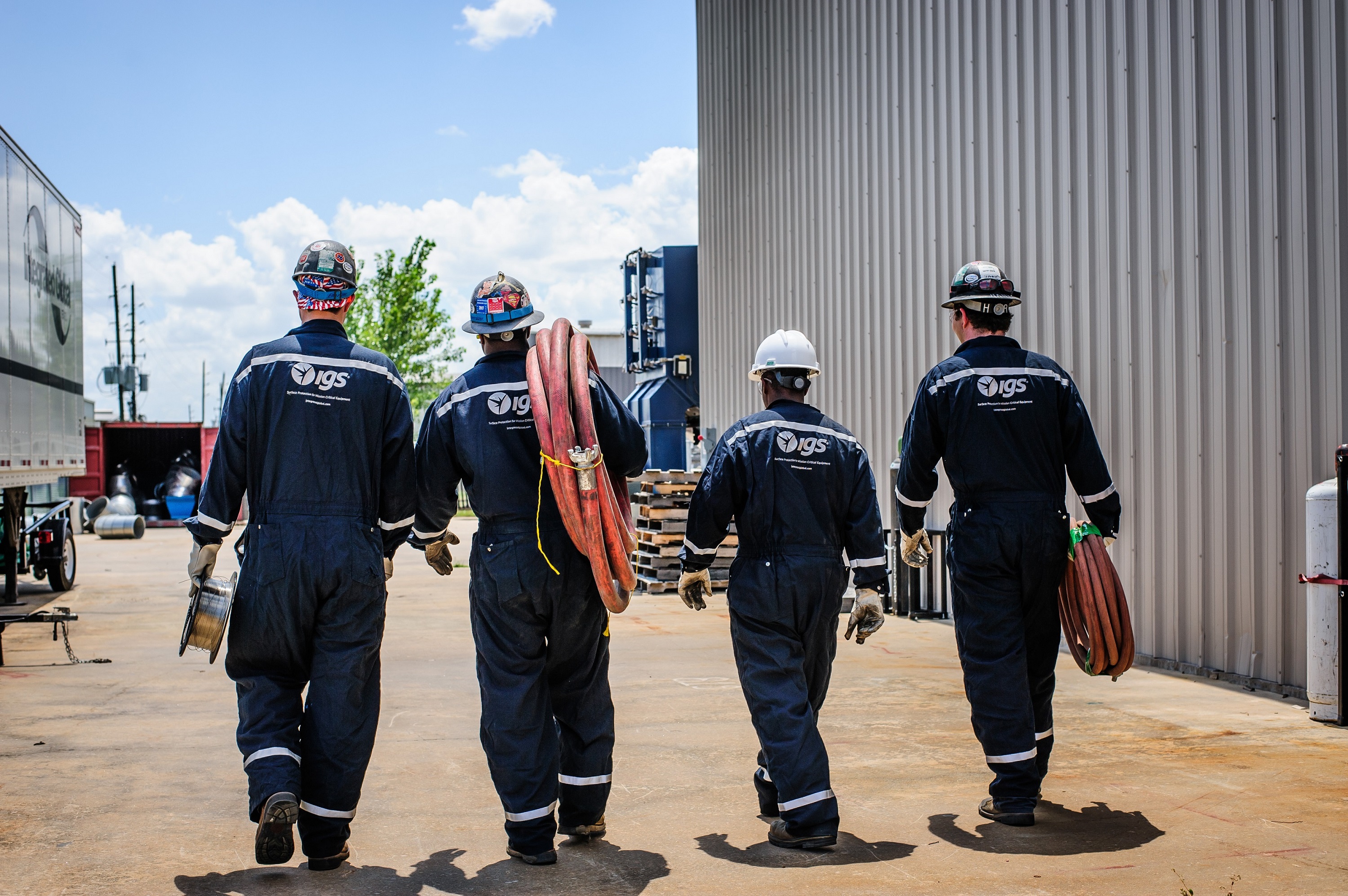
Developed by corrosion mitigation specialists Integrated Global Services (IGS) in the early 2000’s following decades of field application experience, HVTS is designed to protect the base metal in high corrosion environments and involves the simple application of a non-porous high nobility metal alloy. This application upgrades the metallurgy of base materials, protecting them from new operating environments. Since the early 2000’s HVTS has been successfully installed and the performance verified through inspection in hundreds of critical O&G process assets over thousands of square metres of internal surface.

The application process is considerably faster than welding and there are no stresses imposed on the base material during the application process, effectively for the substrate the application is a cold process. Furthermore, HVTS application does not generate any dilution (the process does not require fusion or a metallurgical bond).

HVTS Features:

Application Speed

32-64 ft² / 3-6m² per shift per HVTS machine

Heat treatment before / after

Application

Not required, no pre-heat or HAZ

Bond:

Mechanical and Chemical (>35 MPa)

Thermal resistance

Over 1000°F / 537°C

Top Tips for Upgrading Vessel Internal Metallurgy for Renewables Conversion

Prequalifying the Solution

When selecting a contractor to protect mission-critical equipment from new processing environments, there are several things to consider. Firstly, the contractor should work with the EPC, asset owner and the licensor to deliver a comprehensive pre-qualification engineering package to govern the quality of the applied surface technology solution and ensure that the protection solution is suitable for the new harsh corrosion mechanisms. Rigorous testing should be performed by the provider to verify the suitability of the selected solution in advance of the application.

Delivering a Technical Package

A good surface solutions provider should deliver a complete technical package of services ensuring a turnkey site application within agreed timescales, including:

  • Project Plan
  • Method Statement
  • Project Safety Analysis
  • Risk Assessment and Mitigation Plan
  • Job Specific Safety Data Sheets
  • Material Selection
  • Surface Preparation
  • Utilization of the Application Process
  • Critical QA/QC Controls
  • Post Project Reports

Case Study: Half the Cost and a Third of the Application Time in LP Separator Renewables Conversion

Introduction

A multinational Oil & Gas company is sharpening its focus on meeting the world’s growing energy needs while reducing its carbon emissions intensity. As a result, it is converting one of its refineries to a renewable fuels manufacturing and terminal facility that will be able to produce approximately 730 million gallons of renewable fuels per year.

The Problem

A low-pressure separator with a minimum corrosion allowance remaining was being prepared for converting to renewable diesel. The asset was at risk of carbonic acid attack if left untreated, so the metallurgy of the LP separator required an upgrade before commissioning. The plant considered welding internal cladding, but that option carried significant costs and would require 30 shifts to apply.

The Solution

The plant selected HVTS, an IGS Solution, to upgrade the metallurgy of the separator to a higher nobility alloy able to prevent carbonic acid corrosion. References, operations excellence, and the ability to inspect the separator in between turnarounds without shutting it down were the key drivers of the plant’s decision-making.

To Weld or Not to Weld?

The Plant had weld overlay installed in the bottom of the separator already and was considering welding a higher nobility alloy above that area. Field welding is an expensive and time-consuming process and the plant elected to utilize HVTS alloy cladding that delivered numerous technological and commercial benefits.

Cost and Time Savings

Field welding is significantly costlier compared to HVTS and requires 3X the time to apply the solution. This can be a problem if the asset is on a critical path.

Guaranteed Performance

As the separator had minimum corrosion allowance left, the plant engineers had to be certain that the HVTS would not fail in service. Multiple references and performance qualifications completed in the IGS Technology Centre confirmed that HVTS delivers equivalent protection when compared with welding with added benefits:

  • no heat treatment before and after application
  • no heat affected zones (HAZ)
  • no dilution
  • no risk of metal distortion

External Inspection

IGS designed a method to verify HVTS integrity during an asset’s normal operation. This approach offers extra peace of mind as there is no need to wait until the next scheduled turnaround to ensure that the corrosion protection barrier is intact. The plant welcomed this addition to the service package.

Project Execution

IGS delivered an engineering package, including the project plan, method statement, inspection test plan, project safety analysis, risk mitigation plan and the job-specific safety data sheets. The whole project was completed in 9 shifts as planned.

Summary

With the rise in renewable conversions, there is a multitude of issues to consider for oil and gas companies. Corrosion protection is critical for long-term asset performance and a comprehensive mitigation strategy should be in place at the beginning of the conversion process.

A preventative maintenance plan will ensure that asset life is prolonged, the risk of costly unplanned outages is reduced, and performance and efficiency are maximized.

This website is owned and operated by: MSL Media Limited

msl logo
www.mslmedialtd.com

Co. Number: 05359182

© 2005 MSL Media Ltd. All rights reserved. E&OE

ems logo mobile