Fast spill response with improved Rigid-Lock QuickBerm Lite

Protect your environment with the efficient, space-saving spill containment berm from Brady. Its patented Rigid-lock design ensures quick deployment and easy setup, what makes it ideal for fast spill response.

Benefits:

  • The sturdy, portable berm offers 100% leakproof containment, making it ideal for a wide range of spill prevention needs
  • Save time and effort with our one-piece design
  • The exclusive wall support system features durable stainless-steel braces that securely lock into place at a 90-degree angle
  • The reliable containment system features robust walls and anchor points that can withstand 64 KPH (40 MPH) winds, preventing the berm from moving into the stowed position
  • The PVC-coated fabric is highly resistant to ultraviolet rays and chemicals, ensuring long-lasting performance even with repeated use

Check-out available dimensions >>

Brady Corporation
www.brady.eu

The Hills Are Alive with the Sound-Thinking of Sustainability

As the saying goes: ‘Don’t judge a book by its cover’. A partly submerged tank containing a chopper pump and a mixer at Hendwr Farm’s biogas plant probably won’t win any industry awards in the ‘aesthetically pleasing’ category. But who cares? Least of all, Phil Hughes, who runs it.

A traditional hill farm in North Wales that produces lamb and beef? Yes. A highly innovative visionary business that leads the way in diversification by taking a truly circular view of its future? Ditto.

The farm (about 25 miles west of Wrexham) began in 1902, when it was purchased by Phil’s great grandfather, Cadwalader Jones Hughes.

‘Diversification’ is of course a big current buzz word, and good job too, but John Hughes (Phil’s father), saw the benefits of it back in the late 1960’s when he began offering camping at the farm, which then evolved into the thriving Hendwr Caravan Holiday Park. Income from the serenely-set medium-sized static caravan holiday park was and continues to be a success, but its growth meant plenty of electricity consumption, so as the next Hughes’ generation brought its influence to bear, Phil (in 2011) went ahead with the introduction of ground-mounted solar panels.

“We wanted to limit external inputs into the farm,” he said, “and when we saw the benefits of this first venture into renewable energy, we started looking at how else we could expand it.”

Producing a modest amount of manure from 120 Angus calves, a plan emerged to combine this with waste, corn and chaff to feed a biogas plant that would not only produce energy, but fertiliser too, which especially given the rising costs, the farm didn’t really want to have to buy any more. The key ingredient though would be to use chicken litter, which has proved to be a very fast and efficient feedstock.

‘Strong financial case for making this source of renewable energy work’

“I would say that when we started building our biogas plant in 2015, we were gloriously ignorant,” added Phil Hughes. “It was a thousand times harder than we thought it would be! – but when you look at the value of farm produce compared to the value of anaerobic digestion (AD), there’s a strong financial case for making this source of renewable energy work and work well. Food is so undervalued. We’re incentivized as farmers to produce food as cheaply as possible, rather than look at the whole food cost and the effect on land and our wider society.

“We have almost 100 control signals on our biogas process, so if something isn’t right and an alarm goes off (typically in the middle of the night!) you have to deal with it straight away if you want to keep the plant up at its target performance levels, which for us, is a minimum of 95%. We have a 200kW engine, and a digester that very much fits our farm size. I’ll admit that we’re obsessive about maintenance, but we have to hit high numbers to be profitable, and you just can’t neglect the biological process. It’s not like a light that you switch straight on. It takes time to come back to full production, so time is money. To keep our system running at its optimum levels, we’re always absolutely on it. We take regular samples, and over the years have learned what good biology is, so that we know what to do and what not to do.”

For its 90m3 reception tank, Hendwr invested in a chopper pump and a mixer from Landia to blend the incoming feedstock into a very homogenous mix.

“The only problem we had,” continued Phil, “is that after six years of continuous use, we eventually killed the pump! It was cast iron and was basically being asked to do something that it wasn’t designed for. The low pH, running at 3.8, had over time, made everything corrode. We very much wanted to stay with Landia, but to upgrade to stainless steel, this meant a short wait, so they kindly helped us out with a temporary replacement so that we could keep producing gas. The Landia Chopper pump is very effective and reliable, continuously reducing particle sizes, ready for the liquid to go through into our milling and micronizing lines.”

During lockdown when some of us put on far too much weight and drank far too much, Hendwr far more wisely relieved the boredom by learning how to dewater digestate and slurry to get not only a dry, stackable solid, but a polished water that’s dischargeable into water courses. This has resulted in the development of Ekogea, whose BioComplex product maximises biogas outputs and improves commercial viability, as well as reducing waste digestate by up to 80% by volume. It also treats wastewater to Environment Agency permitted discharge standards. The product range helps with sustainable and profitable slurry management, provides natural fertiliser for crops and soil regeneration, and improves the health and profitability of livestock.

Phil Hughes continued: “We’ve found a way of concentrating solids so that we can now dewater very efficiently. As hill farmers, it allows us to take that digestate as valuable fertilizer safely up onto the banks, whereas slurry tankers would be dangerous with all that weight sloshing around. It’s a big advantage because we can deliver nutrients much further through the farm, which has increased our productivity. When spreading onto our land, it’s going into the plant, instead of going up into the air, which is why we're growing so much more grass on the farm, because the nitrogen isn’t being been lost to the atmosphere.

“We’re actually reducing the volumes of liquids and slurries we’re dealing with by a factor of almost 10, reusing the water to wet the dry chicken litter at the front end of our system for a much cheaper, more efficient process. When trying to dewater, covering our lagoon (5m deep), was one of the best things I ever did. We have no shortage of rain in North Wales! Dewatering offers numerous options because it is so much easier to transport. It is a very exciting piece of technology, which in addition to farming, can be used at factory sites, even if they already have a DAF treatment process. We can collapse the COD, BOD and nitrogen levels that they get charged for by the water companies.

‘Good Mixing Remains Crucial’

He continued: “At the heart of our biogas process, good mixing and pumping for that all important homogenization remains crucial. When the Landia team turn up to carry out maintenance, they are armed with good client data. We could be made to feel that we’re just a small customer out of thousands, but they know our names, know exactly what they are doing and provide very attentive, enthusiastic service. They’re good lads. Hitting our performance target means having the right machines, the right service, and the right after-sales, which we’ve always had from Landia.”

01948 661 200

This email address is being protected from spambots. You need JavaScript enabled to view it.

www.landia.co.uk

New Separator provides benefits for dairy farmer

A Separator from Borger has helped a dairy farmer provide bedding material for his 240 cows, as well create useful feedstock for his biogas plant.

Also utilising control technology from Borger and a BLUEline rotary lobe pump, the dry solids (DS) content can be continuously adjusted with ease. Thus, the farmer is able to select a high DS content (>30 %) for use as bedding material, and a low DS content (approx. 22 %) when the solid phase is to be delivered to the biogas plant.

The installation has created a 25% saving on storage capacity, and furthermore, the bacteria count in the cow’s milk has reduced to a very low level since the switch from straw to the separated manure.

Designed and built by Borger, the control unit of the energy-efficient Bioselect RC 40 Separator coordinates the operation of the feed pump, the liquid phase pump and the Separator. Automatic separation at required times can also be selected.

For easy maintenance and long-service life, the Bioselect RC 40 is also designed so that the drainage and press channels are positioned one after the other, which helps preserve the filter unit. The rotating clearing auger is also designed in such a way that it does not come into contact with the screen. Abrasive parts cannot cause any damage to the surface area here; helping increase the longevity of all components.

Borger UK

01902 798 977

www.boerger.com

This email address is being protected from spambots. You need JavaScript enabled to view it." data-linkindex="1" style="border: 0px; font: inherit; margin: 0px; padding: 0px; vertical-align: baseline; color: rgb(70, 120, 134); text-decoration: underline;">This email address is being protected from spambots. You need JavaScript enabled to view it.

Enerpac Cutter Spreads and Cuts in One

The Enerpac ECS-Series Cutter Spreader combination tool features powerful jaws that can cut and spread, bringing a versatile and simple tool to industrial customers.

Two Tools in One
With a 30cm maximum aperture, the powerful spreading jaws apply five tons of force to quickly open workpieces and expose the internal parts of vehicles, appliances and other industrial equipment. A pair of large blades grip and cut through extensive sections of sheet metal and similar materials, streamlining and accelerating the cutting operation. Whether recycling appliances, removing impediments or cutting materials down to size, the Enerpac Cutter Spreader combination tool is the ideal tool to access required parts and get the job done.

Easy to Use
The Cutter Spreader combination tool is an innovative and simple design that offers both cutting and spreading action in a single plug-and-play tool without the need of pumps, hoses or batteries. The tool only weighs 15 Kg and features a rotatable head for optimal positioning of the jaws on the workpiece. A large control knob positioned directly at the front of the handle makes it easy to activate the jaws, regardless of how the tool is positioned.

Fast and Powerful
The Cutter Spreader combination tool's wide aperture blades are able to grip and cut a large variety of work pieces within two to three seconds. Unlike typical spreading tools that deliver only one ton of spreading force, the powerful ECS-Series tools generate over five tons of force to get the job done fast and with ease.

For more information on the Enerpac ECS-Series Cutter Spreader tool, visit www.enerpac.com.

Clean Air Solutions on Show at Southern 2025

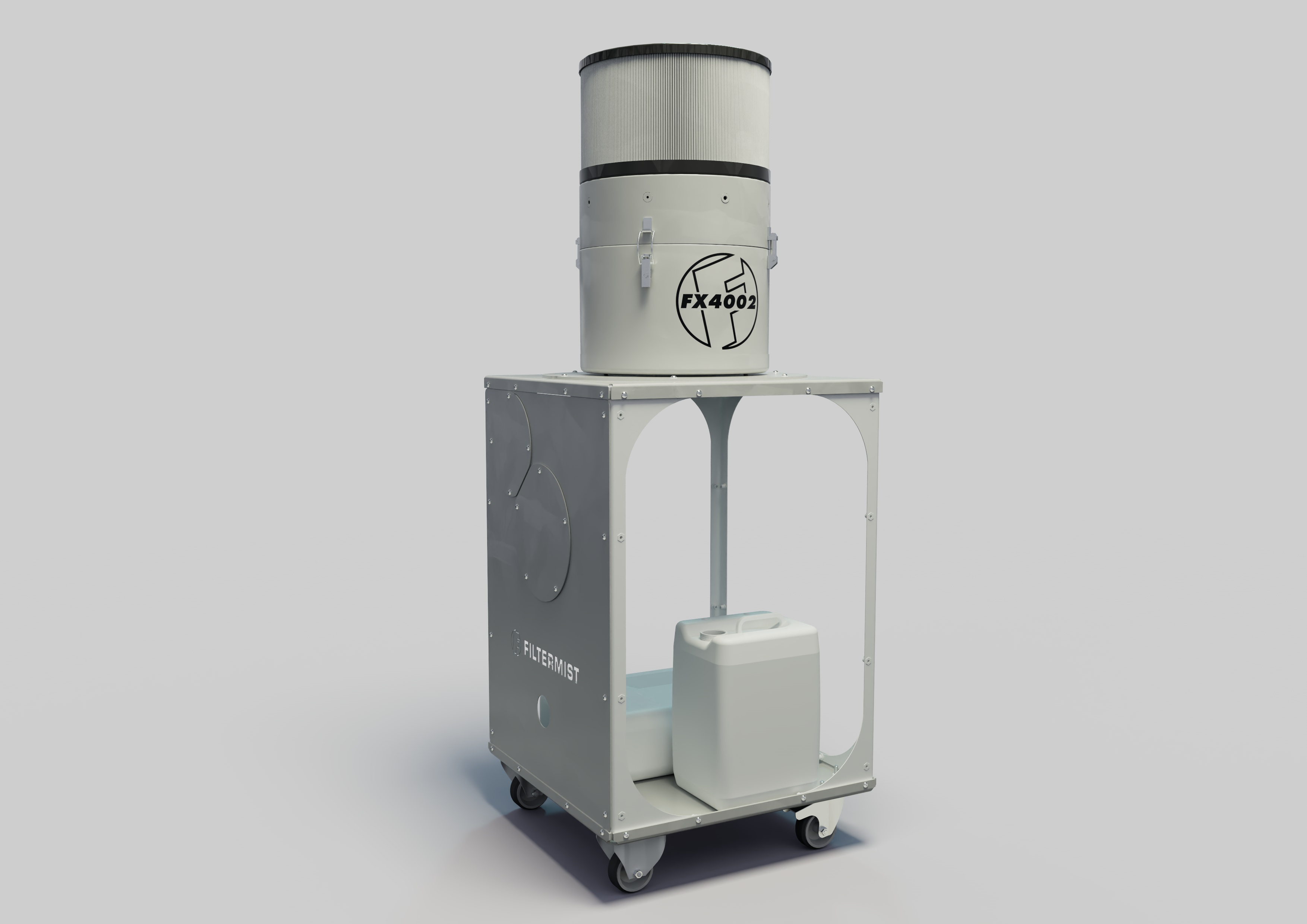
Industrial clean air specialist Filtermist Limited will be showing two of its latest innovations on stand F245 at Southern Manufacturing 2025. The UK manufacturer will be launching a brand-new mobile stand for its larger Filtermist oil mist filters, as well as showcasing an A.erity 10-30 oil mist collector from sister company Absolent AB.

The new portable stand is designed to make it simple to move a Filtermist oil mist filter to wherever it’s needed and is ideal for use on grinding applications when used with a cyclone pre-filter. The height of the stand also makes it easy for the Filtermist unit to be serviced and maintained – helping customers comply with Working at Height Regulations 2005.

Josh Palmer, Product Manager for Filtermist, elaborates, “We work closely with our key customers to identify how we can improve our product offering. As well as being perfect for any applications where enhanced flexibility is required, this new mobile oil mist extraction solution is also ideal for customers that would like to trial a Filtermist unit before committing to a permanent installation.”

Filtermist will also be showcasing an A.erity oil mist filter at the Farnborough show for only the second time since the new product’s launch in 2023. Key Account Manager Simon Harkis, comments, “The A.erity range from Absolent is relatively new and additional models are still being introduced. The current product line-up includes filtration units with airflows from 500-4,000m3/hr, capable of handling particle loads from 5-70mg/m³. With the modular design of the A.erity range this maximum airflow can be increased further to 12,000m3/hr using multiple units driven by one controller.

“A.erity units include multiple filtration stages with a HEPA filter as the final stage, and thanks to Absolent’s patented Catch&Release filtration media and energy efficient EcoDrive technologies, A.erity offers users up to 8760 hours of maintenance free operation.

“We have installed several A.erity units for customers across the UK and they are being very well received. Absolent also offers its A.Smart IoT monitoring solution - allowing customers to check the performance of their Absolent units from any location via an easy-to-use dashboard which can be accessed from any internet enabled device. This is a big plus for companies with multiple machines where keeping downtime to an absolute minimum is critical.”

The Filtermist team will also be reminding show visitors that it manufactures Kerstar industrial vacuum cleaners, including ATEX rated models available with a choice of compressed air or electric power. The Southern stand will include a KEVA 45H with carbon fibre kit and a KAV15 – the smallest model in the Kerstar range.

Visitors to the stand can also learn about Filtermist’s comprehensive Aftermarket division which offers spares and consumables, servicing and maintenance, and COSHH compliant LEV testing throughout the UK.

Please visit the team on stand F245 to discuss how Filtermist can support with effective extraction for oil mist, dust, fume and smoke, or go to www.filtermist.co.uk to find out more about all of the products and services available for UK manufacturers.

Empowering Technical Buyers to Make Successful Decisions

Axair’s Technical Director, Andrew Jones, explains how the Axair team are creating a dramatic change in the way you work with fan suppliers by revolting against industry behavioural norms.


I’ve previously discussed the impact of complacency and frustration in technical industries and how looking at things differently can aid competitive advantage and open the door to new opportunities. Customers deserve more than they get from industry giants, regardless of spend or size, interactions should be frictionless and foster a collaborative work environment.


Business leadership teams constantly talk about how they can improve their processes and systems, but how many spare a thought for those customers in roles where they are buying solutions for organisations. As the technical head of an engineering company I speak to a lot of customers who are buyers of industrial fans and the positive feedback following the first interaction is often overwhelming. They have a long, arduous process that sales teams really don’t appreciate or take on board when interacting with them. From self-educating and intense research to ultimately becoming subject matter experts in many niche components or applications. They want to speed this process up of course, but admittedly, none of us like to speak to a salesperson who doesn’t add value or understand our specific requirements, especially when we feel we know more about the component than the very people who are meant to be the experts. The biggest issue for buyers isn’t finding suppliers, it’s having trust in the information available, the people giving that information and mitigating the risk associated with the solutions or suppliers offering them.


Our company, Axair Fans, has a set of values that every employee embodies in their everyday activities. A key value we live by is that “We Understand, Apply and Give Back”. This means that we focus on understanding our customers’ needs before offering a solution. In an old, antiquated industry such as ours there are lots of old school salespeople, keen to talk about product features or ask the next question, and they forget to listen to what their customers are saying. This creates a huge gap in communication in a stage that is highly significant to the buyer who wants to ask questions about specifications, implementations, and the expected challenges if they transitioned to our solution.
You must be genuinely interested in your clients’ challenges to operate in this way, because ultimately customers don’t buy products, they buy the results that the product gives. To appreciate this, you must show empathy for the customers plight and build authentic and trusted relationships that take away any perceived risk of changing supplier or product. In my experience giving the buyer the control in the selection process ensures they can focus on their goals rather than being swayed down a road that is more biased towards the suppliers’ own objectives around product targets and revenue goals. This doesn’t only help the buyer to navigate to the right decision using their own goals as the compass, it benefits the supplier too. Our employees who understand, apply and give back learn more about the industry we operate in and stay up to date with the latest trends. Ultimately our customers ensure we have one foot in the real world and don’t make assumptions about buyer or customer behaviour. In an economy where one of the most popular measures businesses are taking to remain solvent, is improving efficiency, reducing friction in the purchasing journey, and speeding up selection times makes a significant contribution.

www.axair-fans.co.uk


Cutting-edge engineering coming to Farnborough

Advanced technology from across the mechanical engineering and electronic spectrum in approximately equal measure awaits visitors at the next Southern Manufacturing & Electronics trade fair, taking place from 4th to 6th February 2025 at the Farnborough International Exhibition & Conference Centre. The event is widely regarded as the largest and most comprehensive annual industrial exposition in the UK, and a major global showcase for engineering and manufacturing.

This longstanding annual gathering features more than 500 global exhibitors. Focused on ground-breaking engineering, sustainability and technology of the future, it offers the opportunity to network with pioneering problem solvers from all fields of manufacturing. The new owner of the show, Easyfairs, says that a particularly high level of interest in the run-up to the event from companies not just in Britain and Ireland but also from overseas indicates that the exhibition will be a sell-out.

Southern Manufacturing and Electronics seamlessly hosts large and small companies alike thanks to the organiser's policy of open access. Famous for its vibrant yet relaxed atmosphere, it promises to foster collaboration, networking and discovery. There will be educative seminars delivered by the best thought leaders and experts from industry, adding thoughtful debate and learning alongside time on the show floor.

On display will be workshop equipment, dust and fume extraction, humidity control, workplace storage, bespoke case and foam manufacture, plastic packaging, labelling equipment, hand tools, adhesives, industrial flooring, waste removal and recycling, freight forwarding services, and financial and business consultancy. Workflow planning systems, engineering and business software, and materials and consumables will be in evidence alongside suppliers of plastic injection and rubber mouldings, controls, displays, HMIs, data acquisition systems, sensors, drives, encoders, fasteners, pressings, wire forms, springs and gaskets.

Visitors will build meaningful connections with industry leaders, innovators and peers, engage in exclusive networking sessions designed to nurture collaboration, exchange ideas, create long-term partnerships and share best practice across three days.

Some useful functional changes will be added to the show experience. Visitors will receive a new smart badge with which they can simply touch an EasyGo badge reader on each stand they call on and the relevant information will be emailed to them the following morning. It saves having to carry heavy brochures around all day. Likewise, without any effort, the exhibitor will have a record of who has shown interest. New also will be a dedicated app, Southern Connect, for matchmaking with other relevant visitors.

Visitors will be able to take advantage of an extensive programme of free-to-attend technical seminars covering a wide range of topics to give people valuable learning opportunities, with a particular focus on the technical, managerial and environmental issues facing manufacturers today. All sessions will be CPD-approved to ensure they meet specific quality standards.

Southern Manufacturing & Electronics co-locates with AutoAero, a specialist thread that runs through the main programme concentrating on matters important to automotive and aerospace engineering. Both sectors directly contribute billions of pounds to the UK's GDP, while supporting numerous industries and businesses in the supply chains and providing much needed employment for highly skilled engineers.

There is free car parking at the Farnborough site, which is well served by road and public transport links. A regular, complimentary bus service runs between the two local railway stations and the showground. Admission to the exhibition is also free. Register today at: https://register.visitcloud.com/survey/00mf6xsmh61zw?actioncode=1033

Why vibration analysis is so important in Condition Based Maintenance

It is now generally accepted that to avoid costly breakdowns, Condition Based Maintenance (CBM) is a far superior approach to Planned Periodic Maintenance (PPM). Not only is PPM needlessly costly, due to the time wasted stripping down perfectly functioning machinery, it can sometimes make matters worse by introducing faults during the process of stripping down and rebuilding a perfectly healthy machine. Even more of a problem is deciding the correct PPM time intervals. Too short, means more wasted time and cost (and more potential for introducing faults) but too long means more unexpected breakdowns.

CBM, using tools such as vibration analysis, thermal imaging and oil analysis, is nowadays clearly recognised as the way to run an efficient and effective maintenance program. But why is vibration analysis so important and what does it tell us about machine condition? Put simply, it all boils down to two measurements. One is the average (RMS) value of the low frequency vibration that tells us how well the machine is running. The other is the average value of the high frequency vibration that tells us something about the condition of the bearings.

The low frequency vibration is the typical “hum” you hear from a rotating machine due to the centrifugal force resulting from any out-of-balance in the machine. Since it is virtually impossible to exactly align a machine’s centre of gravity with its centre of rotation, even a well-balanced machine will still vibrate. But what is an acceptable level? This is where the International Standards Organisation (ISO) comes to our aid. ISO produces a set of guidelines that define acceptable levels of machine vibration in the frequency range 2Hz to 1kHz (120 RPM to 60,000 RPM), the frequency range covering the vast majority of machine running speeds normally encountered.

The high frequency vibration is the typical “whine” you hear from a badly worn bearing. In practice, it is there all the time but is inaudible until the bearing becomes so bad it is probably about to fail. Fortunately, a vibration analyser can detect the inaudible bearing noise well before it gets to that point. This means bearing wear can then be displayed, for example, in Bearing Damage Units (BDU) that very roughly can be thought of as a “percentage” of bearing wear.

Modern, easily affordable vibration analysers can capture vibration from a machine and automatically generate the ISO reading and the bearing condition. It is largely this ability that distinguishes them from simple vibration meters.

Test Products International manufactures a complete range of low-cost, high-performance vibration analysers from the £575, one-button-to-press TPI 9070, to devices that include advanced diagnostics and machine balancing. The TPI 9070 features colour coded alarm levels and zoomable on-screen vibration frequency plots together with on-meter detection of machine faults such as unbalance, misalignment, looseness and bearing wear.

The TPI 9085 from £1,995 simultaneously captures vibration data and bearing temperatures and comes complete with license-free PC based trending software that includes automatic report generation and email notification of alarms, implementing a full CBM solution. The TPI 9085 can store lists (routes) of machines (up to 1000), each with up to 10 measurement points, all with full vibration waveform and frequency spectrum (FFT) capture.

Routes and readings can be transferred to and from the TPI 9085 via the included USB docking cradle, wirelessly via Bluetooth or remotely via a Bluetooth link with a smart phone or tablet PC running the free TPI Bridge App. This allows service personnel to receive and return routes and readings, no matter where they are in the world.  

For more information please contact TPI Europe’s head office on +44 1293 530196 or take a look on the website at www.tpieurope.com or email This email address is being protected from spambots. You need JavaScript enabled to view it.

Hot Isostatic Pressing, Heat Treatments and Hard Coatings – Stand E290, Southern Manufacturing

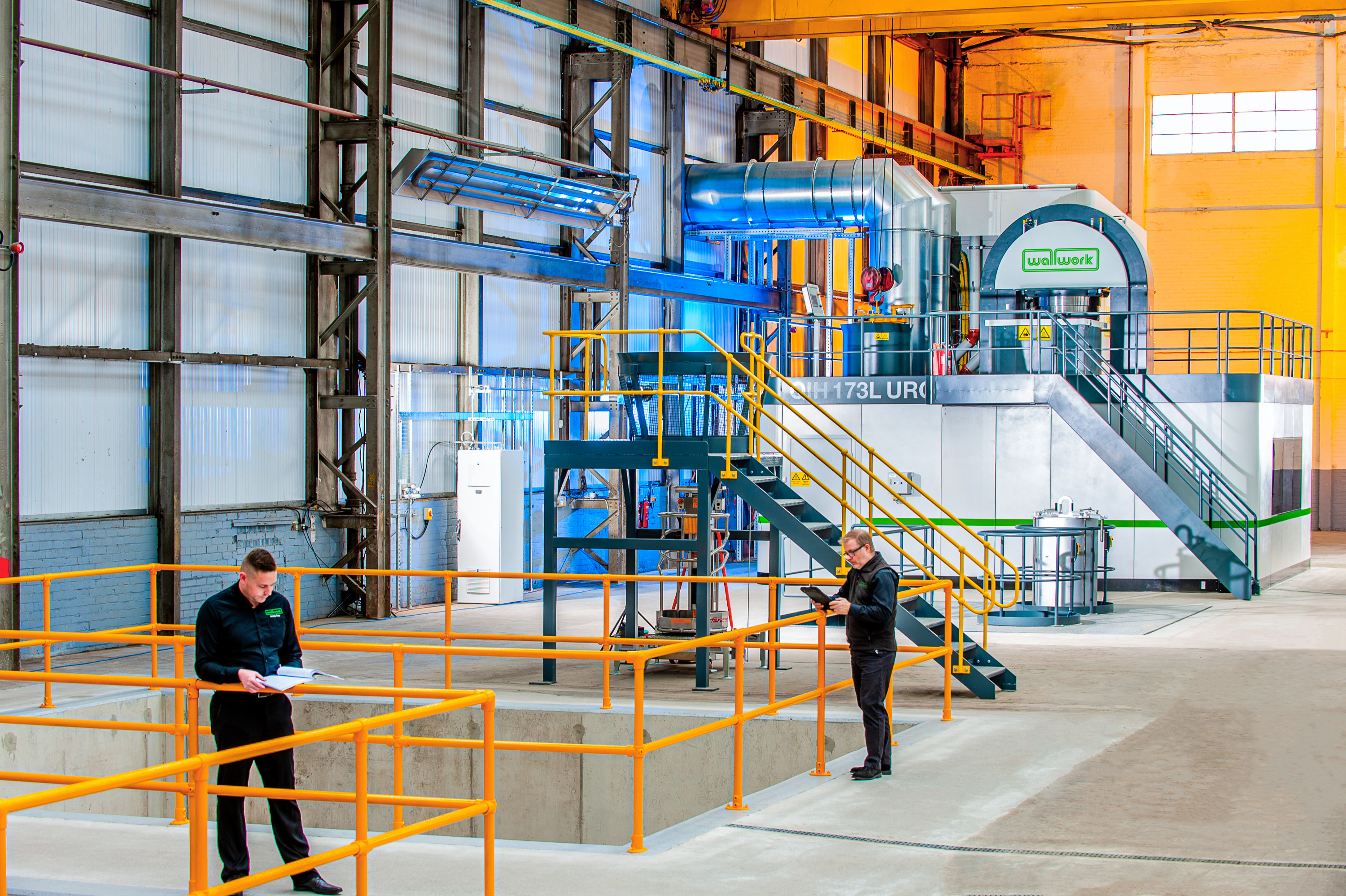
At Southern Manufacturing 2025, Wallwork Group, is highlighting the rapid growth of their hot isostatic pressing facility. With an initial investment of over £10 million, the 2500 square metres facility opened at the end of 2023 and became fully operational just in time for last year’s Southern Manufacturing.

To keep pace with demand, the equipment for an additional Quintus Technologies HIP is now arriving at the Wallwork HIP Centre. Following, installation, testing, commissioning and certification processes, this new HIP capacity will be available in the second half of 2025. “While we knew there was great demand for more HIP capacity in the UK, companies across Europe and beyond are also finding our service competitive and compelling,” explained Wallwork HIP Business Manager, David Loughlin.

Suitable for metal additively manufactured, power-metallurgy and cast parts, the EN9100 approved HIP service is provided stand-alone or can be combined with the Wallwork Group’s vast array of heat treatment services. All easily accessible from facilities in Cambridge, Manchester, Birmingham and Newcastle, via the their own secure and dedicated commercial transport fleet.

The stand team will also be keen to discuss with visitors other services including PVD and PVECD coatings, plasma nitriding, vacuum carburising, and vacuum brazing. Wallwork maintains in-house, well-equipped, UKAS certified, mechanical testing labs. Their research and development teams work closely with manufacturers creating unique surface treatments in aerospace, automotive, motorsport, medical, oil and gas and other precision industries.

With Nadcap accreditations (the company recently achieved Gold for their Manchester site) and multiple aerospace prime accreditations, customers really appreciate the full end-to-end experience that Wallwork delivers. This is only possible with so many services accessible from one supplier. As a one hundred percent UK owned company, ITAR compliance is also an important consideration for some manufacturers.

Visit Wallwork stand E290 at Southern Manufacturing. Register: https://www.southern-manufacturing-electronics.com/en/ 

www.wallworkht.co.uk


Fluke Survey Reveals How Data is Powering the Future for Solar Energy Innovation and Growth

OEMs, technicians, and installers are optimistic about solar's future, many believe the industry is hindered by gaps in data and understanding smart technology


Summary:

  • 63% predict that solar will lead their country’s energy transition.
  • 91% are concerned about solar panel efficiency, and 39% cite inverter failures as a common issue.
  • Nearly a third use reactive maintenance, while over half prioritize adopting predictive maintenance.
  • 59% stressed the need to train technicians in advanced diagnostic tools to address evolving challenges.
  • 45% view AI integration in solar panel design, optimization, and maintenance as a key opportunity.

Fluke Corporation, a leading provider of safe, rugged, and reliable industrial tools and integrated software, has released new survey findings highlighting key challenges for the solar industry on its path to a net-zero future. The survey identifies improving panel efficiency, transitioning from reactive to predictive maintenance, and adopting smart technologies as top priorities. Crucially, data emerges as the driving force behind innovation and operational efficiency, offering solutions to these pressing challenges.

The survey, conducted by Censuswide on behalf of Fluke, engaged over 400 solar OEMs, technicians, and installers across the UK, Germany, Spain, and the USA to gain insights into their perspectives on the pressing challenges facing the solar industry. The survey results also highlighted their attitudes toward emerging trends and their expectations for how the future of solar energy is likely to evolve in the coming years.

The research revealed that nearly two-thirds of respondents (63%) believe solar will become the dominant energy source in their country. However, it also highlighted significant challenges that must be addressed to turn this optimistic vision into reality and pave the way for a solar-powered future.

“The adoption of smart technologies is going to be critical for companies to gain a strategic edge,” says Vineet Thuvara, Chief Product Officer, Fluke. “Businesses are increasingly keen to automate their maintenance operations, with approaches like condition monitoring and predictive maintenance, and those that don’t utilize new AI enabled technologies - and their capabilities for collecting more data and gaining more knowledge - will be left behind.”

One of the challenges that emerged in the survey’s findings is the need to rapidly shift from reactive maintenance to a more proactive approach. With 91% of those surveyed reporting concerns about the efficiency of the current generation of solar modules and 39% of respondents identifying inverter failures as a common issue, it’s clear an effective maintenance strategy is a necessity. Nearly a third of all respondents described their current maintenance strategy as reactive, while more than half indicated that implementing predictive maintenance was a key priority.

Thuvara continued, “The next step, and the real opportunity to overcome the challenges facing the future of the solar industry, lies in the use of smart tools to analyze this data, and benchmark new data against historical data to detect issues before they risk causing failures. This is where using advanced diagnostic tools, and training technicians on how to use them will help maximize solar panel and maintenance efficiency.”

The skills shortage emerged as a significant concern, especially as data tracking through smart technologies becomes more integral to the solar industry's future. A notable 59% of respondents emphasized the importance of training technicians to effectively use advanced diagnostic tools to meet evolving challenges. Additionally, 53% highlighted the need for more focused training in electrical troubleshooting and diagnostics, underscoring the urgent need to equip the workforce with the skills to navigate the industry's technological shift.

In a positive sign, nearly all respondents are taking proactive steps to improve system efficiency through diverse strategies, including investments in module optimization software and collaborations with research institutions. Notably, 45% of respondents see the integration of AI in solar panel design, optimization, and maintenance as a promising opportunity for advancement. Additionally, 36% are eager to adopt AI-powered diagnostics to enhance maintenance efficiency. However, challenges remain: 28.7% are still relying on a reactive maintenance approach, with over 52% depending on external services rather than in-house maintenance teams.

More than half of those surveyed also identified supply chain resilience as a major concern for installers, with macro-economic and geo-political trends continuing to create uncertainty. Fluke’s Will White, Solar Application Specialist, explains: “Organisations are continuing to search for solutions to tackle persistent supply chain issues, aiming to find the sweet spot between adaptability, transparency, affordability, and accessibility. It’s positive to see that the industry remains confident in finding this sweet spot to enable solar to be the dominant renewable energy source in the future.”

www.fluke.com


Visualising the pathway to better papermaking efficiency and control

Industrial Video Solutions Inc (IVS), a US-based specialist in automation for the papermaking industry, is leveraging FLIR infrared (IR) thermal cameras to obtain valuable data from paper machines as part of a patented system that boosts machine control and efficiency. Recent developments in thermal signature analytics have expanded the applications of thermal cameras beyond routine troubleshooting; they now contribute to paper machine control, energy usage benchmarking, wet streak detection, and the identification and prediction of certain classes of sheet breaks.

Moisture and temperature directly affect both paper properties and machine runnability - making the measurement of these parameters essential to the papermaking process. However, despite the presence of visual spectrum cameras in several machine locations, some aspects of the papermaking process remain invisible to operators. This problem is attributable to factors such as steamy operating environments, visual camera limitations, and a lack of tools that convert camera images into actionable data.

The solution arrives in the shape of ThermoVision, an IVS-patented system featuring FLIR IR cameras at its core. With its FLIR cameras, ThermoVision sees real-time moisture profiles in any paper machine location, mapping them to a multi-functional thermal profiler. The system can provide real-time, full-width, cross-direction (CD) moisture and temperature profiles, as well as real-time machine direction (MD) profile variations. Moreover, profile analytics provide insights into dewatering and drying efficiency - critical for energy benchmarking.

ThermoVision facilitates the real-time detection and classification of wet streaks and spots, as well as the real-time detection of embedded foreign materials, such as metals in fluff pulp. A key capability of the system is its ability to provide visibility in steamy machine locations. Using a FLIR IR camera to capture an image of a pulper vortex, for example, allows users to see through steam and visualise the vortex in full detail, including the position of the chain and vortex edges. This ability is indispensable for monitoring locations within the machine like trim squirts and dryers.

While it only requires a single FLIR IR camera to execute all ThermoVision analyses, multi-camera systems are more effective for complete process troubleshooting, optimisation, and improvement. It is even possible to feed data from a combination of IR and visual spectrum cameras to an artificial intelligence (AI) module. This neural network learns the relationship between the forces exerted on the paper, paper vulnerabilities, and process upsets - such as sheet breaks - with the goal of predicting runnability issues.

Seven-figure savings

“Armed with new data for maximising paper machine performance, we estimate substantial savings for ThermoVision users,” says Slawek Frackowiak, President and CEO of IVS. “For example, reductions in energy consumption and paper breaks, alongside increases in productivity, can lead to annual savings in the region of $1.3 million on a 300,000-ton liner-board machine.”

He continues: “We came across the potential for this technology by chance. We had already patented our ProcessVision technology, which extracts pixels from an image to effectively turn an area-scan camera into a linear camera, when a potential application provided us with a new idea.”

On papermaking machines, excessive moisture often leads to sheet breaks - a major runnability issue. IVS was invited to quote for a project in Poland that sought to use IR cameras instead of a traditional sheet break system.

“I had no idea why, so I started investigating,” says Mr Frackowiak. “I discovered that while a few competitors had started using IR cameras for displaying video, they were not doing anything with that output. In a papermaking machine, temperature is inversely proportional to moisture, so we set about developing a new system – ThermoVision - which combines the concept of our existing ProcessVision with FLIR thermal cameras.”

This idea has led to the award of multiple patents pertaining to thermal vision - in particular, temperature being inversely proportional to moisture in the papermaking process.

“Of course, anyone can mentally make that conversion, but a system based on that concept is our patent. I was surprised no one else had thought of it. We’ve also patented specific outputs from the technology, such as predicting sheet breaks and runnability issues.”

The FLIR solution

Depending on the application, IVS uses either FLIR A50/A500 or A70/A700 FLIR IR thermal cameras.

“With their higher resolution, we tend use FLIR A70/A700 models for papermaking machinery applications,” reveals Mr Frackowiak. “However, ThermoVision can also benefit machines that produce corrugated paper for packaging. We use FLIR A50/A500 series cameras for corrugators as these applications do not require the same level of resolution, helping to minimise costs for customers.”

Rugged, IP66-rated FLIR A50/A500 and A70/A700 series cameras offer multiple field-of-view options, image streaming, and simple integration with the specific needs of customers. By providing quick access to thermal characteristics, users of these cost-effective cameras can maximise asset uptime and minimise maintenance costs.

“In my opinion, FLIR IR cameras are competitively priced considering the capabilities they offer. During my initial research, I came across other thermal cameras of similar specification, but they cost more. We’re incredibly happy with FLIR IR cameras and now standardise on these models.”

Seeing is believing

There are essentially two ways of adopting ThermoVision on a papermaking machine. First, as an add-on to existing sheet break systems. FLIR IR cameras see ‘invisible’ defects that visual spectrum cameras cannot. The system also detects wet streaks in real time, helping to prevent costly sheet breaks that can lead to hours of downtime.

Second, the system can involve sending the sheet-wide thermal profile to a quality control system (QCS) scanner. A QCS scanner moves back and forth across the sheet, a process that takes anything from seconds to minutes. However, using data captured by FLIR IR cameras, it is possible to feed the QCS in real time. While the control system will not likely work in real time, capturing images with FLIR IR cameras at 30 frames per second, for example, means the system can provide an average profile every second, supporting ultra-fast control system decisions.

“A big issue with a QCS scanner is its location at the end of a papermaking machine,” explains Mr Frackowiak. “From placing pulp on the wire, ready for manufacturing into paper, to running through the entire machine and reaching the QCS scanner, no quality measurement checks take place. However, by positioning a FLIR IR camera at the beginning of the process, perhaps in the press section, we can immediately detect defects like wet streaks or incorrect moisture profiles. This is important because some start-up processes can take hours, with papermaking plants unable to thread the web due to problematic sheet breaks. We now have a way of letting them know why, saving significant time.”

Several papermaking facilities are already taking advantage of the technology. Following the award of its patents, IVS now has two papermaking systems running with ThermoVision in the USA, as well as a corrugator. Multiple quotations have been sent to further potential customers, with some planning to include ThermoVision in their next capital expenditure budget.

With the right innovation and technology,  even a mature process like papermaking can see step changes in key metrics - such as quality, efficiency, uptime, and control. Thanks to the ingenuity of proprietary IVS systems and the capabilities of FLIR IR thermal vision cameras, papermaking is set to reach a whole new level.

This website is owned and operated by: MSL Media Limited

msl logo
www.mslmedialtd.com

Co. Number: 05359182

© 2005 MSL Media Ltd. All rights reserved. E&OE

ems logo mobile