By Stefan van Bussel, Teamlead Technical Services, and Jeroen Wijnen, Maintenance & Installations Leader, Berkvens Doorsystems
Every morning in a manufacturing facility, before a single machine is switched on, a maintenance team lead is already working. Reviewing overnight breakdowns, scanning shift logs, checking notifications, building a picture of what the machine park looks like before the day begins. Here at Berkvens Doorsystems, that process used to take between 30 minutes and an hour. Every day. Per team lead.
Team leads now no longer need to spend this time; it is recovered by artificial intelligence (AI).
A manufacturer with nearly a century of tradition
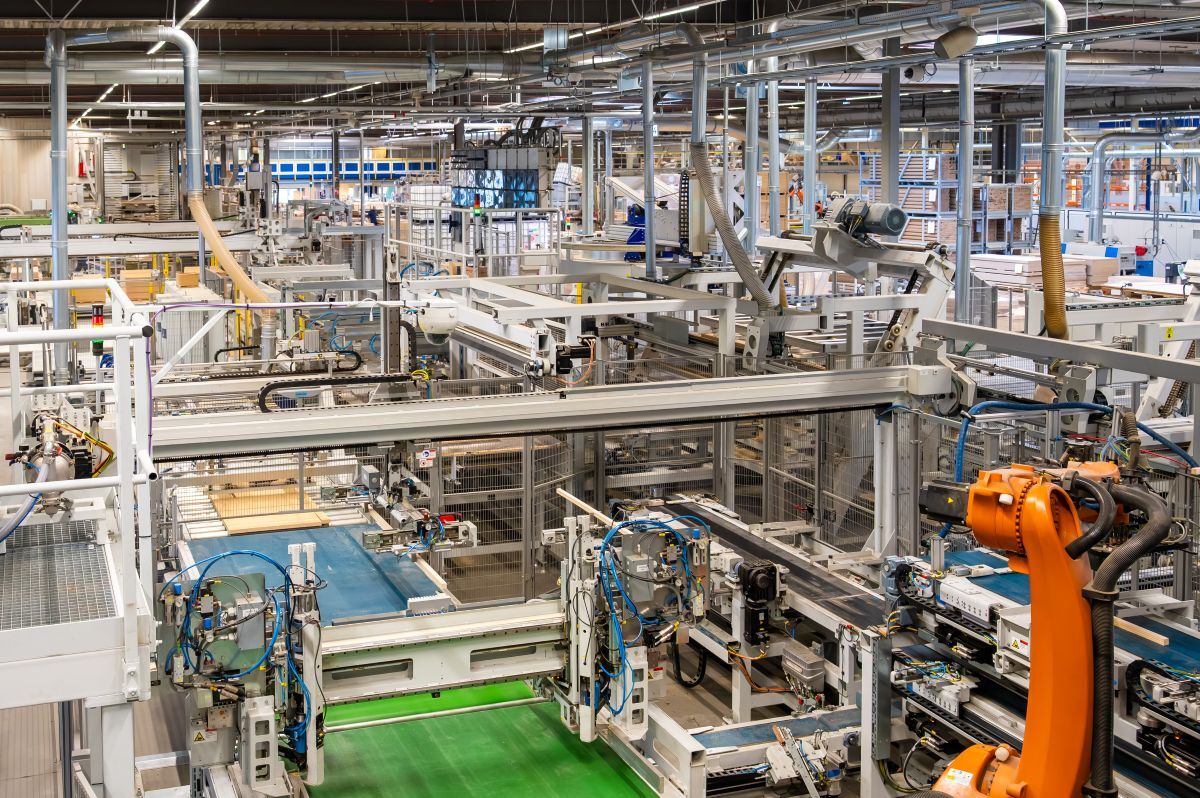
Berkvens Doorsystems is a family-run manufacturer headquartered in Someren, Netherlands, and part of Xidoor. With three production facilities and five brands, we produce interior doors, frames, and sliding door systems for the housing, healthcare, hospitality, and education markets across Western Europe. Manufacturing at this scale demands disciplined asset management - diverse equipment across multiple production environments, high standards for uptime, and a technical team responsible for keeping it all running.
Like many manufacturers, we have made a foundational investment in an enterprise asset management (EAM) platform to bring structure to maintenance planning, work order management, and equipment tracking. EAM gave the technical department visibility it had previously lacked. But visibility only goes so far when the volume of data such as notifications, shift logs, work histories, and equipment records, keeps growing. At some point, reviewing all of it manually becomes the constraint. That is the problem AI is now solving.
The business case has never been clearer
Our experience sits within a broader industry shift that is accelerating. According to Ultimo's Maintenance Trend Report, 63 percent of manufacturing organizations are struggling with an aging workforce - a challenge that is as much about knowledge as it is about headcount. The diagnostic expertise accumulated over decades of hands-on maintenance work does not transfer automatically to the next generation. When experienced technicians retire, they often take with them an understanding of how specific equipment behaves that exists nowhere in any system.
AI in the form of digital workers is changing that equation. By learning from operational data over time, it can surface patterns and institutional knowledge that would otherwise be invisible or lost. For manufacturers already running an EAM platform, that intelligence is embedded in data they are already collecting. It simply needs the right tools to unlock it.
A digital worker is an AI system embedded in operational workflows that can independently monitor data, initiate actions, and complete multi-step tasks - handling the routine cognitive work that would otherwise fall to a person
What changed at Berkvens Doorsystems - and how quickly
We adopted Ultimo's digital workers as one of the Company’s earliest users. The starting point was practical: digital workers that analyze the data the team was already generating, delivered through the EAM system already in daily use. No new platform. No disruptive implementation. Intelligence added to the workflow already in place.
The morning review process was transformed almost immediately. Where our team leads had previously spent up to an hour manually cross-referencing breakdowns, notifications, and logs to build a status picture, the digital worker now assembles and summarizes that information automatically.
The digital workers’ output matches the team's own manual analysis more than 95 percent of the time, meaning the time recovered is genuine, not traded against accuracy. Across a team of technical leads, that amounts to between 125 and 250 hours of recovered productivity per person per year, with a direct financial value of roughly €12,500 to €25,000 annually per team lead depending on hourly rates.
Insights that were not visible before
Efficiency gains are the most measurable outcome, but not the most strategically significant one. What has mattered more for us is what Ultimo digital workers surface that manual review would have missed entirely.
By combining data across sources such as work orders, logbooks, and maintenance histories, the system identifies patterns that are hard to detect when each data stream is reviewed in isolation. This revealed that certain equipment issues were recurring structurally rather than randomly. That single insight changed how the team approached maintenance planning and where it directed improvement efforts.
By intelligently combining data from different sources, new insights emerge, enabling teams to set better priorities, identify structural issues, and carry out more targeted maintenance and improvements.
This is the practical meaning of Intelligent Asset Management: not AI as a reporting layer, but AI that changes which decisions get made, and when.
One lesson every manufacturer should hear
The most consistent message from our experience is that the value of AI is directly proportional to the quality of the data it works with. We believe that disciplined, consistent registration of notifications, work orders, and operational data is a prerequisite, not something AI can substitute for. Poor data hygiene does not get corrected by AI; it gets amplified.
For manufacturers evaluating where to start with digital workers in maintenance, this is the practical readiness test. The technology is capable. The question is whether the data foundation is there to support it. For us, years of structured EAM usage meant it was.
What comes next
The team's expectations continue to grow. The area generating most interest is troubleshooting support – a digital worker that not only identifies what has gone wrong but assists the troubleshooting.
Think of digital workers that analyze similar past failures and immediately suggest possible solutions. This can help technicians arrive at the right solution faster and further reduce downtime.
For a manufacturer operating across multiple factories and brands, that kind of embedded guidance - turning accumulated failure history into real-time decision support for any technician, regardless of their experience level - represents exactly the kind of knowledge transfer that the industry's workforce challenge demands.
The conclusion we have reached is the one more manufacturers are arriving at: AI does not replace the judgment and skill that experienced maintenance professionals bring. It removes the administrative burden that keeps them from applying it - and it finds the signal in operational data that no manual process reliably could. The starting point is closer than most organizations expect, and the returns begin earlier than most anticipate.