
Managing Corrosion and Extending Asset Life in European Waste-to-Energy Boilers A practical perspective on materials, inspection, and high-quality weld overlay execution
Author: Lech Biegus, Regional Operations Lead, Integrated Global Services (IGS)
Waste-to-energy boilers operate in environments where corrosion is an inherent and ongoing consideration. The combination of chlorine-rich fuels, variable feedstock composition, and elevated steam conditions accelerates material degradation compared to conventional power generation.
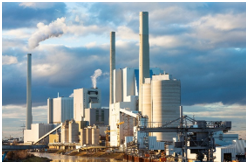
For maintenance teams, the focus is on effective corrosion management throughout the asset's operational life. This requires a clear understanding of degradation mechanisms, supported by appropriate inspection strategies and timely intervention.
In this context, material selection and the application of weld overlay, including re-overlay, are established approaches to maintaining component integrity. When implemented correctly, these measures can help manage degradation rates, support planned maintenance strategies, and extend the service life of critical boiler components.
The Role of Chlorine in High-Temperature Boiler Corrosion
In European WtE boilers, chlorine-induced high-temperature corrosion is the primary driver of fireside damage.
Municipal solid waste contains significant amounts of chlorine, largely from PVC and other chlorinated materials. During combustion, chlorine forms hydrogen chloride (HCl) and reacts with alkali and heavy metals such as zinc, lead, sodium, and potassium. These reactions produce low-melting-point metal chlorides, including ZnCl₂ and PbCl₂.
These compounds form molten deposits on tube surfaces and
- Flux and destabilise protective oxide layers (e.g. Cr₂O₃)
- Promote active oxidation mechanisms
- Accelerate metal wastage
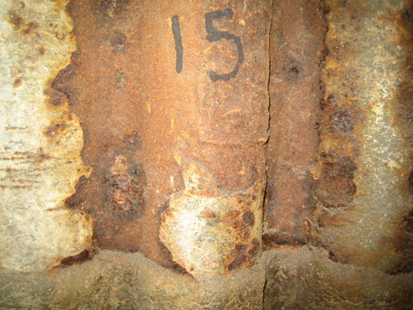
Example of boiler tube degradation
in practice, this manifests as general wall thinning, localised pitting, and, in severe cases, rapid loss of tube integrity, particularly in high-temperature regions.
The Role of Fuel Variability
Unlike conventional fuels, waste streams are inherently inconsistent.
Variations in chlorine content, alkali metals, moisture, and ash composition can significantly alter deposit chemistry. Biomass co-firing, now increasingly common in Europe, introduces additional potassium and sodium, further influencing deposit melting behaviour.
This variability means that corrosion rates are not constant. A boiler may experience relatively mild conditions during one run and aggressive degradation in the next.
From an operational standpoint, corrosion behaviour in WtE boilers is highly plant-specific and cannot be reliably predicted from design conditions alone.
Understanding Erosion-Corrosion in WtE Boilers
In addition to chemical attack, many WtE boilers experience erosion-corrosion, particularly in areas exposed to high-velocity, particle-laden flue gases.
This is commonly observed in:
- Superheater banks
- Economisers
- Gas flow turning zones
In these regions, fly ash particles remove protective oxide layers from tube surfaces. The freshly exposed metal is then subjected to accelerated corrosion, creating a self-reinforcing degradation mechanism.
The severity of erosion-corrosion depends on gas velocity, ash loading, and local flow geometry, and is often intensified in modern plants operating at higher efficiencies.
Inspection Strategies and Corrosion Monitoring
Given the variability of both fuel composition and operating conditions, regular inspection is essential.
Effective inspection programmes typically include:
- Visual assessment of exposed surfaces
- Ultrasonic thickness (UT) mapping
- Evaluation of protection system (weld overlay, thermal spray) condition and integrity
- Identification of pitting and localised attack
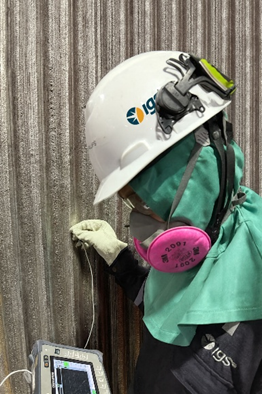
Weld UT thickness mapping
Establishing corrosion trends is critical. In many cases, operators observe measurable wear rates in protective overlays, while base material degradation can accelerate rapidly once exposure occurs.
Without structured inspection, maintenance strategies tend to become reactive, often leading to unplanned repairs or premature component replacement.
Protection Strategies for Waterwalls and Other Components
Panel replacement
Full panel replacement remains the most invasive option. It involves removing sections of waterwall tubing and installing new prefabricated panels, often with shop-applied overlay, followed by additional on-site welding.
While this approach effectively resets the asset's condition, it introduces significant logistical complexity, costs, and outage duration.
On-Site Weld Overlay
Weld overlay has become the industry standard for protecting carbon steel components in WtE boilers.
In this process, a corrosion-resistant nickel-based alloy, most commonly Alloy 625, is deposited onto the tube surface. The overlay acts as a sacrificial barrier, protecting the base material from aggressive combustion environments.
On-site application offers flexibility, allowing operators to:
- Extend the life of existing components
- Target specific high-risk areas
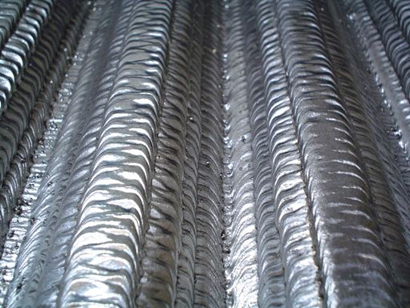
Boiler weld overlay
Re-Overlay - Extending Asset Life
Increasingly, operators are adopting re-overlay strategies to extend the life of previously protected areas.
Rather than waiting for full degradation, controlled re-overlay enables the restoration of protection before base material exposure occurs. This approach can significantly delay the need for panel replacement and reduce lifecycle costs.
However, re-overlay is not simply a repeat of the original process. It requires:
- Thorough surface preparation and removal of fatigued material
- Precise control of heat input and dilution
- Understanding of existing metallurgical condition
Execution quality is essential. Poorly executed re-overlay can lead to defects such as lack of fusion, porosity, and irregular surfaces that compromise both performance and inspectability.
Common Operational and Maintenance Pitfalls
Field experience across European WtE plants highlights several recurring challenges:
Delayed Inspection and Intervention
Operators often delay inspection or continue operating beyond safe parameters, accelerating degradation. In some cases, remaining wall thickness becomes insufficient for weld overlay, leaving replacement as the only option.
Operating Beyond Design Conditions
Running boilers above intended production rates or burning more aggressive waste streams increases both corrosion and erosion rates, reducing the effectiveness of protective systems.
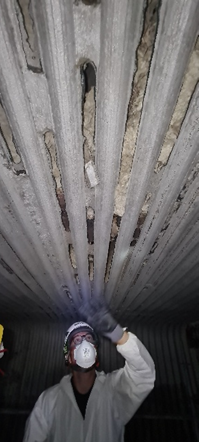
Visual inspection of failed boiler tube protection
Poor Execution Quality
Common technical issues include:
- Inadequate surface preparation
- Lack of bead overlap and exposed base material
- Incorrect welding parameters
- Excessive or uneven overlay thickness
Such deficiencies not only reduce protection performance but also create inspection challenges and localised corrosion initiation points.
Overcrowded Outages and Coordination Challenges
Attempting to execute multiple activities simultaneously in confined boiler environments can compromise safety, quality, and productivity. Effective planning and contractor coordination are essential to avoid delays and rework.
Welding Execution and Outage Delivery
While material selection is important, field experience shows that execution quality, especially under outage conditions, is the key determinant of long-term performance.
High-quality weld overlay depends on:
- Precise control of welding parameters
- Consistent bead geometry and full overlap
- Proper surface preparation (e.g. SA3 cleanliness)
- Controlled heat input to avoid distortion and defects
Automated welding systems, combined with experienced operators, enable consistent quality and efficient execution within tight outage windows.
However, European WtE outages are highly constrained, often involving multiple contractors in confined spaces. Success therefore, also depends on:
- Detailed pre-outage planning
- Adequate resources and skilled personnel
- Right-first-time execution to minimise rework
- Effective coordination on site
Ultimately, the ability to maintain quality under pressure and to stop and correct issues early is what separates durable repairs from short-term fixes.
Conclusion
Waste-to-energy boilers operate in uniquely aggressive environments driven by chlorine chemistry, fuel variability, and demanding efficiency targets.
In this context, long-term reliability requires a combination of:
- Deep understanding of corrosion mechanisms
- Structured inspection and monitoring programmes
- Strategic selection of protection methods
- High-quality execution of welding processes
Integrated Global Services, IGS - Your Efficiency & Reliability Partner

Explore EMS
More Editorial
Directory
This website is owned and operated by: MSL Media Limited

Co. Number: 05359182
© 2005 MSL Media Ltd. All rights reserved. E&OE