
How Leading CFB Operators Are Breaking the Cycle of Tube Leaks
Author: Al Geraskin, Integrated Global Services (IGS)
Circulating fluidized bed (CFB) boilers operate under highly erosive conditions. High-velocity bed material, abrasive ash, and increasingly diverse fuel mixes can rapidly reduce tube wall thickness if left unmanaged. For many operators, recurring tube repairs have become an accepted part of every outage, increasing maintenance scope and creating the risk of unexpected tube leaks, and unpredictable and extended turnarounds.
Increasingly, however, that assumption is being challenged. Experience across a growing number of CFB plants shows that understanding wear mechanisms, rather than repeatedly repairing their consequences, can significantly improve long-term reliability. Once forced outages are brought under control, maintenance can shift from reactive repairs to planned refurbishment, more predictable outage scopes, and longer operating cycles.
The following case study draws on more than 40 years of experience protecting CFB boilers across North America, Europe, Asia and the Middle East.
From 500 Tube Repairs per Turnaround, to Zero
While the Texas plant demonstrates the long-term value of a proactive maintenance strategy, another North American CFB facility illustrates how quickly reliability can deteriorate when protection systems fail.
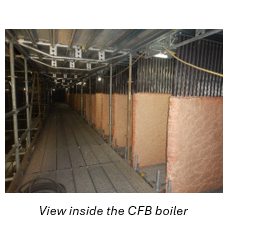
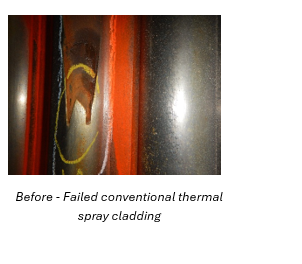
The 300 MW units, firing a combination of coal and up to 20% biomass, had previously been protected using an off-the-shelf thermal spray system. Within a year, widespread coating failure had exposed the underlying tubes to severe erosion-corrosion, resulting in more than 500 tube repairs during a single outage. Inspection found that in many locations the coating had worn through completely, allowing deep gouging of the boiler tubes and creating a much larger mechanical repair scope than originally anticipated.
Rather than simply replacing the failed coating, the operator recognized that the problem needs a professional solution. IGS boiler reliability teams undertook non-destructive testing and mapped wear across the boiler. This information was used to prioritize mechanical repairs and develop an HVTS protection specification tailored to the wear characteristics of each boiler zone. Inspection and planned refurbishment were then incorporated into the long-term asset management plan, allowing protection to be monitored and renewed before significant tube loss occurred.
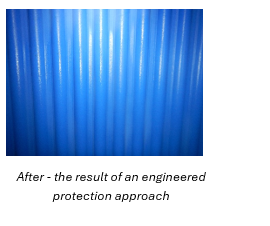
The results were immediate. Tube repairs fell from more than 500 during the rehabilitation outage to just five the following year, before reaching zero in subsequent outages. Equally important, the plant moved away from unpredictable emergency repairs towards a planned maintenance approach with a defined scope, enabling more accurate outage planning and reducing the risk of future forced outages.
The benefits extended beyond reducing repair numbers. Once wear mechanisms are understood, protection is matched to local wear conditions, and refurbishment becomes part of a strategy, operators can begin extending inspection intervals and reducing outage frequency with greater confidence.
Lessons from the Field
Although the boilers described in these case studies differ in size, fuel type and operating conditions, they reveal a consistent approach to managing tube wastage. Rather than relying on recurring repairs, the operators focused on understanding the causes of degradation and using that information to build more predictable maintenance programs.
Several practical lessons emerge.
- Understand the degradation mechanism before selecting the repair.
Erosion, corrosion and erosion-corrosion each require different maintenance strategies. Effective programs begin with inspection data, thickness measurements, and an understanding of how operating conditions influence wear.
- Match protection to the wear environment.
Degradation is rarely uniform throughout a boiler. The most successful approaches tailored protection to individual boiler zones, recognizing that areas such as refractory interfaces, cyclone inlets, and superheater banks experience different wear rates and mechanisms.
- Use inspection data to plan refurbishment before failures occur.
Monitoring wear over time allows protective systems to be refurbished in a controlled manner, preventing significant tube thinning and reducing the likelihood of forced outages.
- Place equal emphasis on application quality and quality assurance.
Long-term performance depends not only on the protection system selected, but also on surface preparation, application procedures, inspection and ongoing verification that the specification has been achieved.
- Treat maintenance as a reliability function rather than an outage activity.
Across each of the plants featured, the greatest improvements came when maintenance shifted from responding to tube failures towards managing wear over multiple operating cycles. The result was greater confidence in outage planning, fewer emergency repairs and improved operational continuity.
For more information, visit www.integratedglobal.com

Explore EMS
More Editorial
Directory
This website is owned and operated by: MSL Media Limited

Co. Number: 05359182
© 2005 MSL Media Ltd. All rights reserved. E&OE