
Extending Pulverized Coal Boiler Tube Life
Extending the operating life of a pulverized coal (PC) boiler requires careful management of its pressure parts. Corrosion and erosion progressively reduce tube-wall thickness, increasing the risk of failures, forced outages, and costly panel replacement. Protecting tubes while they remain suitable for service can help preserve existing assets throughout an extended operating period.
The starting point is to understand what is causing the damage. Different areas of the same boiler can experience different mechanisms, so the protection system must match the local operating environment. Two utility boiler examples show how this approach supports waterwall preservation, from long-term testing to protection expanded over successive outages.
Understanding the damage
PC boiler tubes can suffer from reducing-atmosphere fireside corrosion, coal-ash corrosion, fly-ash erosion, and damage associated with wall blowers or sootblowers. Fuel chemistry, combustion conditions, ash loading, gas velocity, and cleaning practices influence where and how quickly metal is lost.
In reducing furnace conditions, sulfur-bearing species can attack carbon-steel waterwalls and form iron-sulfide-rich scales that provide limited protection. Low-NOₓ burners and staged combustion can contribute to these conditions.
Blower activity can intensify the problem. Cleaning removes the corrosion-product layer, exposing fresh tube metal to the furnace environment and allowing the corrosion cycle to restart. Mitigation must therefore provide a corrosion barrier durable enough to withstand repeated cleaning. Blower alignment, pressure, and operating frequency should also be reviewed.
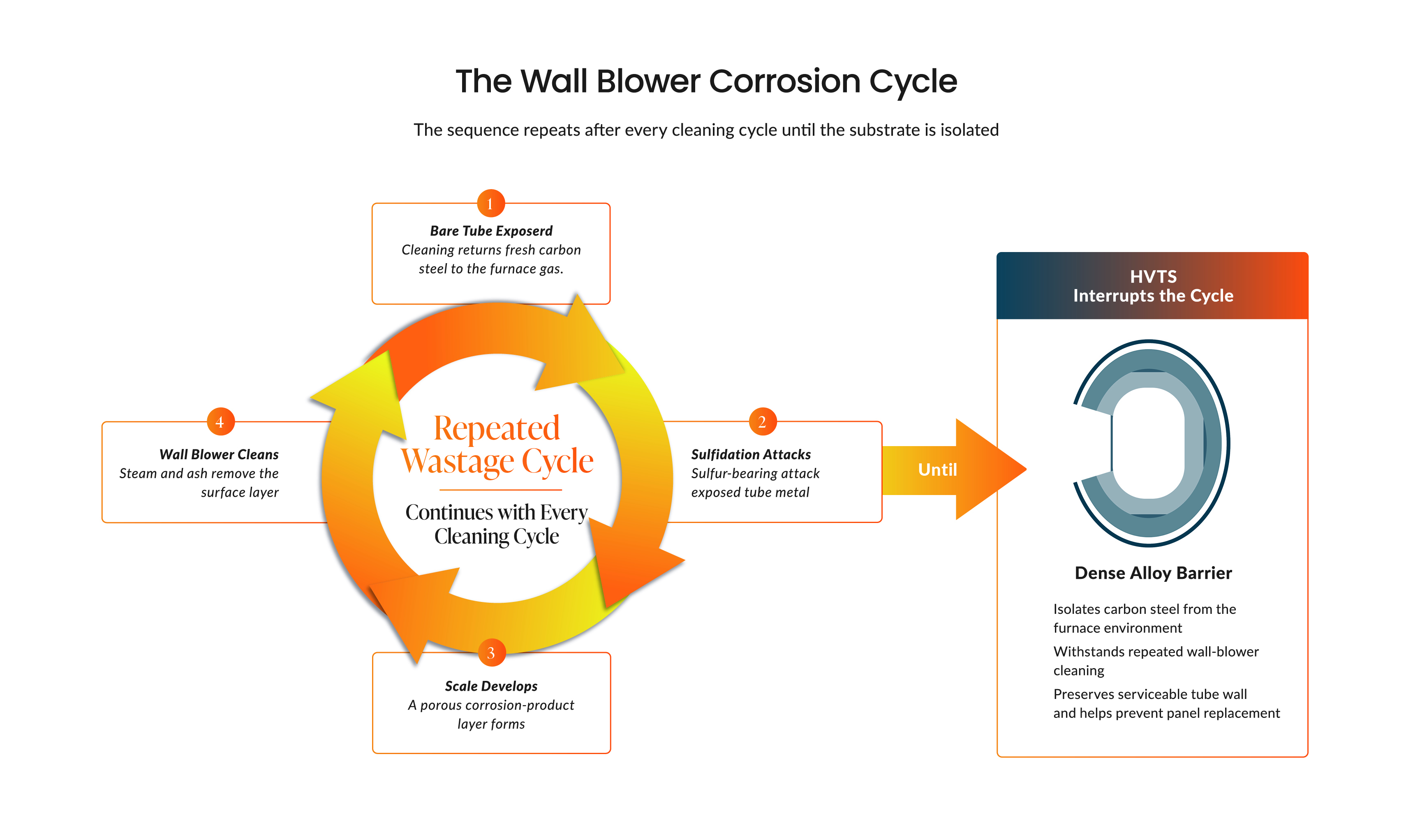
The wall-blower corrosion cycle repeats until HVTS alloy cladding interrupts exposure of the carbon-steel substrate.
Inspection should combine operating history, visual examination, ultrasonic thickness mapping, and, where appropriate, deposit analysis. Tubes below the plant’s allowable minimum wall thickness, or with unacceptable cracking, require repair or replacement. HVTS alloy cladding protects remaining serviceable metal; it does not restore pressure-boundary thickness or repair structural cracks.
Case study: five years in a 1,300 MW boiler
A US utility owner and the Electric Power Research Institute (EPRI) evaluated thermal-spray materials in a 1,300 MW supercritical PC boiler operating with low-NOₓ burners and reducing-atmosphere fireside corrosion.
Test panels containing IGS HVTS alloy cladding and products from another thermal-spray provider were installed adjacent to the burner elevations. This placed the materials in the furnace environment where protection was needed, allowing their performance to be assessed after extended operating exposure.
Tube-panel evaluation map used to compare material performance after long-term exposure.
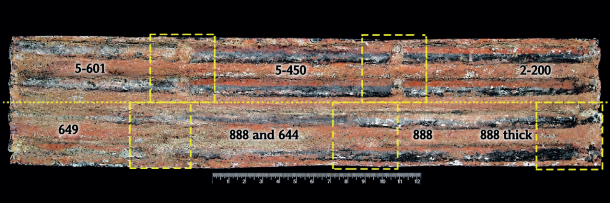
Following five years and approximately 39,000 operating hours, IGS HVTS showed no visible deterioration. Examination recorded a maximum measured loss of less than 0.007 inches beneath the IGS HVTS alloy cladding. Other thermal-spray products tested experienced cracking and delamination.
The significant result was preservation of the underlying pressure-part material. Surface appearance alone cannot establish whether a protection system has performed its intended function; the condition of the tube beneath it is central to evaluating life-extension potential.
This evaluation provides long-term field evidence for protecting serviceable waterwalls exposed to reducing-atmosphere fireside corrosion. It also demonstrates why material selection should consider the performance of the complete installed system, including its ability to maintain an effective barrier throughout prolonged furnace exposure.
Case study: protecting waterwalls over successive outages
At another site, waterwall tubes above the burner elevations and below the over-fire-air ports experienced fireside corrosion following the installation of low-NOₓ burners. Sootblower activity worsened the damage.
The location and operating history pointed to interacting corrosion and cleaning-related mechanisms. Repeated removal of the surface scale exposed the tubes to further attack, making protection of the remaining serviceable waterwall material a priority.
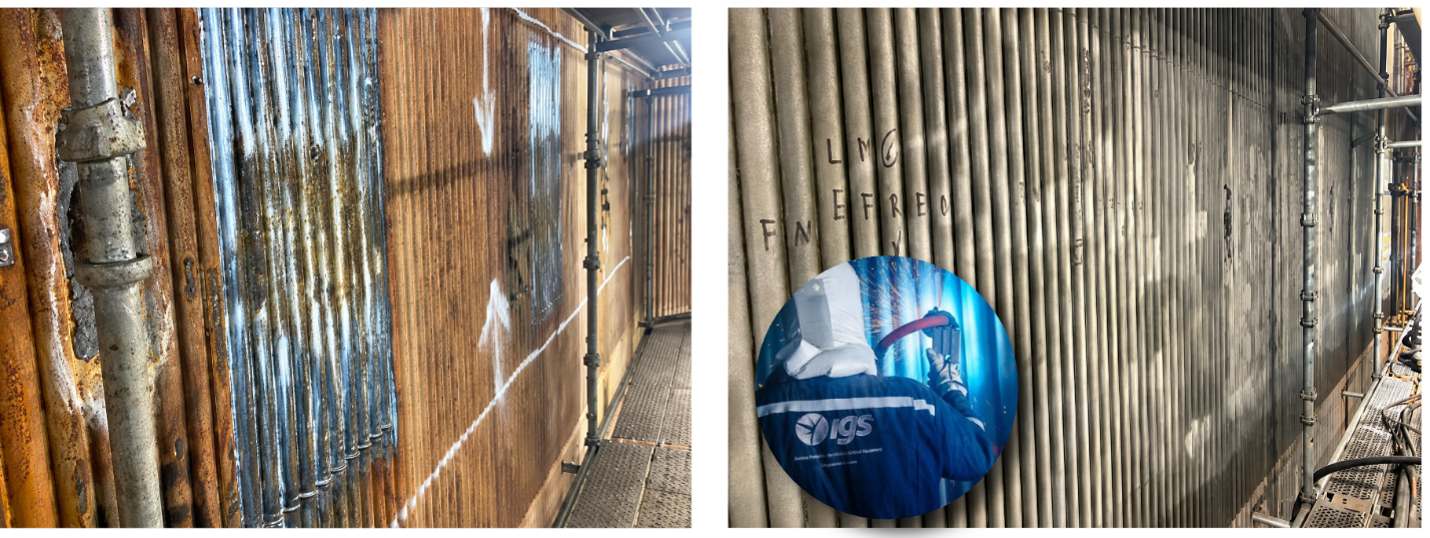
IGS installed bands of HVTS alloy cladding around the furnace and expanded the protected zones during successive outages. The dense, low-permeability alloy barrier isolates the carbon-steel substrate from the corrosive furnace environment.
The program’s objective is to preserve the original waterwalls, reduce exposure to forced outages, and prevent panel replacement in the corrosion zones. Expanding protection during successive outages allows the utility to address affected areas as part of its ongoing maintenance program.
|
Left - waterwall tubes before surface preparation and the alloy upgrade. Right - waterwall tubes after installation of 5450 HVTS alloy cladding |
This application illustrates the importance of evaluating fireside corrosion and blower-related damage together. Selecting protection for only one mechanism could leave the tube vulnerable to the other.
Matching protection to the application
The alloy system must suit the dominant degradation mechanism. A dual cladding system is available for waterwall applications in severe corrosion and erosion environments. Where both mechanisms are significant, a corrosion-resistant underlayer with an erosion-resistant outer layer can be applied.
Application quality is equally important. Substrate acceptance, surface preparation, controlled application parameters, qualified operators, and inspection all influence performance. Final records should document protected areas and support inspection during future outages.
Conclusion
Boiler tube life extension starts before metal loss makes replacement unavoidable. By identifying the damage mechanism, confirming that tubes remain serviceable, and applying the appropriate alloy upgrade, utilities can protect existing pressure parts and reduce the risk of premature panel replacement.
The long-term evaluation and staged waterwall application demonstrate the value of combining field evidence with a maintenance strategy tailored to the boiler. Continued inspection remains essential to managing those assets throughout their service life.

Explore EMS
More Editorial
Directory
This website is owned and operated by: MSL Media Limited

Co. Number: 05359182
© 2005 MSL Media Ltd. All rights reserved. E&OE