

 Latest Analytical Technology Ensures Biogas Efficiency
Anaerobic Digestion (AD) relies on the ability of specific micro-organisms to convert organic material into a gas that can be used to generate electricity. However, these bacteria require specific conditions if they are to function effectively and instrumentation specialist company HACH LANGE has developed a range of online, portable and laboratory (Read More)
instruments that have enabled a large number of AD plants to maximise efficiency and prevent the risk of failure.
In 2009, renewable energy accounted for just 3% of the UK’s energy supply. However, the UK Government has a target to raise this contribution to 15% by 2020 as part of its strategy to fight climate change. Along with wind, solar and various other sources of renewable energy, AD has an important role to perform in helping to achieve the renewable energy target whilst also helping with the management of organic waste.
Biogas is generated in large anaerobic digesters; air tight tanks in which bacterial digestion takes place in the absence of oxygen. Biogas is a combination of Methane, Carbon Dioxide and many other gases in trace amounts, which can be burnt to produce electricity, and then transported to the National Grid. Alternatively it can be further processed and refined to around 100% methane and injected into the national gas grid.
The remnant digestate can be used for a variety of purposes such as a nutritional additive to crops on arable land, much in the way manure is used, or as a landfill restoration material.
There are two types of biogas plants, determined by the substrate they use; co-fermentation plants and renewable raw material fermentation plants. In co-fermentation plants, substrates of non-renewable raw materials are used, such as residues from fat separators, food residues, flotation oil, industrial waste products (glycerol or oil sludge) and domestic organic waste. Renewable raw material fermentation plants utilise materials such as maize, grass, complete cereal plants and grains, sometimes together with manure slurry.
Efficiency is vital to the success of a biogas production plant; bacteria require optimum conditions to effectively produce biogas from the digestion of organic matter. Plant operators therefore have a strong interest in the efficiency of their biogas plant and the activity of the bacteria. Consequently these production plants require reliable, on-site analysis in combination with continuously operating process instruments. Loading excessive levels of biomass into a digester may have severe economic consequences and could potentially lead to biomass inactivation and necessitate a cost-intensive restart. Conversely, under-loading a biomass digester could also have financial implications, because less electricity is produced and potential revenue is lost. Substrate amounts must be tailored to achieve the optimum rate of bacterial digestion.
The degradation process which occurs within the biogas plant digesters does so in a highly sensitive microbial environment. The digesting, methane-producing bacteria, for example, are highly temperature sensitive and most active within the temperature ranges of around 35 to 40 DegC and between 54 to approximately 57 DegC. The specific nature of the microbial environment inside the digesters must be maintained throughout fermentation to increase production and avoid inactivation of the highly responsive bacteria.
HACH LANGE provides portable, laboratory and online monitoring systems that facilitate examination at key points within the fermentation process, including eluate analysis, where the substrate is fed into the digester, but also within the digester itself. Online process analysis instrumentation can be employed to continuously maintain optimum conditions within the biogas plant and/or samples can be collected regularly for analysis.
Different analytical instruments are required for different stages of the fermentation process: at the substrate entry point; within the main digester; in post-fermentation tanks and to continuously monitor biogas production.
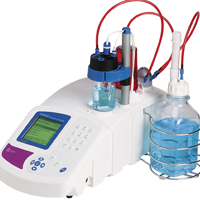
One of the most important measurements for assessing fermentation progress is known as the FOS/TAC ratio. This is determined by the HACH LANGE TIM 840 Titrator, and the values generated enable the system supervisor to identify potential process problems such as the imminent inversion of digester biology, so that countermeasures can be initiated. The FOS stands for Flüchtige Organische Säuren, i.e. volatile organic acids while TAC stands for Totales Anorganisches Carbonat, i.e. total inorganic carbonate (alkaline buffer capacity).
To measure the FOS/TAC ratio with the TIM 840 titrator, 5ml of sample is added to a titration beaker containing a follower bar. 50ml of distilled water is then added and the measurement is started. The addition of reagents is then conducted automatically by the titrator which saves operator time and reduces the potential for human error. After about 5 minutes the TAC and FOS values are calculated automatically using a pre-programmed formula.
All measured values can be stored in the autotitrator and/or sent to a printer or PC.
The FOS/TAC ratio provides an indication of the acidification of the fermenter, which is an important measurement because a low acid content demonstrates that the rate of bacterial digestion is not high enough. Conversely, too high an acid content means bacterial digestion is exceeding required levels, due to an overloading of substrate.{jcomments on}