
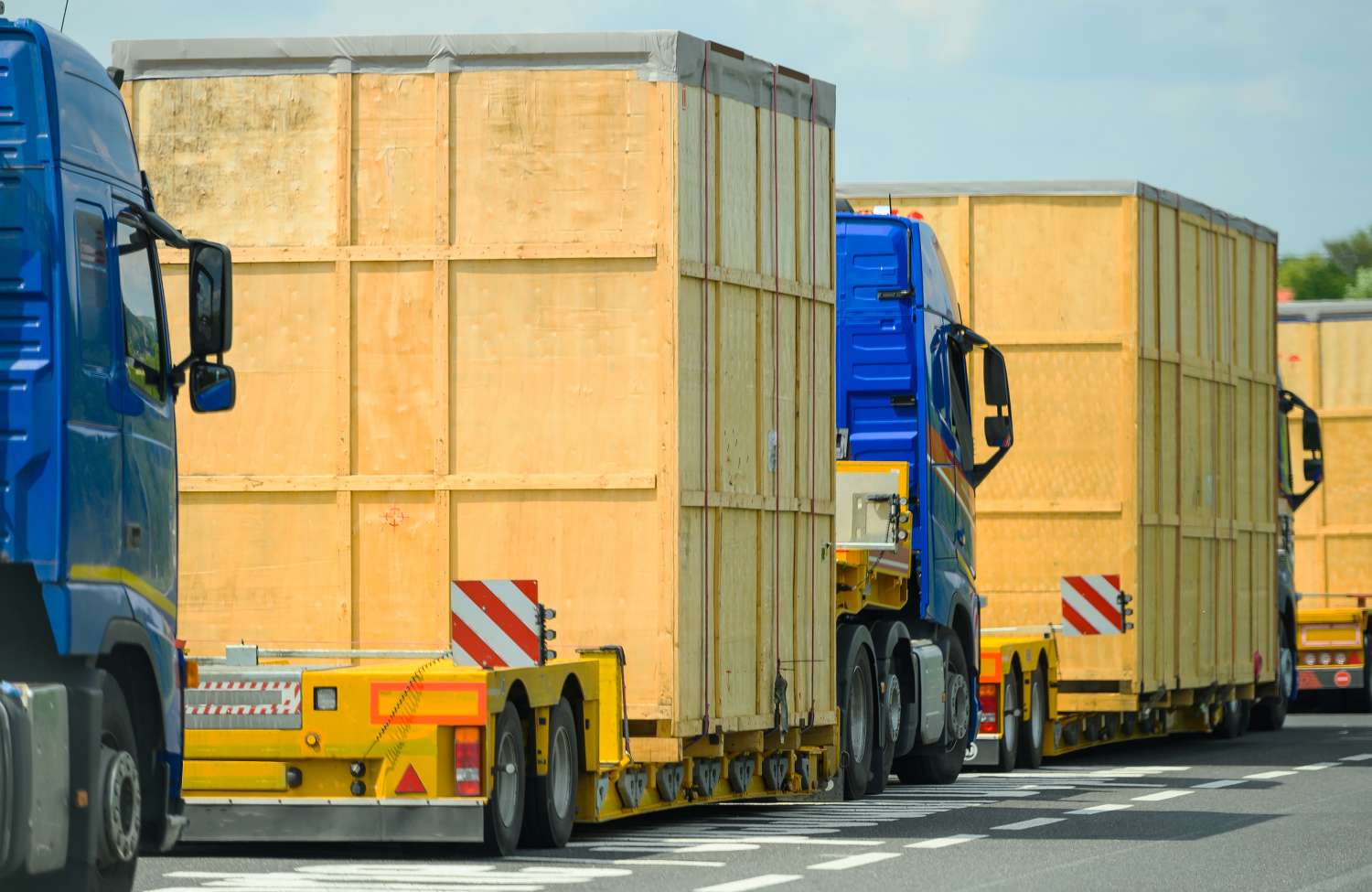
Managing risks, protecting shipments
Invisible forces, extreme conditions, and tight schedules make heavy haulage a risky balancing act – with potentially serious consequences for projects and budgets. After all, what happens if damage to the goods only becomes apparent at the destination or even when the components are put into operation? How can it then be determined beyond a doubt when and where the damage occurred? Modern data loggers provide reliable answers here: They make transport conditions transparent, comprehensively document critical events, and create a reliable database for analysis, verification, and optimization.
Whether in construction, energy, industry, or infrastructure: heavy-haul transport is an integral part of logistics processes for companies in these sectors, including in international projects and across national borders. At the same time, heavy-haul transport is a key factor that contributes to project success and, ultimately, to a company’s competitiveness. However, they always entail a risk, as the safety requirements for the capital goods being transported are high: Since heavy-duty goods often weigh several tons, enormous physical forces come into play during transport – and especially during braking, acceleration, and loading. Compounding this is the high and often asymmetrical center of gravity of the goods, which increases the risk of tipping. Last but not least, changing weather conditions and long periods of inactivity can also affect components, some of which are sensitive. Despite careful planning and elaborate packaging and securing strategies, transport damage is therefore not uncommon – yet it is often not noticed until the goods arrive at their destination, making the frustration all the greater. When and how did the damage occur? Who is responsible for it? And who will compensate for the damage? These questions need to be clarified. This is possible with digital data loggers, which provide concrete evidence.
High risk in time-sensitive projects
This is because digital data loggers comprehensively document critical events during transport. “Heavy hauls are always critical for companies,” says Josia Fritz, Product Manager at ASPION. The German high-tech company, which specializes in modern sensor technology, develops shock and climate data loggers specifically for the transport of high-value capital goods. Fritz is therefore well aware of the challenges companies face with heavy-haul transport and understands the consequences that transport damage can entail: “Especially in highly time-sensitive projects, transport damage can lead to significant delays and result in financial losses,” says Fritz.
Even minor transport damage can cause significant delays because the system components are usually custom-made and cannot simply be reordered. Many system components are sensitive to excessive mechanical or climatic stress – even when no external damage is visible. “Defects are therefore often only discovered during assembly or commissioning,” notes Fritz. “This further complicates the situation.” While transport insurance generally covers the damage, this is only the case if companies can prove that the goods were actually damaged during transport. However, without concrete data, this is difficult, if not impossible.
Recording temperature, humidity, and mechanical load
Modern data loggers close this information gap. They continuously record parameters such as temperature, humidity, and mechanical load like vibrations or tilt, and store relevant events with timestamps. The respective threshold values are individually tailored to the specific component for each project. Mounted directly on the equipment or its transport rack, the devices accompany the entire supply chain. The recorded data can ultimately be retrieved via a smartphone app – both at the destination and at individual loading points. Fritz: “This allows the condition of the goods to be assessed even while they are in transit.” If anomalies are detected in the data – for example, significant impacts or temperature differences – companies can intervene before the goods are transported further.
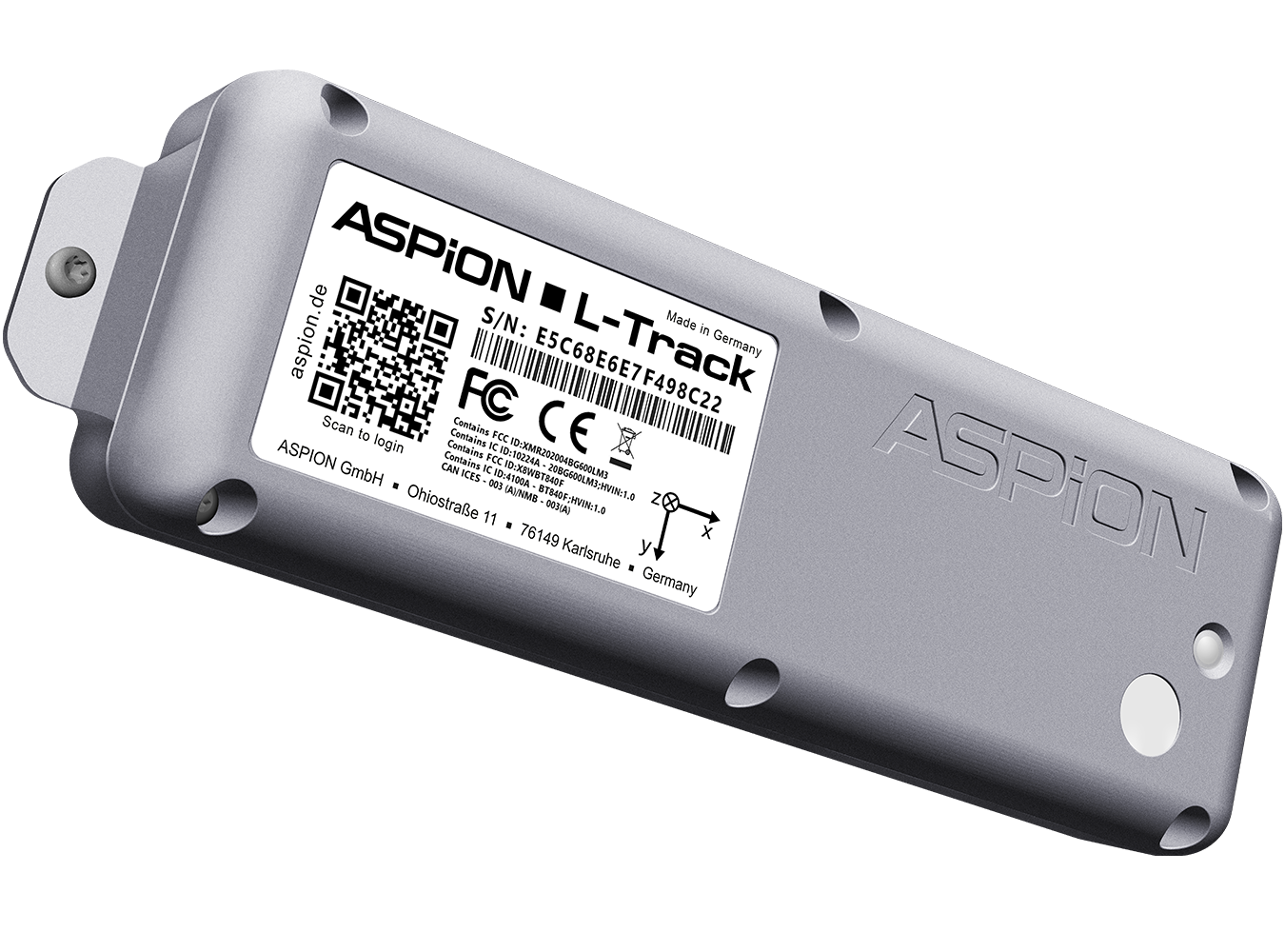
Data security plays a central role in data analysis; in other words, the data must not be accessible to just anyone and must be strictly protected against tampering. “We protect the data in our ASPION G-Log using a PIN, among other measures,” explains Fritz. Authorized personnel can download the data from the logger via the app; however, only those with the proper authorization can view and analyze the data. Live tracking represents an extension of this technology: systems with continuous data transmission provide not only status information but also real-time location data. “With ASPION L-Track, companies can track where their components are and what condition they’re in virtually at any time and no longer have to wait for the data loggers to be read,” explains Fritz. If defined thresholds are exceeded, warning messages are also generated automatically. This feature offers a decisive advantage, particularly for time-critical heavy hauls. Companies can react immediately, adjust or halt transports and thus prevent or limit potential damage at an early stage.
Correctly interpreting measurement results
However, mere data collection is only part of the solution. Interpreting the reading requires expertise, as the assessment of mechanical loads depends heavily on factors such as size, weight, and transport conditions. In addition to individual impact events, events such as vibrations, dynamic forces during transport, and short-term extreme stress also play a role. What matters here is not only the intensity but also the duration of an event. A controlled lifting operation differs significantly from an abrupt impact – with correspondingly different effects on the goods. A thorough analysis of the data makes it possible to identify and accurately assess such differences. “At ASPION, we place great importance on providing our customers with the best possible support in this area as well,” emphasizes Fritz.
Beyond providing immediate proof of damage, data loggers deliver valuable insights for future projects: Companies gain a realistic picture of the actual transport conditions on specific routes or during specific logistics processes. What forces actually act on the components during transport? Where are the risks regarding stability? Which routes and vehicles are particularly critical, and which are particularly safe? The information collected can be used to optimize packaging concepts, adapt transport strategies, and minimize risks for heavy-haul transport as early as the planning phase. “The collected data thus acts, in a sense, as a black box for transport processes,” explains Fritz. This is because the data helps to continuously improve processes and reduce follow-up costs resulting from damage or delays.
Conclusion
In heavy haulage, data loggers are evolving from an optional extra to an indispensable key technology. They create transparency throughout the entire supply chain, enable reliable proof of damage, and help companies identify risks early on and take targeted countermeasures. At the same time, they provide valuable insights for the continuous optimization of transport processes. In doing so, they not only contribute to the safety of sensitive goods but also to meeting deadlines, reducing follow-up costs, and ultimately strengthening competitiveness.
ASPION and interview partner Josia Fritz will be exhibiting at trade fair “Breakbulk Europe” in Rotterdam in Hall 1, Stand 1J51.
Author: Julia Kowal, Editor at Wordfinder