
In an ideal world, a cooling tower would reliably deliver its design fluid temperature and flow rate relative to the prevailing ambient conditions indefinitely.
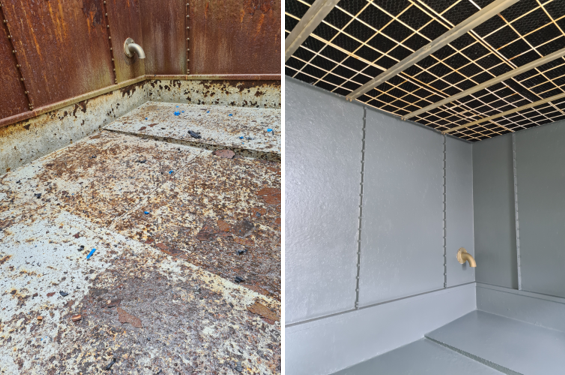
In reality, cooling towers act as natural air scrubbers, removing impurities from the incoming air. Over time, these impurities can accumulate on the heat exchange media. At the same time, water evaporation concentrates dissolved solids, which can lead to scale deposition.
Water flow, airflow and heat exchange surface are the essential ingredients of cooling tower thermal performance. However, these three critical subsystems do not make up the entire cooling tower system.
Managing Airflow
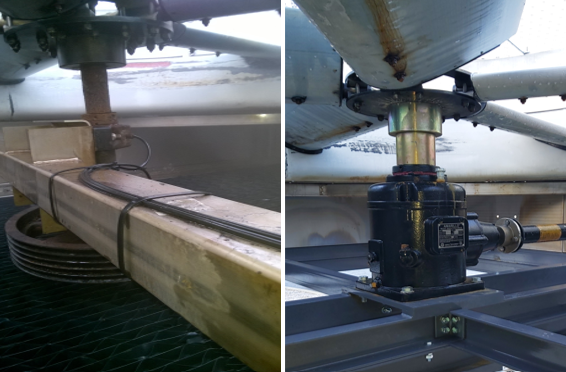
Airflow is generated by fans driven by motors that are either directly connected to the fan or operate through gearboxes or belt drives.
Maintenance of the air-moving equipment should focus on the condition and performance of the fans themselves. Where fan blades are adjustable, blade angles should be checked and correctly set to achieve the required airflow. Gearboxes and belt drives should also be inspected to ensure they are operating correctly, with bearings and gearboxes adequately lubricated in accordance with the manufacturer’s requirements.
Regular inspection is essential to identify issues such as worn belts, damaged fan blades, excessive vibration, bearing deterioration or gearbox problems before they affect performance or lead to unplanned downtime.
Heat Exchange Media
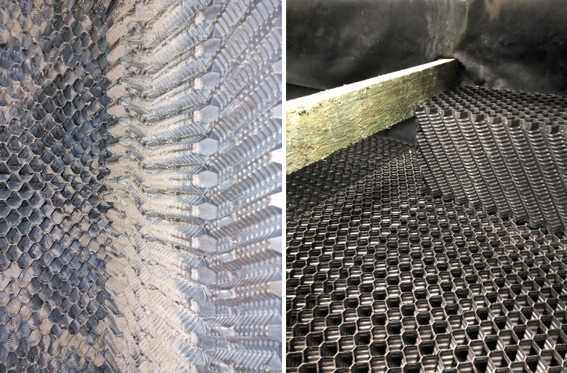
The heat exchange media, or fill, should be selected to provide the optimum balance between heat transfer performance and resistance to fouling.
Maintenance should begin with checking the cleanliness and condition of the heat exchange surfaces, while also confirming that the correct type of fill is being used and that it has been installed correctly.
Incorrect fill selection or poor installation can cause the packs to become blocked rapidly, increasing pressure drop and restricting airflow. Poorly fitted fill packs can also allow air to bypass the water through gaps within the pack. This reduces thermal performance and can increase drift rates.
Cleaning and inspection should therefore form a key part of any preventive maintenance programme, particularly where the cooling tower operates in an environment with high levels of airborne contamination or where water quality presents a significant scaling or fouling risk.
Managing Water Flow
The water distribution system is also essential to efficient cooling tower operation. Heat exchange surfaces can only perform effectively when they receive a consistent and evenly distributed flow of water.
Blocked, damaged or incorrectly positioned nozzles can cause an imbalance in water distribution, resulting in variations in wetting rates or even dry areas within the fill. These dry spots reduce the effectiveness of the available heat exchange surface and can significantly affect overall thermal performance.
Regular inspection and cleaning of distribution pipes, headers and nozzles should therefore be incorporated into the maintenance programme. Any damaged or blocked components should be repaired or replaced promptly to maintain uniform water distribution across the fill.
Beyond Cleaning
While water flow, airflow and heat exchange surface are the essential ingredients of cooling tower thermal performance, the wider system also requires regular inspection and maintenance.
Other important components include:
- Drift eliminators, which minimise the quantity of water droplets carried out of the cooling tower with the exhaust air.
- Air inlet screens and honeycomb panels, which help prevent direct sunlight from entering the tower and reduce the ingress of airborne contamination.
- Access and safety systems, which provide safe access for inspection, cleaning and ongoing maintenance.
- The tower structure and general fabric, which should be inspected to identify corrosion, deterioration, damage and other issues that could affect the integrity or performance of the system.
A Comprehensive Approach to Preventive Maintenance
A comprehensive cooling tower maintenance programme must go beyond cleanliness. Regular inspection, cleaning, servicing and replacement of components not only support safe operation but also help maintain thermal performance and minimise operating costs.
Cooling towers are ultimately maintainable systems made up of a series of interconnected subsystems. Many of these components can be inspected, serviced, repaired or replaced relatively easily and cost-effectively when problems are identified early.
By maintaining airflow, water distribution, heat exchange surfaces and the supporting systems in good condition, cooling towers can continue to operate safely and efficiently for many years.
Preventive maintenance is therefore not simply about keeping a cooling tower clean; it is about maintaining the performance, reliability, safety and longevity of the complete system.