
Bearing failures can be costly, disruptive and in some cases dangerous. Ian Breeze, Technical Director for Bowman International, considers three of the main reasons for bearing failure in high-load environments – and explores why it is so important to make the right decision first time.
There are three main reasons for bearing failure: bearing fatigue, poor maintenance practices and the incorrect selection bearing material. In high-load applications, these potential points of failure are amplified, but addressing them during the specification process could help designers and decision-making engineers to make the right decision first time. In doing so, many facilities can harness untapped performance, time and cost efficiencies that they were unaware of.
Bearing fatigue
First and foremost, it is vital to select the right bearing for the application in question to prevent premature bearing fatigue. There are many types of bearing to choose from, including plain, spherical, needle, ball and split roller bearings to name but a few. Each of these bearing categories has many variations within it, such as sintered, wrapped, composite or machined, and then there are sizes, seals, lubrication and performance enhancing extras to consider.
The majority of customers know exactly what their bearing needs to do. They know the load, speed and environmental requirements that will reduce fatigue, but need advice on what type of bearing can deliver those capabilities most efficiently, and at the right cost.
Selecting the right bearing will influence not just the initial purchase cost, but potentially other factors including the cost of ongoing maintenance, lifespan of the bearing and even how efficiently the equipment works. Often, when working closely with a bearing manufacturer, customers realise there are clear benefits to switching to an alternative bearing type, from the one style they have been specifying to date.
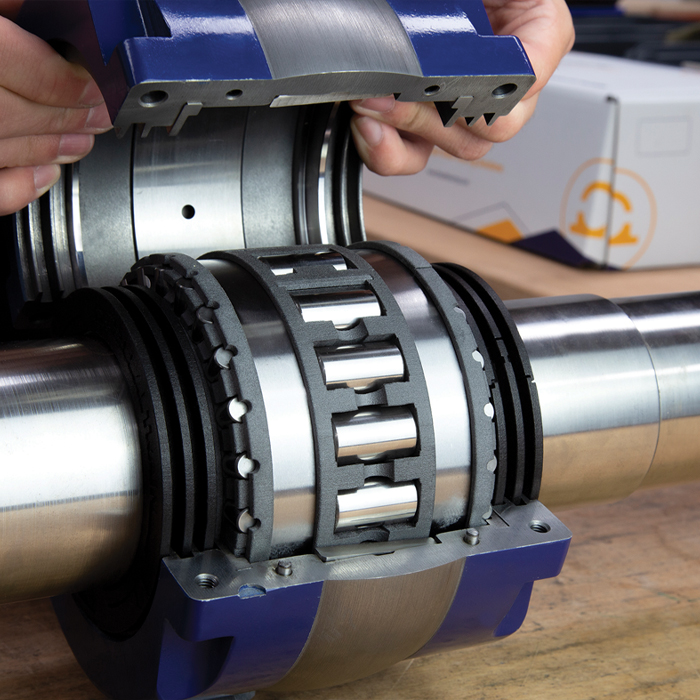
The new Bowman Advanced Split Roller Bearing for example is specifically designed for high load applications and can improve performance and drive cost efficiencies compared to solid bearings for systems with high radial and axial load requirements. In fact, this bearing offers up to 75 percent higher radial load capacity and up to a 1000 percent increase in axial load capacity compared to other split bearings.
This is really where a whole-market manufacturer and supplier, not restricted to any single type of bearing, can add real value through independent advice.
Material selection
The choice of material is another important decision that can affect system performance, bearing life and OPEX costs. Bearings are manufactured in a range of materials to suit a range of purposes including sintered bronze, sintered copper, rolled bronze, cast bronze and various plastics. Composites, stainless steel and other alloys are also widely used to meet the needs of certain applications.
As material science evolves, so too can bearing design and now for the first time in bearing history, 3D printing is also being used by Bowman International to facilitate the use of complex geometries to radically improve bearing life, load and performance whilst keeping cost- and time-to-market low.
Ease of maintenance
Reducing downtime is an important driver in any industry, especially those with restricted system access, mission critical operational parameters or high levels of customer demand to meet.
Choosing split bearings over solid bearings for example can save time during installation and maintenance because they are assembled radially around the shaft. This eliminates the need to disconnect the coupling and move other equipment, such as motors, gearboxes or pumps out of the way to access the shaft - making installation up to ten times faster.
The Bowman Advanced Split Roller Bearing even uses the rollers to lock the two cage halves together, eradicating the use of small and easy to lose clips and other locking components. Further enhancing the performance of this revolutionary split roller bearing is a patented triple labyrinth seal which not only offers a tighter seal than other split bearings, but also reduces the need for costly removal, machining or replacement of worn shafts.
For more information on Bowmans Advanced Split Roller Bearings, visit: www.bowmansplitbearings.com