
HVTS® Cladding Delivers Biomass Boiler Protection at Vattenfall Plant
Plant Background
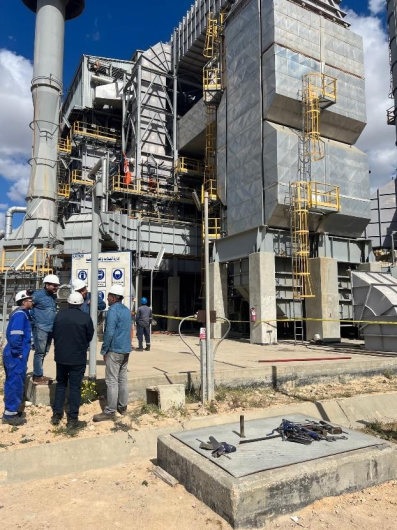
The Idbäcksverket combined heat and power (CHP) plant, operated by Vattenfall since 1997, is a vital energy facility in Nyköping, Sweden. The plant plays a crucial role in the region's energy infrastructure, providing approximately 95 percent of the Nyköping urban area with district heating and electricity. Aligned with Vattenfall's commitment to fossil freedom, the facility primarily utilizes renewable fuel sources, with the majority consisting of industrial and forestry waste.
Plant Facts
|
Country |
Sweden |
|
Electrical power |
35 MWe |
|
Heating effect |
234 MWth |
|
Technique |
CHP power plant |
|
Main fuel |
Biomass |
The Challenge
At this power facility, a biomass-fired Bubbling Fluidized Bed (BFB) boiler that processes waste wood was facing erosion and corrosion wastage, particularly affecting the waterwall surfaces, a common challenge in biomass boiler operations. As a major energy producer in the region, maintaining reliable operations at this renewable energy facility is crucial. This degradation posed a significant risk to operational reliability and could potentially lead to unplanned outages due to tube leaks.
The Solution
The plant approached Integrated Global Services’ (IGS) European division for a solution to stop the metal wastage issues. To address the issue, IGS deployed its proprietary High Velocity Thermal Spray (HVTS) cladding technology, a proven solution for protecting biomass boilers against aggressive operating conditions. This solution focused on the lower section of the furnace, treating approximately 100m² of surface area to protect and extend the lifetime of the aging weld overlay.
The project scope also included the protection of the carbon steel waterwalls in the upper furnace section and the connecting roof area between the furnace and second pass, ensuring comprehensive protection throughout critical areas of the boiler.
HVTS is applied at a nominal thickness of 500 microns. The technology works by creating dense protective layers while minimizing internal stresses. The process applies ultra-fine particles in a dense pattern, creating longer pathways from surface to substrate that effectively prevent permeation. This corrosion-resistant alloy (CRA) cladding creates a robust barrier against further material degradation.
A key advantage of HVTS is its ability to protect and extend the life of existing panels with minimal remaining thickness, eliminating the need for intensive panel replacements. In areas with existing Inconel protection, HVTS provides an effective method to further extend the operational life of these critical boiler components, offering a cost-effective alternative to complete panel replacement.
Implementation Timeline
The plant has implemented a systematic biomass boiler protection program over several years:
- 2020: Initial application covering 35.0 m²
- 2022: Major expansion to 158.0 m²
- 2023: Additional 80.0 m² coverage
- 2024: Latest refurbishment of 17.0 m²
All projects were completed on time with zero safety incidents.

Inspection Results
Regular inspections were conducted to verify the cladding's performance. Thickness measurements were taken every 300mm and detailed mapping of application areas was conducted.
Inspection results showed that the cladding was in excellent condition with consistent thickness readings above 400 microns.
Benefits of the Project
Enhanced Protection
- The HVTS cladding successfully prevented further erosion and corrosion of the biomass boiler surfaces.
Minimal Operational Disruption
- Can be applied simultaneously with other maintenance tasks such as tube replacements in other boiler sections, as the process doesn't generate heat-induced distortion. This enables efficient maintenance planning and reduced outage time.
Non-Invasive Application
- No heat-related distortion, making it ideal for sensitive components like hanger panels and dividing walls.
- No pressure testing required for the protected area.
Flexible and Customizable
- Possibility to customize the alloy for specific wear mechanisms
- Repairable unlike other protection processes
- Can extend the life of existing panels, including those previously protected with Inconel
Quality Assurance
- Post-application inspections confirmed uniform coverage and quality, ensuring long-term protection.
Safety Excellence
- Zero safety incidents throughout the project execution. IGS Europe is ISO 45001:2018 certified and follows OSHA best practices and all local safety regulations, whichever is stricter.
Future Recommendations
Based on the successful implementation and monitoring results, the following recommendations were made:
1. Regular inspections during scheduled outages to monitor cladding performance
2. Proactive identification of additional areas requiring protection
3. Continued monitoring of existing applications to optimize future maintenance schedules
Conclusion
The systematic application of HVTS cladding technology has proven to be an effective solution for protecting biomass boiler surfaces against erosion and corrosion.
IGS has performed over 4,000 site projects and installed millions of square feet of reliable surface protection across the globe. IGS enables plants to avoid costly equipment replacements without sacrificing long-term reliability of boilers and vessels.

https://integratedglobal.com/services/on-site-hvts-cladding/

Explore EMS
More Editorial
Directory
This website is owned and operated by: MSL Media Limited

Co. Number: 05359182
© 2005 MSL Media Ltd. All rights reserved. E&OE